August 2025

August  2025
I DON'T NEED A RIDE. I NEED AMMUNITION.

Translate

Monday, September 27, 2021

VICKSBURG Chapter Seventy-One


A minie' ball shattered Andre's left arm. The stinging numbness shocked his entire being and dropped him to the ground. The 37 year old knew instantly that his career as a boxer was over. Still, the handsome captain struggled to his feet. He held his sword aloft in his still strong right arm and with horse shouts rallied his company for yet another charge. Then, as the men rushed forward for the 6th time against the fortifications of Port Hudson, Captain Andre Cailloux (pronounced Cah-you) relinquished command of company K, of the 1st Louisiana Native Guards and dropped back.
Five days after Grant threw his “forlorn hope” against the defenses at Vicksburg, Major General Nathaniel Banks repeated the tactic against the defenses of Port Hudson. And with the same results.
The Dutch origin of the phrase - “Verloren Hoop”, meaning lost heap - reflects the influence of Marquis de Vauban's competitor, Baron van Coehorn - who designed forts for the Republic of Holland. In German these units were called “Verloren Haufen” - forlorn heap. In France they were the Lost Children - “Les Enfants Perdus” - and in Norman English, they were the “avant-garde” or “vanguard”.
The troops chosen were either the best the army had to offer, or the most expendable. But from the Greeks who hid inside a wooden horse to defeat the walls of Troy, through the German Storm Troops who overwhelmed French trenches in 1918, they always represented a desperation when technology favored the defense. With a tactical advantage, such as a siege tower at Troy, such forlorn hopes were occasionally successful. But usually, as at Vicksburg on 22 May, 1863, and Port Hudson on 27 May, 1863, they failed. And in failing at Port Hudson, they failed a nation which desperately needed the very men who were being sacrificed, men like Andre Cailloux.
He was born into slavery on 25 August, 1825, on a plantation less than 20 miles from the mouth of the Mississippi. When he was five his owner, Joseph Duvernay, died, and eventually the child became the property of Duvernay's daughter Aimee and her husband, William Bailey. 
Then in June, the Bailey's sold Andre's mother, and took the child with them to New Orleans. As soon as he came of age, he was sold into apprenticeship to a cigar maker.
Andre thus arrived in the fastest growing city in the United States, with a population of 46,000 souls. In 1830 a thousand steamboats burdened with corn, cotton and tobacco from Ohio, Kentucky and Missouri, tied up along the New Orleans levee. 
Then in 1831, six miles of rails were laid to Lake Pontchartrain. Five more years and the new lake port saw 169 ocean going steamships, almost 300 sail driven packets, sloops and brigs, all transferring cargoes bound for or coming from American Atlantic ports, Europe and South America. Within ten years the number of riverboats docking at the Crescent City had doubled, and residents had topped 100,000. The number of river boats doubled again by 1850, and the city added 40,000 more residents.
Andre was also lucky in that he was African in his genes and Cajun culturally, meaning French in his language and Catholic in his religion. His new home had been founded by the French in 1718, and then occupied by the Spanish for 40 years - between 1762 and 1802. That history left slavery more plastic here than anywhere else in the America. 
Laws still forbade mixed race marriages, but were often ignored because of a shortage of socially acceptable white females. This necessitated the “Quadroon Placage –. educated black women - or quadroons - who “married” white men. These woman and their mulatto children became a middle third race. They could not vote, but they had property rights, which also meant the right to read and write, sign contracts, and for their mixed race children to inherit. By 1850 the city contained 144,000 white residents, 14,000 slaves and 11,000 “gens de couleur libres”, or free blacks.
At the age of 21, Andre Cailloux filed a petition for his manumission with a police court. Supported by his owner, the all white jury granted his petition in 1846. The very next year Andre married Felicie Coulon, a free Creole woman of color, and adopted her son. He then established his own tobacconist shop. By 1852 he had moved his business to the corner of Prieur and Perdido streets, and moved his growing family – 2 more sons - into a cottage on Baronne Street.
In late 1852, the New Orleans, Opelousas and Great Western railroad began laying tracks out of
Algiers , Louisiana – on the west bank of the river from New Orleans. By 1857 the line had reached 83 miles south west to Brashier City, where construction stopped. But still, the line into the rich delta lands proved profitable. In addition, the New Orleans, Jackson and Great Northern Railroad headed north from the Crescent City as far as Canton, Mississippi, before the start of the war ended construction on that line.
By 1861 Andre Cailloux was a community leader, handsome and athletic, a boxer and a horseman, equipped with hard earned social graces and sophisticated language. Andre began calling himself with pride, “The Blackest Man in New Orleans.” In January of 1860 he opened a second tobacco shop, the same month in which Governor Thomas Overton Moore had taken Louisiana into succession.  
Moore's  Secretary of State, George Williamson, was explicit concerning the future of race relations. “ Louisiana”, Williams told his audience, “looks to the formation of a Southern confederacy to preserve the blessings of African slavery...” Governor Moore asked the loyal citizens of Louisiana to show their support with a lantern in their front parlors. And in that light, and the more threatening flames of pine torch processions through the New Orleans' streets, the black residents, free and slave, saw the shadow of the noose tightening about their necks.
For the time being, free blacks in New Orleans still held the right to serve in the militia, and Andre formed a company of them, presumably to defend their city. They were called the Native Guards, but in  contrast to white militias, they were never issued uniforms or weapons. As one Louisiana artilleryman explained, "I never want to see the day when a negro is put on an equality with a white person. There is too many free niggers . . . now, to suit me...”. 
But Andre continued to drill his little black band along with the white recruits on the grounds of the Metairie race track until February of 1862. As soon as a federal fleet under Admiral David Farragut approached the head of the pass at the mouth of Mississippi River (above),  the governor informed the men of color that their help was not wanted, and they were ordered disbanded.
The governor's prudence did nothing to save the largest and richest city in the Confederacy. Farragut captured New Orleans in April of 1862. And in May, 44 year old Massachusetts political general Benjamin Franklin Butler (above) arrived with 5,000 soldiers. Butler saw slaves as property to be seized – contraband. But free blacks were an unknown quantity, unlike Jews, whom Butler hated with a passion. 
Being painfully short of men, and listening to the treaties from Andre Cailloux and others, in September Butler authorized the formation of the Native Guards in the Federal army. 
Butler's orders were that only free blacks could enlist. But with the Native Guards officered by blacks, the induction of escaped slaves began almost immediately, allowing the Guards to expand to 3 full regiments, all with blue uniforms and muskets. 
Then Major General Nathaniel Banks arrived to replace Butler, bringing with him 30,000 fresh troops. No longer in desperate need of soldiers, Banks felt less need for the Native Guards, and began replace their black officers with whites.
As the Army of the Gulf marched up Bayou Techee the guards found themselves chopping wood and moving dirt behind the lines. The lack of respect and Bank's attitude drove many to walk away until there were only about 1,500 left in all three regiments. 
Then in May of 1863 Banks was forced to bend to General Hallack's orders and return to Port Hudson. He divided his army at Alexandria in Mid May. Some , 10,000 men retreating back down Bayou Techee, to Bashear. They dug in there to guard the southern approaches to New Orleans. That freed Banks, at the head of 20,000 men, to move by boat down the Red River to the Mississippi. Stripping a division each from Baton Rouge and New Orleans, Banks now had some 30,000 men for an assault on Port Hudson, in addition to the 3 regiments of The Louisiana Guards.
Thirty Federal guns began blasting the rebel defenses from the land and the river at about 9:00 am, and about 9:30 General Sherman's division struck out from Slaughter's Plantation. By 10:00 am when that attack became bogged down, Bank's ordered the 1st and 3rd Native Guards to rush the northern flank of the fortifications, where the land met the muddy Mississippi. The assumption was that with the proper elan, the rebel line was certain to break somewhere.
At 200 yards, the rebel troops opened fire, in such volume that the attack dissolved into confusion, and the black Yankees took cover among willow trees. The officers – black and white – rallied the men to continue – only to have them driven back again. Again the men were rallied, and again they were driven to ground. Then finally, with the wounded Captain Cailloux (above)  in the lead, some 1,000 black men in blue uniforms reached the edge of the the ditch. Following Cailloux's sword, the men stood for an instant and then let fly a volley of murderous fire aimed at the rebel forts and trenches. Heads down, as if charging into a hurricane wind, the guards surged forward into the ditch and up the slope.
It was then the rebel artillery let lose a coordinated volley of grape and canister, shredding the battle flags of the 1st Louisiana Native Guards, and the assault troops. And a few yards behind the attacking line a jagged piece of shrapnel, tumbling and spinning at high speed struck the wounded Captain Cailloux in the head, blowing off a chunk of his skull, and spewing what had once been the brave ambitious man across the Mississippi River mud.
Out of the 1,000 Native Guards selected as the Forlorn Hope, 36 were killed and 133 were wounded, a casualty rate of almost 20%. The rebels did not lose a single man. General Banks told his wife, “They fought splendidly!”. Said one of the defenders, “We mowed them down, and made them disperse, leaving their dead and wounded on the field to stink."
Across the entire front, Banks lost 2,000 men on Wednesday 27 May, 1863. The following morning, Thursday, 28 May, 1863, the rebels accepted a truce and the bodies of some 2,000 white Yankees were retrieved from the field to be identified and buried with honor. But the Confederate gunners, who had suffered only 500 dead and wounded, would not allow the removal of a single black skinned corpse from the Native Guard's battlefield. Those dead would lay in the Mississippi river mud for another 47 days.
They would be far from the last last black men to die in the fight against white supremacy.
- 30 -

Sunday, September 26, 2021

VICKSBURG Chapter Seventy

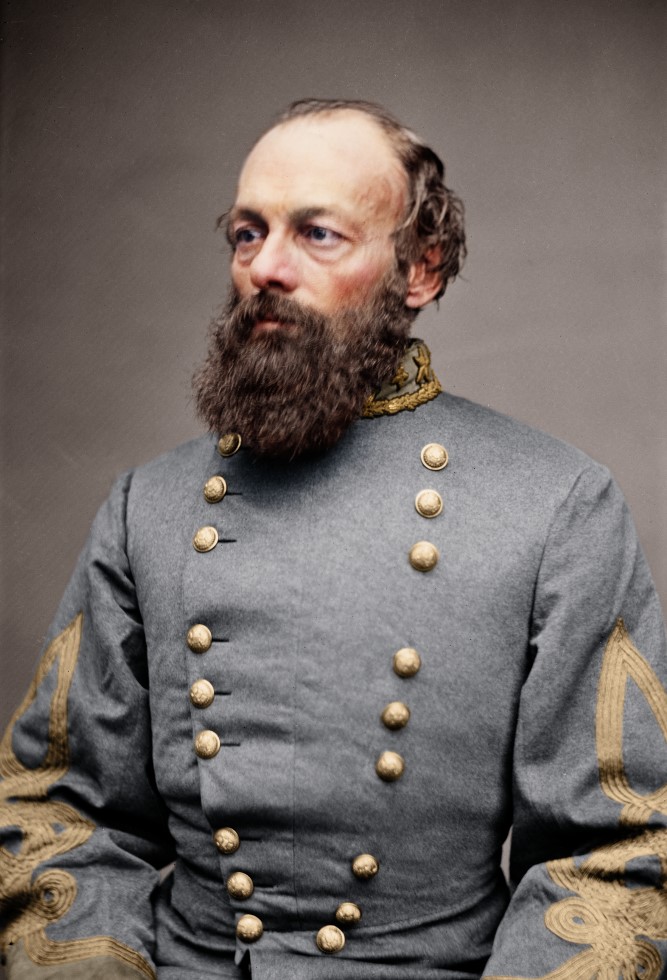
In mid May the new commander of the Trans-Mississippi – just 3 months on the job - 39 year old General Edmund Kirby “Seminole” Smith (above) , faced a mounting crises with shrinking resources. 

Two years before, in March, the Confederacy had lost its most populous city, New Orleans. In April of 1862 the Yankees of had driven the government of what had been the richest state in the Confederacy  from it's capital, Baton Rouge. In January of 1863  Smith had surrendered the new capital of  Oposlusa. And in early May, from it's 4th capital Alexandria,  on the Red River. Since March the government had been isolated 124 miles northwest of Alexandria, in the small town of Shreveport - half a mile to the east of Smith's headquarters at Fort Johnston, and just 40 miles from the Texas border.
The little capital of Shreveport (above) -   between hills and the Red River -  was jammed with about 6,000 whites and 3,000 slaves – almost double it's antebellum population. The Shreveport Arsenal, under Captain Frederick Peabody Leavenworth, was busily producing ammunition and repairing weapons, now with additional workers evacuated from the Arkadelphia, Arkansas Ordnance Works. But the only way to get that production to the armies was by horse drawn wagon. The Red River supply line was now blocked at Alexandria. The closest railroad to Shreveport was the line from Marshal, Texas - which stopped 5 miles short of town. The only other railroad came no nearer than Monroe, 100 miles to the east.
Almost 200,000 men from the Trans Mississippi were serving in Confederate armies - 60,000 from Arkansas, almost 60,000 from Texas, 50,000 from Louisiana, 30,000 from Missouri and 2,500 from New Mexico Territory. But by mid-May of 1863 all those men were beyond reach. Kirby Smith could muster barely 30,000 men in the Trans Mississippi. And those few were short of training, uniforms, food, ammunition and medicine because the “gray back” Confederate currency used to buy supplies was almost worthless. The view from Fort Johnson was so depressing, Smith began to consider resigning from the army and retreating into a Jesuit monastery.
Seventy miles southeast of Shreveport, at Natchitoches, commanding about 4,000 scattered men, was 36 year old Major General Richard Scott "Dick" Taylor. He had spent the spring being pushed up the Bayou Teche, even suffering the insult of having his own plantation burned to the ground. Even after Yankee Major General Nathaniel Banks withdrew 3 divisions down the Red River to attack Port Hudson, Taylor's army was still too small to confront the 10,000 Yankees as they backtracked down Teche Bayou to Brashear City, the western terminus of the railroad out of New Orleans. Never the less, the ex – President's son had a plan.
General Taylor would write after the war that as he re-entered Alexandria, he received word that, “...Major-General Walker, with a division of infantry (Walker's Greyhounds)...would reach me within the next few days”.  Taylor had no doubt how best to use 4,000 fresh soldiers. “I was confident that, with Walker's force, Brashear City could be captured...(And when) Banks's communication with New Orleans..._(was)threatened....(this) would raise such a storm as to bring General Banks from Port Hudson, the garrison of which could then unite with General Joseph Johnston in the rear of General Grant.”
Major General John George Walker (above)  was another of the qualified field officers in the Army of Northern Virginia who were transferred west in June of 1862, after Robert E. Lee took over in Virginia. So, in November, Walker took command of 12 Texas regiments in 3 training camps in Lonoke County, central Arkansas. The staging posts had originally been called Camp Hope, but in the fall 1862 measles and typhoid swept through the 20,000 recruits, killing 1,500 of them, including newly promoted Brigadier General Allison Nelson. Thereafter the soldiers referred to the place as Camp Death, but the War Department preferred Camp Nelson. Walker earned his men's respect by paying attention to camp hygiene, which cut the death rate by two thirds.
A brigade of the Texas Division, under Brigadier General Thomas J. Churchill, was detached to occupy Fort Hindman at the Arkansas Post in January of 1863, but was lost when that position was captured by Major General John Alexander McClernand. Until late April, Walker's men remained in central Arkansas, in case the Yankees made another strike toward the capital of Little Rock. But once General Smith could confirm that Grant had crossed the Mississippi to attack Vicksburg, he decided he could risk 6,000 of Walker's men to cut the Yankee supply line.
They set out on foot the morning of Friday, 24 April, 1863. Eight days and 78 miles later they crossed the border into Louisiana. They made 16 miles on Saturday, 2 May, and another 16 on Sunday, 3 May, camping that night on the banks of Bayou Bartholomew. Following that tributary south for 2 more days, and 15 miles, brought Walker's division to Washita, Arkansas, where they were met by a dozen steam boats, which carried them to the town of Trenton, opposite the town of Monroe, western terminus of the Vicksburg railroad. The 6,000 rebels camped that night, 2 miles south of Trenton. That night they informed General Smith they had finally arrived in the theater of operations.
While General Smith considered what to do with Walker's Texas division, local commander, and Texan, 44 year old Brigadier General Paul Octave Hébert, tried to pilfer a brigade for his own needs. But Walker was able to fall back on his orders from General Smith, to keep his division together.
Eventually, Smith decided it would be better to send the Texans back to Arkansas, where they would be safe from both the Yankees and sticky fingered Confederate generals. So at 8:00 a.m., on Saturday, 9 May, the 6,000 Texas soldiers re-boarded transports (above)  for a return voyage to Washita. But as the boats headed north, General Taylor would re-direct Walker and his men to his join his southern assault on Brashear City.
The Texans waited until Friday, 15 May, for their supply wagons to arrive from Washita. The next day, Saturday, 16 May, as Grant's Yankees were driving Pemberton's rebels back behind the forts at Vicksburg, the Texas Division retraced their steps 17 miles southward. Over the next 8 days General Walker's Greyhounds marched 150 miles, finally reaching Alexandria, on Wednesday 27 May –which is when General Smith in Shreveport finally learned of Taylor's revival of his proposed advance down Bayou Teche.
Taylor would claim that both Confederate Secretary of War James Seddon and President Jefferson Davis had approved his fantastic, almost fantasy, plan to threaten New Orleans. But Taylor's boss, General Kirby Smith (above), did not.  As they retreated from Alexandria, the Yankees had burned and destroyed everything in Cajun Country which might support an advancing rebel army.  So Taylor's plan depended upon capturing Yankee supply depots to feed and arm his now 8,000 men, and that, in the opinion of General Smith, was not likely to happen. And even if it did, it would leave half of the Trans Mississippi army isolated in the far south west corner of the theater. Besides, Smith had been receiving an almost endless stream of orders from President Davis to do something directly to rescue Vicksburg – under cutting the claim Davis supported Taylor's fantasy.
General Taylor (above) whined, “ I was informed that...public opinion would condemn us if we did not try to do something.” So Smith's original orders stood. On Thursday, 28 May the Texans changed their line of march, now heading 40 miles over 3 days toward the port called Little River. There they prepared 2 day's rations before again boarding steamboats, this time heading north up the Tenas River.
Taylor and Walker were to advance toward Richmond, Louisiana, on the Shreveport and Vicksburg railroad, and strike from there to capture Young's Point and Milliken’s Bend, thus cutting Grant's supply line down the western bank of the Mississippi. Taylor remained skeptical. “The problem was to withdraw the garrison (of Vicksburg), not to re- enforce it”, he wrote.  But in all fairness, that was not Smith's plan, either. He wanted to force Grant to withdraw from his positions in central Mississippi, by cutting his supply line. 
The problem was that the week earlier,  Grant had shifted his supply base to the Yazoo River at Chickasaw Bayou and Snyder's Bluff. So after a month's worth of exhausting marching and counter-marching, General Smith's plan had failed before it had ever been launched.
- 30 -

Saturday, September 25, 2021

VICKSBURG Chapter Sixty-Nine


Shortly after the battle of Plains Store, Lieutenant Colonel James Francis O'Brien sought to rally his hometown of Charlestown, Massachusetts to the suddenly unnerving cause of freedom. He began by denouncing the rebellion, “ which has caused thousands of our citizens to fill bloody graves.” And he had no doubt as to the cause of all this misery, identifying it as “the noxious institution of slavery”. 
However,  many in the north felt that fighting to defend the Union of the States was one thing, while fighting to free black skinned men, women and children was something else. The Irish in Boston were at the bottom of America's economic ladder, and saw ex-slaves as competition. But O'Brien wanted his fellow citizens to see the connection between their lives and freedom and the freedom of others.
He wrote, “Slave labor feeds our enemy in the field, digs his ditches, and builds his fortifications. Every slave liberated by our arms is a diminishment of rebel power. Every slave who wields a spade or musket in our cause is so much added to our strength.” Then James went further. “Now ...our blood is up, our armor is buckled on, the shield and sword are in our hands, and we are ready to stand on the blood sprinkled fields of our ancestors and swear in the presence of high heaven that this Union in which the happiness of unborn millions reposes, shall live.” In that one breathless appeal, an Irish immigrant had seen the yet unborn of African ancestry joined with the yet unborn of Irish descent as partners in any future America.
At 2:00 a.m., on Friday, 22 May, 1863, the men of 34 year old Brigadier General Cuvier Grover's division began landing at Bayou Sara. Often sited for bravery - he had even led a bayonet attack against “Stonewall” Jackson at Seven Pines – Grover was a courageous and smart commander. And he did not let a driving rain storm prevent his 4th division from securing the crossings of Thompson's Creek before nightfall and meeting up with Yankee cavalry.  Immediately behind came the 3rd Division of 37 year old curly haired Wisconsin lawyer, Brigadier General Halbert Eleazer Paine.
Also landing at Bayou Sara were 6 regiments of the Corps D'Afrique and the 4 regiments of the “Native Guards”, under 53 year old New York lawyer, Brigadier General Daniel Ullman (above). 
Ulman had approached Lincoln a year earlier, and urged him to allow black men to fight for their own freedom.  And now he was leading almost 5,000 of them into battle. The war was about to change in a very fundamental way.
Inside the trenches of Vicksburg, staunch rebel Emma Balfour was learning to face the transition into this new world. “If you see a shell burst above you,” she told her diary, “stand still, unless it is very high; if it be the sound of a Parrot, the shot has passed before you heard it...” 
She thought the Yankees lacked respect for the rebels, alleging they were firing at the city, “...thinking that they will wear out the women and children and sick, and Gen. Pemberton will be forced to surrender the place on that account, but they little know the spirit of Vicksburg’s women and children if they expect this. Rather than let them know they are causing us any suffering we would be content to suffer martyrdom.”
But Brigadier General William Tecumseh Sherman, facing the extreme right of the Vicksburg defenses,  had something more aggressive in mind. Two rebel cannon threatened his sappers trying to dig an outflanking trench south of Mint Spring Bayou. Because of the swampy ground in the area, he could not place his own artillery to suppress their fire. He asked 59 year old Admiral David Dixon Porter for the use of a single ironclad boat to knock out the offending battery.
The problem, from Admiral Porter's viewpoint, was that any gunboat sent to deal with these two guns would have to pass within range of the Upper Water Battery, at the foot of Fort Hill – three 32 pound rifled cannons, one 32 pound smooth-bore cannon and a single 10” Columbiad. There was no ship in Porter's brown water navy which could stand up to that kind of point blank fire power in daylight. And the gunboat had to come down in daylight, and hug the eastern bank, to hit the 2 offending rebel guns. In short it was damn near suicidal. Still, Porter had not yet turned down a request for help from the army, and he had no intention of starting now.
Porter chose the USS Cincinnati  for the mission - a 512 ton, 175 feet long stern wheel ironclad, with a crew of 251 officers and men. She had just arrived from Cairo, having been rebuilt after being sunk in May of 1862, at Fort Pillow. And she was now steaming under the command of a great-great-grandson of Ben Franklin, 21 year old Lieutenant George Mifflin Bache, Jr. (above) 
The Cincinnati (above) could make 4 knots on her own, and steaming with the current south around the Desoto promontory she would be making almost 7 or 8 knots relative to the shore batteries, which gave her at least a chance of getting her four 32 pound port side rifles close enough to silence the offending cannon. In preparation they covered her deck in layers of green wood, and stacked hay around her boiler, intending to soak it in river water just before setting out.
And then the Cincinnati had a stroke of luck. Observers on the western shore reported that the guns of the Water Battery had disappeared. At least one was seen being manhandled out of the battery, so presumably they had all been shifted to strengthen the landward defenses. Lieutenant Bache was told his odds of surviving the mission had just improved substantially. Except they hadn't. Only 1 gun, the smooth-bore 32 pounder, had been moved. The other three 32 pound rifled cannon and the big Columbiad were still there, sitting low on their carriages and no longer visible from the western shore.
Leaving the guns recessed was the idea of battery commander, 20 year old baby faced Captain William Pratt “Buck” Parks (above), out of Little Rock, Arkansas. If he had not been plagued with reoccurring bouts of illness, “Buck” might have become a major by now. After his latest absence he was returned to duty as a quartermaster, and might have been at least partially responsible for the great Vicksburg pea bread disaster. Clearly his skill was as a line officer, which he displayed after being abruptly transferred to the Arkansas Battery, aka the Upper Water Battery.
On Tuesday, 26 May, 1863, the attentive Captain Parks read a coded message being flashed via Yankee semaphore flags down the west bank of the Mississippi. And he broke the code. A federal ironclad gun boat was coming down tomorrow morning to knock out two guns on the extreme right flank of the rebel line. Overnight Parks added piles of cut brush to camouflage the now raised guns. Amazingly not a single Yankee noticed, or if they did, did not bother to notify the Cincinnati.
At about 8:30 a.m., Wednesday, 27 May, 1863, the USS Cincinnati steamed around the tip of the DeSoto peninsula. Less than thirty minutes later it was all over. The first round fired by Park's guns was a 32 pound shot, at point blank range. It blasted through the Cincinnati's 2 ½ inch sloping armor like paper, plowed through the gun deck, penetrated the magazine and passed through the keel, breaking the gunboat's back. 
As the Mississippi began flooding into the ship, the second rebel shot sliced her tiller ropes, damaging her steering. The third shell passed through the pilot house, killing the helmsman and injuring several men next to him. Lieutenant Bache took the wheel. Standing now in the center of a sudden hell, he wrote, “ The enemy fired rapidly, and from all their batteries... hitting us almost every time. We were especially annoyed by plunging shots...(which) went entirely through our protection hay, woods, and iron. “
According to the correspondent for Harper's Weekly, “She went gallantly into action...and blazed away at the rebel batteries,.” But with a barrage of rifled shells cutting through the armor, Bache turned the Cincinnati back up stream. This immediately cut the ironclad's speed to a mere knot against the current, leaving her a sitting duck. “I ran her upstream,” Bache reported, “and as near the right-hand shore as our damaged steering apparatus would permit...we ran close in, got out a plank, and put the wounded ashore. We also got a hawser out to make fast to a tree to hold her until she sunk.”
In his report to Admiral Porter, Bach figured “...about 15 (men) were drowned and about 25 killed and wounded, and 1 probably taken prisoner.” The good news, according to the Lieutenant, was that, “ The boat sank in about 3 fathoms of water, lies level, and can easily be raised....” Also, “The vessel went down with her colors nailed to the mast, or rather the stump of one, all three having been shot away. Our fire until the magazine was drowned, was good, and I am satisfied did damage.”
The truth was the Cincinnati barely fired a round, and hit nothing. So after gambling a $90,000 vessel ($25 million in today's dollars), and a crew of 250 men, the government of the United States lost the boat and 50 men, and gained nothing except making it clear again to their enemy they would spare no expense in wealth or life to capture Vicksburg and destroy the rebellion.  And now that also meant freeing, training and arming black slaves.
- 30 -

Blog Archive