August 2025

August  2025
I DON'T NEED A RIDE. I NEED AMMUNITION.

Translate

Showing posts with label Ohio. Show all posts

Monday, August 25, 2025

THE PETER PAN PRINCIPLE

I assume you have heard of the most famous work by Dr. Laurence Peter, who created "The Peter Principle.” It states that in any hierarchy “every employee tends to rise to their level of incompetence”. Well, I have observed a related behavior in human males which I call “The Peter Pan Principle”. 

Peter Pan was the theatrical character, the boy who never grew up, and my theory postulates that some males emotionally stagnate in adolescence.  And my example is the life long adolescent, Arthur Brown , second cousin to Calvin Coolidge, and a man whose dramatic life reached its pinnacle on the floor of the U.S. Senate, and its nadir ten years later and a block away, on the floor of a hotel bedroom. To put it another way - Arthur Brown slept his way to the bottom.

Arthur  (above) grew in up in the 1840's on a Michigan farm, with two older sisters - he was a baby Moses floating on the estrogen Nile. Family friends generously described him as possessing a “keen intellect” but less perceptive on “moral issues”.  

When Arthur was 13 his progressive minded parents dragged him to the center of Ohio so that his older sisters could attend the Unitarian funded Antioch College (above).  And Arthur eventually entered that institution as well.   As was to be expected given its progressive coeducational provenance, the academic standards at this institute of higher learning were high, while the standards of discipline were a bit fuzzy. 

The students did not pass or fail, they instead received a “narrative evaluation” for each class. It was the perfect environment for Arthur, giving him easy access to mother figures and women he could manipulate. In short he seems to have been confused as to the advice of the school's first President, Horace Mann; “Be ashamed to die until you have won some victory for humanity.”

After graduating from Antioch, Arthur earned a law degree and spent the Civil War years back in Kalamazoo Michigan, building a successful criminal law practice, marrying, and fathering a daughter. And when his mid-life crises came, Arthur's response was almost pre-ordained. 
He fell in love with a younger woman - Ms. Isabel Cameron (above), daughter of the powerful Republican State Senator, David “The Don” Cameron, and wife of a clerk.  Arthur bought his new mistress a horse and buggy, and rented her a house. 
Now, no rational person would have expected to keep such a high profile romance secret in a town of just 20,000. And one night in 1876 Arthur's offended spouse surprised the loving couple in his law offices. Mrs. Brown was armed with a loaded revolver, but luckily she proved a poor marks-woman. The entire town sided with the wife when she threw Arthur out on his ear.  The man-child Casanova now moved to Salt Lake City, Utah Territory, evidently under the mistaken impression that Mormons were open to open marriages. 
Arthur was expecting to be appointed the U.S. District Attorney for Utah, but the pall of smoke from the Republican bridges he had burned in Kalamazoo obscured his prospects. So he opened a law office at 212 South Main Street in Salt Lake City (above), where he quickly duplicated his Michigan success. The local newspaper judged Arthur to be “a good hater,.” and described him as “Gentile in faith, but a Mormon in practice.” Little did they know. 
By 1879, when he was rejoined by the still smitten Isabel,  Arthur (above) was a millionaire. And the instant his Michigan divorce was finalized, Isabel became the second Mrs. Brown. Arthur bought a fine house in the fashionable section of South Temple Street, and, in time produced a son - his second -  whom they named Max. 
In 1894 Arthur was sent to Washington as one of Utah's  first two senators. The New York Times described him as “an intense, bitter partisan...Always pugnacious...”  His honorary post ended after only one year, and he did not run for election. He returned to his profitable law practice and his family, in that order.  In 1896 Arthur was a delegate to the Republican National Convention held in St. Louis. 
And it was there he met his next mistress (that we know of), secretary for the local Republican party, Mrs. Anne Maddison Bradley (above). He was 53, and she was 23.  It became apparent that Arthur had a type - younger.
Annie was the editor of the Salt Lake City Woman's Club magazine, a member of the Woman’s Press Club and the Poet's Roundtable. She was also a charter member of the Salt Lake City Unitarian Church. She was everything a rich Unitarian might seek in a mistress, if you overlooked her clerk husband, Clearance A. "Ned" Bradley and their two children.  But wouldn't that just make her more likely to be discreet? 
The convention (above) nominated William McKinley on the first ballot, allowing Arthur and Anne to consummated their affair so quickly that Arthur overlooked yet another impediment to his new mistress - a vine of insanity intertwining several roots of  Madison family tree.
Back in booming Salt Lake City (above), Annie at once separated from her husband, Clarence. He started drinking to excess, and then gambling to excess. A couple of years later Clarence conveniently ended up in jail.  Anne testified later that Arthur then “...began coming to my house at very unseemly hours, and I told him it must stop, but he answered. 'Darling, we will go through life together. I want you to have a son' and after several months we did.”  
Arthur Brown Bradley (above) was born 7 February, 1902. Shortly thereafter Arthur took a suite at the Independence Hotel. He informed Isabel - remember wife number 2? -  that he was going to file for divorce. He even took Annie with him on a trip to Washington, D.C,  staying in adjoining rooms at the Raleigh Hotel, just behind the Capital, at the corner of Pennsylvania Avenue and 12th street.
When the divorce papers arrived back in Utah, Isabel was finally spurred to action.  When hitting Arthur with a horse whip did not dissuade him from seeing his mistress, Isabel had both Arthur and Annie arrested and charged with adultery - four times in six months.  The Salt Lake City “Desert News" was present at the last arraignment. Said the News, “Arthur Brown On the Rampage...Says He Was Knocked Down By an Officer.” 
Arthur accused the police of notifying the newspapers in advance of his arrest - it was probably Isabel - and denounced the arrest of Annie -  in a very loud voice. “They dragged her through the streets", he shouted, "One on each side of her. Armed to the teeth. Cowards! Cowards! Cowards!” 
Judge Christopher Diehl asked Arthur, “How do you expect to keep such things out of the papers when you yell so you can be heard for two blocks?” Eventually the headlines would read, “Arthur Brown Goes Scot Free.”  But all the dramatics took a toll on Arthur's reputation and his income.  
His last arrest forced some reflection and re-evaluation upon Arthur. He moved back into the house on South Temple (above) with Isabel.  Annie was offered a house of her own and $100 a month to stay away from Arthur. To Arthur's great surprise, she turned it down. 
And a few months later Arthur slipped away to meet Annie in room 11 of the Pacific Hotel in Pocatello, Idaho.  Their passionate reunion was interrupted by Isabel banging on the door. Arthur admitted his wife, at the same time asking his law partner - what the hell was he doing there? -  to please, “Come in, I don't want to be left alone here with them.”
Annie, the mistress,  began civilly enough. “How do you do, Mrs. Bradley? I have wanted to talk to you.”  But Isabel's first instinct was not for conversation. She clamped her hands around Annie's throat and began throttling her. 
The men separated the combatants, and the women spent the next several hours screaming accusations at each other, while Arthur cringed in the corner, if not in the center of the room, then still the center of attention. Come the dawn, Isabel returned home and Arthur Brown stupidly gave Annie a .32 caliber revolver, should Isabel seek a second confrontation. It seemed Annie had won.
But upon Annie's return to Salt Lake City, Arthur's law partner informed her that Isabel and Arthur had “reconciled”.   The offer of a house and weekly stipend was renewed, and Arthur now pointedly denied his paternity of Annie's son, Arthur Brown Bradley.  And being three months pregnant with yet another gift from Arthur, Annie reluctantly agreed to cease and desist any contact with the adolescent lawyer.  She gave birth to her second child by Arthur, on 24 November, 1903.  But to prove she had not given up on her obsession,  she named the new child Martin Montgomery Brown Bradly. 
Despite promises to his wife, Arthur maintained a discreet contact with Annie, at least until August of 1905, when Isabel died of cancer. Abruptly the path seemed cleared for Annie and Arthur to marry. But they did not... that is, Arthur did not make any offer of marriage.
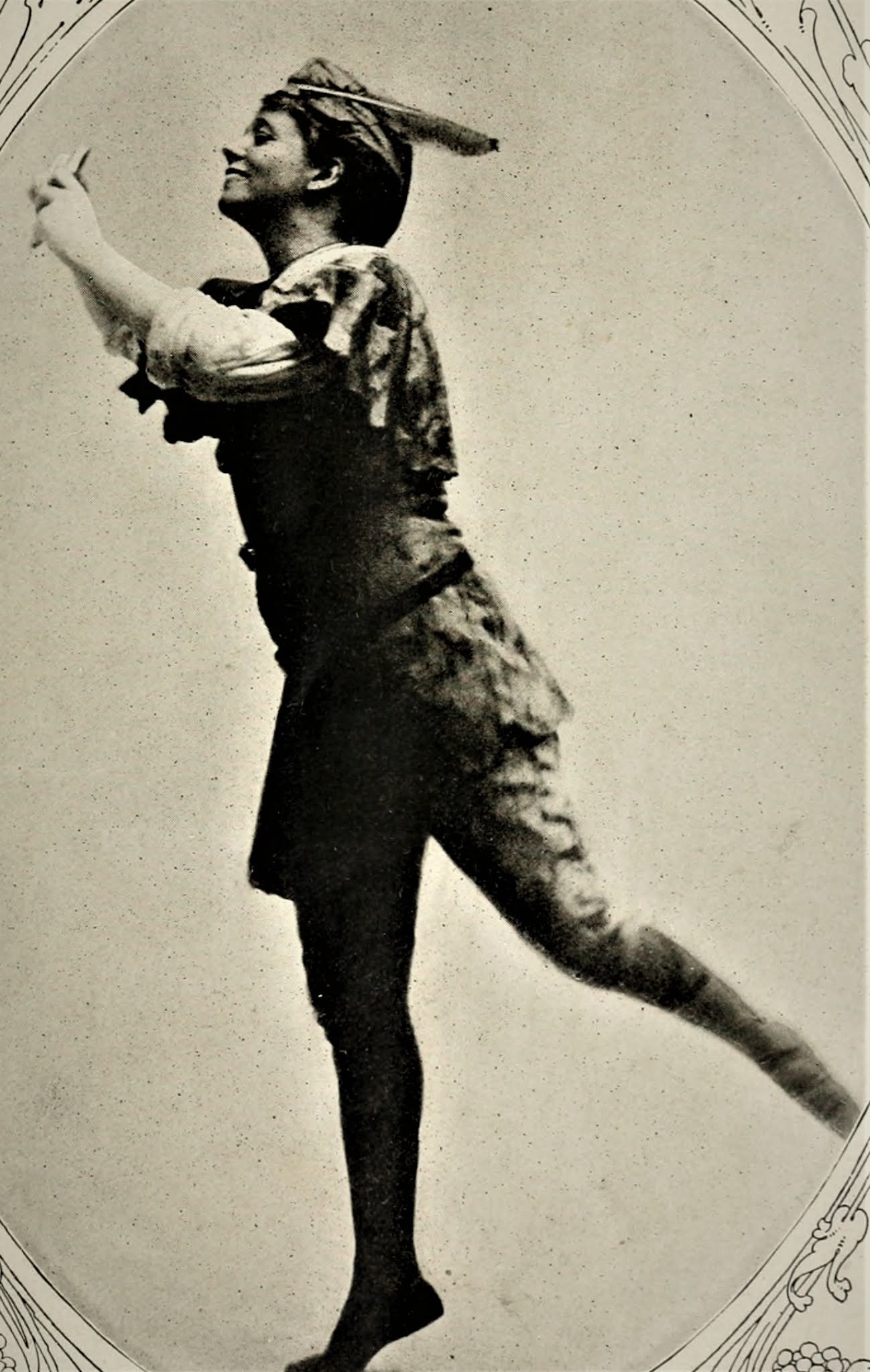
He was 63 years old now, and already had another mistress, someone closer to his own age for a change,  She was Ms. Annie Adams Kiskadden (above, left). She was the mother of Maude Adams (above, right), Utah's famed actress, best known for originating the stage role of Peter Pan. 
If she did not know about the past mistress, Annie Bradley must have suspected this one. She was now 33 years old herself, divorced, the mother of four, and had no income. Swallowing a little more pride she asked her millionaire boyfriend for $2,000 to start a new life.  Arthur Brown ignored that request, but did present her with a one way train ticket to California for herself and the children. Then he left for Washington, D.C. 
This slap in the face finally snapped something in Annie, just the way something had snapped in the two previous Mrs. Browns, one after the other, before her.  Annie traded in her ticket for herself and her sons to California for a one way trip for herself only to Washington, D.C.
Annie arrived in town on Saturday, 8 December, 1906. As she expected, Arthur was registered again at the Raleigh Hotel (above). Annie registered as Mrs. A. Brown, and took the room next to Arthur's. 
Conning the maid into opening the connecting door, Annie searched Arthur's room until she found letters from Annie Adams Kiskadden, which discussed marriage plans. No one should be surprised that after waiting for Arthur's return, Annie shot him with the very gun he had given her for self defense.  I guess you could say that's what she used it for.
What can you say about a man who keeps inspiring the women in his life to shoot at him? Once might be an accident,. twice might be an unlikely coincidence - but three times? And the last time, he supplied the gun!  When the hotel manager bent down over Arthur (above), he said only, “She shot me.” As if he was surprised. 
Indeed, she had. Judging by the powder burns on his hands the Unitarian gigolo was reaching for the gun when Annie pulled the trigger. And six days later the gentile polygamist  died -  13 December, 1906. His obituary in the New York Times noted with faint praise, that Arthur had been “intensely loyal to his male friends.” 
As final proof of his childish character, Arthur's will renounced both of his sons by Annie. “I expressly provide that neither or any of them shall receive anything from my estate.” It almost makes you wish he had lived, so somebody could have shot the S.O.B a fourth time.
A  jury agreed. Annie had entered a plea of “temporary insanity” but almost on the first anniversary of the shooting, and after just nine hours of deliberations, the jury instead found Annie simply not guilty. The misdirected Juliet walked out of the court room a free woman. 
Annie returned to Salt Lake City (above) and opened an antique store called “My Shop” And she made a success of it, running her own business, raising her two sons by Arthur on her own, until her death on 11 November, 1950.
Thus the life of Arthur Brown, who never seemed to get any older than he was at the age of twelve. And don't we all know at least one like guy like that? 

                                      - 30 - 

Thursday, March 13, 2025

HOLY TOLEDO - FIGHTING OVER SWAMPLAND


I would say 1835 was, like most years, a revolutionary year in America. North of the Rio Grande  pro-slavery gringo emigrants rebelled against Mexican anti-slavery laws. In Boston, five thousand  white supremacists broke into a meeting of the Anti-Slavery Society, and dragged abolitionist William Lloyd Garrison through the streets at the end of a rope (above, center).

 In South Carolina 36 slaves and one 60 year old free-black carpenter were hanged for allegedly organizing a slave revolt (above). Meanwhile, far to the north, along the shores of Lake Erie, free whites did their very best to start a civil war over possession of 268 square miles of a swamp known as “The Toledo Strip”.

In truth, the Great Black Swamp was what film maker Alfred Hitchcock would call a "magoffin'. It was not what people were really fighting over, even though it was what people said they were fighting over. It was not even much of a swamp by Louisiana standards.
It was great only because it occupied a swath of land 40 miles wide and 120 miles long, in the northwest corner the new state of Ohio – which was a little far north for a swamp.
It was a remnant of the ice ages, a collection of ponds and marshes interspersed with drumlins, all filled and drained by the 130 mile long Maumee River, which rose from the high ground around Fort Wayne, Indiana and fed into Lake Erie, which formed the northern border of Ohio.  It's only claim to fame was that it formed a natural barrier between the state of Ohio and the territory of Michigan. The Great Black Swamp provided a bumper crop of mosquitoes each summer, and they, and the malaria they carried, made life difficult for any intrepid surveyors who might set up their theodolites upon such soggy ground.
The first real attempt to draw the border through this "mish marsh" was made in 1817, when Former Ohio Territorial Governor and U.S. Surveyor General Edward Tiffin (above), hired surveyor William Harris to mark the southern boundary of the new Michigan Territory.
According to the “Harris Line” the mouth of the Maumee River was in Michigan, and just blow the northern edge of the swamp.  In 1818 Ohio responded by hiring John Fulton to survey the border, which he found five miles further north, avoiding the swamp by going above it. 
Taken together the two lines bracketed the head of Great Black Swamp. And while the desire of each surveyor to avoid all those mosquitoes was understandable, the residents of Ohio and Michigan were confused as to where the border between them actually lay. They appealed to Washington, D.C.  But abiding by the political rule that whatever you do will make somebody angry, the Federal politicians decided to do nothing. After all, nobody would fight for ownership of a swamp.
Then in 1825 the Erie Canal (above) opened, connecting the port of New York City with the Great Lakes. It proved to be such an economic revolution that plans were immediately drawn up for a port at the mouth of the Maumee River, and a canal past the swamp to the high ground at Fort Wayne, Indiana - Hoosier statehood having been granted in 1816. The dreamers then envisioned a canal from Fort Wayne southwest to the head of navigation on the Wabash River, at Lafayette. From there boats could carry the bounty of Hoosier farms to the Ohio River, thence to the Mississippi, New Orleans and the world.   
Those canals would make the port at Toledo (above, which had been established at the mouth of the Maumee River) as the hub of transportation for the entire center of the continent. A Toledo lawyer, John Fitch, noted that already it was the general opinion that “no place on the lake except Buffalo will rival it.” 
Michigan politicians became convinced Ohio politicians were plotting to steal Toledo, Michigan from them. Which was true.  And Ohio politicians found they could raise money and votes by denouncing the thieves from Michigan. Whereupon the wolverine con men copied the buckeye conmen. And things quickly escalated.
The politics finally solidified when hot-headed 23 year old Stephen Thompson Mason (above) was appointed territorial secretary and acting governor of Michigan Territory. He was a gift from President Andrew Jackson, a man who appreciated hot heads.
Mason (above, left,  in the dark top hat)  rallied his followers by saying, "...we are on the side of justice…we cannot fail to maintain our rights against the encroachments of a powerful neighboring state.” And on 12 February, 1835,  Governor Mason issued the “Pains and Penalties Act”,  making it illegal for a non-Michigan resident to enforce Ohio law in Toledo, Michigan Territory.
The Cleveland, Ohio newspapers called the Michigan claim to Toledo “as absurd as it is ridiculous.” And on 23 February, the defiant Ohio General Assembly, playing to their own base, voted to “run the border” of the Fulton Line -  meaning to mark it again as Toledo, Ohio, with stone posts that clearly said so. 
Then on April Fool’s day Michigan held  elections in the Toledo Strip. One week later, on 6 April, Ohio held competing elections in the Toledo Strip. Somebody was going to have to disappoint their supporters.
Two days later a Michigan Country sheriff and an armed posse of 40 men rode into Toledo to enforce the Penalties Act. Several men snuck into the home of Benjamin Franklin Stickney (above), a major in the Ohio militia, who was either an “Ohio patriot” or a "Phio Nut" - depending on which side of the border you lived on.  
Now, even allowing for dysfunctional parenting, the level of strangeness displayed by Benjamin Stickney is staggering.  This respected member of the Ohio community and one of the founders of Toledo, named his eldest son “Number One” and his younger son “Number Two”. Stickney also had a daughter, but we can just call her “Light Sleeper”.
You see, on the night of 8 April, 1835,  Miss Stickney was awakened by a noise, and stepped into the hall to investigate. A creeping Michigan deputy clamped a hand over the startled child’s mouth, and held her silent, lest she shout a warning to her father.  Alas, Benjamin Stickney would not have heard her, as he was not at home. So two of his house guests were arrested and taken north for arraignment. Two days later they were released on bail. Or ransom, depending your state of residence and mind.
In handbills and letters to Ohio newspapers Major Stickney inflated the posse to 300 men “armed with muskets and bayonets".  He claimed the deputies had tried to gouge out his eyes (he wasn't there)  and had “throttled” his daughter.  He urged his fellow buckeyes to “turn out en masse to protect  their northern border and restrain the savage barbarity of the hordes of the north.”  You see, Major Stickney had a lot of money invested in Toledo, Ohio. 
Ohio Governor Robert Lucas (above), another Jackson Democrat, sent 40 men to guard his two surveyors "running" a new border line" - 29 year old Colonel Jonathan Emmerson Fletcher, and Colonel Sebried Dodge. 
The governor then went further and ordered the 100,000 members of the state militia to assemble in the tiny town of Perryville, Ohio (above), just up the Maumee River from Toledo. Only 10,000 actually responded,  and most of them never got to Perryville, because they got lost in the swamp.
Meanwhile on Sunday, 21 April 1835,  a 30 man Michigan posse caught the Ohio “line runners” relaxing in camp at a cross roads bordering a field owned by Michigan Militia Colonel Eli Phillips (above).   Most of the buckeyes broke for the woods and escaped, but nine were caught in the open. And when the badgers fired a volley over their heads the buckeyes wisely surrendered. 
All nine were arrested for violating the “Pains and Penalties Act”.  And on Monday morning six were granted bail and two more were released with just a warning to behave.  The only Ohioan who remained in jail was Jonathan Fletcher, the hot headed surveyor, who refused to post bail “on principle.”  In the annals of Michigan this encounter was memorialized as the “Battle of Phillip’s Corner” (above). 
The whiff of gunpowder brought a temporary degree of sanity back to "Boy Governor" who was not really a governor. Thomas Mason, suddenly discovered he was pretty far out on a political limb. And in the spirit of good will he temporarily suspended enforcement of his Pains and Penalties Act. 
But now it was the Ohio legislature’s turn to appease their base. Kidnapping was already illegal in Ohio, but buckeye politicians now felt it necessary to pass a new law providing hard labor for kidnapping anyone from Ohio. And they made Toledo (above) the capital of a new Ohio county.
In Toledo one observer noted “Men (were) galloping about – guns getting ready – wagons being filled with people and hurrying off, and everybody in commotion “ The little town of just 1,250 citizens had become a magnet for every nut case, political hot head and pugnacious drifter in the old Northwest Territories, looking for a fight.
 In July, two Michigan deputies tried to hold an auction of property seized for non payment of Michigan taxes, and a gang of Ohio “patriots”, led by Number Two Strikney, broke up the auction.  So, on 12 July 1835 a Michigan arrest warrant was issued for the son-of-a-patriot, for disturbing the peace.  Number Two, upon learning of the warrant, sent a message to the Michigan Sheriff to stay out of Toledo, Ohio, if he wanted to live.
That threat set Michigan Governor Mason off again. He ordered 250 men into Toledo, under Deputy Sheriff Joseph Wood, to arrest Number Two and his "gang".  Most of the Ohio “patriots” ran safely for the Maumee River border, but Number Two didn’t make it. 
When Sheriff Wood physically grabbed Number Two, the deuce displayed what in Ohio was called a pen knife and in Michigan was described as “a dirk”.  Whatever the size of the blade,  “Two” stabbed the sheriff in the leg and then disappeared across the Maumee River (below). 
The wound was minor and the sheriff was able to ride home that night, having paused to finally arrest Number Two’s father, the infamous Major Stickney, and drag him back to Michigan, tied to the back of a horse. But before leaving town the Michiganders also smashed the offices of the pro-Ohio Toledo Gazette, behaving, claimed the paper, worse than an “Algerian robbery or Turkish persecution.” It seemed the residents were finally running short of hyperbole. What was left but gunpowder?
It was at this point that Andrew Jackson finally stepped in. How dare these common political jackasses act as if they were by God Andrew Jackson himself!  On 29 August, 1835 the President removed Mason as governor of Michigan Territory.  Party leaders let it be known that Michigan would only be allowed to become a state when they accepted that Toledo was a town in Ohio. It was a bitter pill for the Badger rabble to swallow, particularly after all that rabble rousing.  But in that instant the heat seeped out of the issue.
As a sop for hurt badger feelings, the federal government granted Michigan the additional territory now known as the Upper Peninsula. Michigan was finally admitted into the union as a state, sans Toledo, on 26 January, 1837.
So Ohio won. The canals were dug, and the buckeyes benefited from the taxes paid by the port at the mouth of the Maumee River.  In 1842 1,578 barrels of flour and 12,976 bushels of wheat were shipped through Toledo, and taxed by Ohio.  By 1852 the totals were a quarter million barrels of flour and almost two million bushels of wheat. 
But Toledo did not become the transportation hub for the Midwest, because canal technology was superseded by the railroads, and Chicago superseded Toledo; which the Ohio patriots might have predicted in 1835 if they had calmed down and calmly thought about it for a few moments.
Meanwhile, in 1844, another party of surveyors were investigating and staking out the second place prize for Michigan, the Upper Peninsula,  when they found their compasses spinning wildly. This was caused by one of the largest concentrations of iron ore ever found on the planet Earth, which was surrounded by one of the largest concentrations of copper ore ever found on the Earth. 
Beginning in 1847 and continuing over the next one hundred and fifty years, over a billion tons of iron and several billion tons of copper were removed from the Huron Mountains of the U.P.. It is figured 85% of all the steel which allowed America to win World War II came from iron stripped out of those hills.  None of the Michigan or Ohio patriots of 1835 could have predicted that. 
The truth was the future contained a bounty beyond the imagination of the patriots who willing to kill each other in 1835, all for possession of a swamp – and not a great swamp at that. It has long since been drained for farmland.  And it is a basic rule of human history - That which people are willing to murder for today, they may consider worthless tomorrow.   Folks, you might remember that rule, next time a hot head starts calling for a war. Stop and think before you start shooting. 

- 30 - 

Blog Archive