August 2025

August  2025
I DON'T NEED A RIDE. I NEED AMMUNITION.

Translate

Showing posts with label Larry McCarthy. Show all posts

Monday, November 18, 2024

ORIGINAL SIN Chapter Six


"In recent years, I have come to believe that “conservatism”....has become an arrogant defender of ideological excess and entrenched interests and privileges...(of) Wall Street, Big Energy, multinational corporations, the Military-Industrial Complex, the Religious Right, the Market Extremist think-tanks, and the Rush Limbaugh Axis...."
Kevin Phillips “Why I am No Longer A Conservative” 7 October, 2002
In the early summer of 1988 Lee Atwater (above, right) asked twenty-eight year Republican “operative” Roger Stone (above, center) to come to his Washington, D.C. Office. According to Stone – who is far from an unimpeachable source - Atwater locked the door of his corner office and then popped in a video tape. Atwater said, “`I got a couple boys going to put a couple million dollars up for this independent.'' He meant the ad had been funded by a political group with no ties to the Bush campaign. But the fact that Atwater, who was running the Bush campaign, had an advanced copy of the 30 second spot belied any claim the two groups were working independent of each other.
At 18 years of age Roger Jason Stone (above, right) had cut his dirty tricks teeth on Nixon's 1968 campaign. Before the New Hampshire primary Stone made a donation to one of Nixon's Republican competitors in the name of “The Young Socialist Alliance”, than passed the receipt for that payment to the conservative Manchester Union-Leader newspaper, which eagerly smeared the unwitting target. 
Stone became such a Nixon loyalist, he had “Tricky Dick's” face tattooed across his back. Stone insisted he did nothing illegal during the Watergate scandal, but when it later became public he was working for Senator Bob Dole, Dole felt forced to fire him. Seeking a legitimate income source Stone formed a political “consulting” firm with old friends Charlie Black and Paul Manafort and later, Lee Atwater.
Stone  (Above left) was recruited for the 1980 Reagan campaign, learning from, among others, the infamous Roy Cohn (above, right) , who had been the brains behind Republican Senator Joe McCarthy.  As an operative, Stone admitted delivering a cash filled suitcase to a lawyer representing the Liberal Party of New York. 
In the 4 November general election Reagan beat Democrat Jimmy Carter in New York by just 165,000 votes. Liberal Party candidate John Anderson siphoned almost half a million votes, ensuring Reagan won New York's 41 electoral votes. Not that Reagan needed them that year. But in any case, Lee Atwater knew fully well who he had invited to view “his” commercial.
What came to be called the “Furlough” ad began with pictures of George Bush and Micheal Dukakis side by side. The narrator began, “Bush and Dukakis on crime.” Now only Bush's face was center screen. “Bush supports the death penalty for first degree murderers,” said the narrator.
Now only Dukakis' image appeared. “Dukakis not only opposes the death penalty, he allowed first degree murders to have weekend passes from prison.”
Now the grainy booking photo of William Horton taken from the foot of his bed in the hospital ward, appeared. Horton seemed to be gazing down at the viewer, his tall “Afro” hair defiant, his eyes clouded with pain killers. Intoned the narrator, “One was Willie Horton, who murdered a boy in a robbery, stabbing him 19 times.” 
A photo of Horton being moved in police custody was then shown. “Despite a life sentence, Horton received 10 weekend passes from prison.” 
Then, as each additional offense were named, the key words appeared on the screen. “ Horton fled”, said the voice.” KIDNAPPED a young couple, STABBING the man and repeatedly RAPPING his girl friend.” 
Then Dukakis' face appears again, under first the words (also spoken by the narrator) “Weekend prison passes” and then the words, “Dukakis on crime.”
Nothing stated in the ad was untrue. But according to Stone (above), his reaction was immediate. “That's a huge mistake”, he claims to have told Atwater, “You and George Bush will wear that to your grave. It's a racist ad. You're already wining this issue. It's working for you. You're stepping over a line. You're going to regret it.'' 
 According to Stone, Lee Atwater responded at the time, ``Y'all a pussy.' But for every Republican who seems determined to argue into perpetuity that the ad is not racist, the first reaction of Roger Stone stands unchallenged – if he said it - “It's a racist ad.”
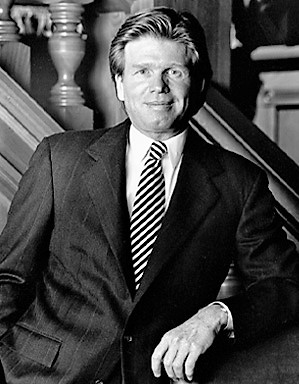
Whatever the truthfulness of Stone's version of events, something caused Atwater and or Ailes to contact the National Conservative Political Action Committee, whose name was on the ad. NCPAC was the 2 year old creation of Floyd Gregory Brown, out of Oregon. He had raised enough money through direct mail and telephone marketing to bring himself to the attention of conservative billionaires like Charles and David Koch, Robert Mercer and Peter Thiel. These wealthy extreme conservative contributors had pumped $9 million into NCPAC, and saw that it hired its most important employee, Larry McCarthy. The “Furlough” ad was physically his creation.
Lawrence C. McCarthy was Brooklyn born. After graduating from Georgetown University in 1974, he worked for several Republican congressmen, on their campaigns and as a press officer. Then in 1981 he became a senior executive for Roger Ailes. Late in 1987, however, Larry abruptly shifted to working for NCPAC. The separation from the Bush Campaign and Roger Ailes was thus no more than one degree and just a few weeks in time.
Larry McCarthy now re-edited “Furlough”. In the new version the in-hospital booking photo of William Horton was completely absent. It was replaced by a longer hold on the middle distant image of Horton in police custody. It was this new “Furlough” which was presented for “clearance” to the advertising directors of the various television stations and cable systems. 
Once they had cleared that version for broadcast, McCarthy then substituted the original “Furlough”, containing “Willie's” ominous image.
Any skepticism about the overt racist message of “Furlough”, or the more subtle version of the coming “Revolving Door” ad, should be buried six feet deep along with the later obfuscation, denials and justifications by Lee Atwater (above),  Roger Ailes and all future generations of Republican apologists. The only reason for a “Cleared” copy and a “Broadcast” copy of “Furlough” was that, in 1988, both conservatives and liberals damn well knew the party was selling racism.
- 30 -

Sunday, November 17, 2024

ORIGINAL SIN Chapter Five


More than likely, the Bush campaign used the racial facts of the case intentionally...as part of the overall strategy to recruit white voters without drawing the ‘racist’ label. Atwater (above) ...was a white man raised in the Deep South…who was accustomed to referring to black men with overstated familiarity.”
Tali Mendelberg Professor of Politics, Princeton University. 2001

The location chosen to shoot the ad was the 37 year old Utah State Prison in Draper (above). The prison had experience working with film production companies, including “Halloween 4”. The weather was reliable and there were support services (film laboratories, editing facilities, local air freight) 20 miles to the southwest in Salt Lake City, and the Utah Film Commission was friendly to Republican ideology. 
 The script for the spot titled “Revolving Door” was written by Milwaukee ad man, Dennis Frankenberry (above) and his firm of Frankenberry, Laughlin and Constable. Later he told an interviewer, "Fortunately, we were in a position to commit our resources to the campaign just then." In truth his availability had been created by his conviction for drunk driving and leaving the scene of an accident having caused bodily injury,  And that is how a white man who had received the benefit of work furlough during his sentence, was able to "commit resources" to create an advertisement which would bring an end to furloughs for thousands of prisoners - most of them black.  D.L. and C. hired a production company called “The James Gang”  out of Dallas, Texas, , run by conservative photographer James Beresford,  to actually shoot the spot.
Ominous drum roll. Quick Fade In Long Shot. The camera pulls back from a guard carrying a rifle as he climbs the watch tower outside of a prison. Title fades in, reading, “The Dukakis Furlough Program”, then fades out quickly. Narrator: “As governor, Dukakis vetoed mandatory sentences for drug dealers.” Dissolve to a Long Shot of a rifle carrying guard walking along a fence line. Narrator: He vetoed the death penalty. His revolving door prison policy....”
Dissolve into a Medium Long Shot of a line of prisoners walking away from the camera toward a fence. In the center of the fence is a glass revolving door. A line of prisoners, heads down, pass through the door and then continue walking back towards the camera. Narrator: “...gave weekend furloughs to first degree murders not eligible for parole.” 
Title fades in across the lower center of the screen: “268 escaped”. Narrator: “While out, many committed other crimes like kidnapping and rape”. Fade in a tighter medium shot centered on the revolving door.
A title card fades in lower center of screen “Many are still at large.” Narrator” And many are still at large.” Quickly fade out title. Narrator: “Now, Micheal Dukakis, says he wants to do for America...” Dissolve to a Long Shot of a guard with a rifle standing on a roof, with the guard tower in the back ground. Narrator: “...what he has done for Massachusetts”. Dissolve in Bush/Quayle claimer across the bottom of the screen. Narrator: “America can't afford that risk.” Quick Fade to Black.
The revolving door was a prop, built in Salt Lake City and assembled a day early at an angle between two gates in the third, outside fence line. Some 50 members of The Young Republicans attending Brigham Young University and The University of Utah were recruited to act as prisoners. None of the actors or crew had any contact with the general prison population. And the actual shoot was accomplished in a single day.
During the shoot Dennis Frankenberry made at least one alteration to the “shooting script”. Among the endless line of down faced prisoners, one, and only one - a black man with a neat low Afro haircut - was instructed to glance upward as he exited the revolving door. He was the only “prisoner” who did anything different from the others, making him an immediate focal point. In order to increase the impact of the spot, during editing it was decided to drain the color from the film, so in its broadcast version it was gray sepia tones, as if it were a 1960's news documentary.
Denials of racism being used as a tool by the Bush campaign are belied by the close coordination between the two spots. They were a one two-punch, one to to the jaw and the second to the breadbasket. The more blatant ad, “Furlough”, began running on Wednesday, 21 September, 1988. The following night CBS News reported on the new commercial, describing it as “crime ad”. Race was not mentioned at all.
The Furlough ad ran for 2 weeks, ending on Tuesday, 4 October. The very next day, Wednesday, 5 October, “Revolving Door” first aired. CBS did not mention either ad again until 20 October, and this time the story concentrated on William Horton's criminal record. Complaints about the racist context to the ads would not be mentioned on CBS until 24 October, three weeks into the “Revolving Door” ad run. CBS only review of the content of the ads was a comment by media consultant Tony Schwartz, who described the ads as “particularly effective”. Why they were effective was not mentioned. This at a time the average television and newspaper newsrooms  had few blacks in editorial positions.
After the campaign, Larry McCarthy, the creator of the “Furlough” ad, described William Horton as “...every suburban mother’s greatest fear.” By suburban, he meant, of course, white. And the Federal Election Commissions investigation of the ads, demanded by the Democratic party and the NAACP was forced to admit that Roger Ailes “may have implicitly communicated to Mr. McCarthy”. But any further questions were cut off by the Republicans who made up half of the commission.
Bill Keller, who edited an investigation of the Horton story for The Marshal Project, would later point out, “The astounding fact is that, at the time, all 50 states had furlough programs for prisoners, including for murderers in many states. Even Ronald Reagan, when he was (Republican) Governor of California, had a furlough program...twice, inmates who were out on furloughs...committed murders. Reagan defended the program and said nobody’s perfect.”
Keller went on to describe William Horton as “...a convenient tool in a kind of politics that at the very least was fear mongering and I think fair to say race baiting. I think it had echoes of the earlier Southern strategy of Republicans, which was to play on white anxiety.” I would say not an echo, but a maturing clarion call to white power and what would become in another thirty years as the Republican base.
- 30 -

Monday, March 11, 2019

FOREIGN AGENTS Chapter Seven.

More than likely, the Bush campaign used the racial facts of the case intentionally...as part of the overall strategy to recruit white voters without drawing the ‘racist’ label. Atwater (above) ...was a white man raised in the Deep South…who was accustomed to referring to black men with overstated familiarity.”
Tali Mendelberg Professor of Politics, Princeton University. 2001

The location chosen to shoot the ad was the 37 year old the Utah State Prison in Draper (above). The prison had experience working with film production companies, including “Halloween 4”. The weather was reliable and there were support services (film laboratories, editing facilities, local air freight) 20 miles to the southwest in Salt Lake City, and the Utah Film Commission was friendly to Republican ideology. 
 The script for the spot titled “Revolving Door” was written by Milwaukee ad man, Dennis Frankenberry (above) and his firm of Frankenberry, Laughlin and Constable. Later he told an interviewer, "Fortunately, we were in a position to commit our resources to the campaign just then." In truth his availability had been created by his conviction for drunk driving and leaving the scene of an accident having caused bodily injury,  Which his how a white man who had received the benefit of work furlough during his sentence, was able to "commit resources" to create an advertisement which would bring an end to furloughs for thousands of prisoners - most of them black.  D.L. and C. hired a production company called “The James Gang”  out of Dallas, Texas, , run by conservative photographer James Beresford,  to actually shoot the spot.
Ominous drum roll. Quick Fade In Long Shot. The camera pulls back from a guard carrying a rifle as he climbs the watch tower outside of a prison. Title fades in, reading, “The Dukakis Furlough Program”, then fades out quickly. Narrator: “As governor, Dukakis vetoed mandatory sentences for drug dealers.” Dissolve to a Long Shot of a rifle carrying guard walking along a fence line. Narrator: He vetoed the death penalty. His revolving door prison policy....”
Dissolve into a Medium Long Shot of a line of prisoners walking away from the camera toward a fence. In the center of the fence is a glass revolving door. A line of prisoners, heads down, pass through the door and then continue walking back towards the camera. Narrator: “...gave weekend furloughs to first degree murders not eligible for parole.” 
Title fades in across the lower center of the screen: “268 escaped”. Narrator: “While out, many committed other crimes like kidnapping and rape”. Fade in a tighter medium shot centered on the revolving door.
A title card fades in lower center of screen “Many are still at large.” Narrator” And many are still at large.” Quickly fade out title. Narrator: “Now, Micheal Dukakis, says he wants to do for America...” Dissolve to a Long Shot of a guard with a rifle standing on a roof, with the guard tower in the back ground. Narrator: “...what he has done for Massachusetts”. Dissolve in Bush/Quayle claimer across the bottom of the screen. Narrator: “America can't afford that risk.” Quick Fade to Black.
The revolving door was a prop, built in Salt Lake City and assembled a day early at an angle between two gates in the third, outside fence line. Some 50 members of The Young Republicans attending Brigham Young University and The University of Utah were recruited to act as prisoners. None of the actors or crew had any contact with the general prison population. And the actual shoot was accomplished in a single day.
During the shoot Dennis Frankenberry made at least one alteration to the “shooting script”. Among the endless line of down faced prisoners, one, and only one - a black man with a neat low Afro haircut - was instructed to glance upward as he exited the revolving door. He was the only “prisoner” who did anything different from the others, making him an immediate focal point. In order to increase the impact of the spot, during editing it was decided to drain the color from the film, so in its broadcast version it was gray sepia tones, as if 1960's news documentary.
Denials of racism being used as a tool by the Bush campaign are belied by the close coordination between the two spots. They were a one two-punch, one to to the jaw and the second to the breadbasket. The more blatant ad, “Furlough”, began running on Wednesday, 21 September, 1988. The following night CBS News reported on the new commercial, describing it as “crime ad”. Race was not mentioned at all.
The Furlough ad ran for 2 weeks, ending on Tuesday, 4 October. The very next day, Wednesday, 5 October, “Revolving Door” first aired. CBS did not mention either ad again until 20 October, and this time the story concentrated on William Horton's criminal record. Complaints about the racist context to the ads would not be mentioned on CBS until 24 October, three weeks into the “Revolving Door” ad run. CBS only review of the content of the ads was a comment by media consultant Tony Schwartz, who described the ads as “particularly effective”. Why they were effective was not mentioned. This at a time the average television and newspaper newsrooms  had few blacks in editorial positions.
After the campaign, Larry McCarthy, the creator of the “Furlough” ad, described William Horton as “...every suburban mother’s greatest fear.” By suburban, he meant, of course, white. And the Federal Election Commissions investigation of the ads, demanded by the Democratic party and the NAACP was forced to admit that Roger Ailes “may have implicitly communicated to Mr. McCarthy”. But any further questions were cut off by the Republicans who made up half of the commission.
Bill Keller, who edited an investigation of the Horton story for The Marshal Project, would later point out, “The astounding fact is that, at the time, all 50 states had furlough programs for prisoners, including for murderers in many states. Even Ronald Reagan, when he was (Republican) Governor of California, had a furlough program...twice, inmates who were out on furloughs...committed murders. Reagan defended the program and said nobody’s perfect.”
Keller went on to describe William Horton as “...a convenient tool in a kind of politics that at the very least was fear mongering and I think fair to say race baiting. I think it had echoes of the earlier Southern strategy of Republicans, which was to play on white anxiety.” I would say not an echo, but a maturing clarion call to white power and what would become the Republican base.
- 30 -

Blog Archive