August 2025

August  2025
I DON'T NEED A RIDE. I NEED AMMUNITION.

Translate

Tuesday, April 14, 2020

COMET - Chapter Two - Changing the World.

I ask you to imagine a rain of metal, rubber tubing and gaskets, copper wires, fabric and human flesh and bone dropping almost vertically onto the chilly surface of the Tyrrhenian Sea. These were followed by a gentle mist of kerosene. The larger, heavier pieces splashed violently into the 55 degree water, and were quickly swallowed. The lighter mechanical fragments and the air bloated bodies remained afloat and began to drift northward at about ½ mile an hour. The source was clearly extraterrestrial, and it did not appear out of a clear, blue sky, but from a uniform soft gray ceiling of clouds which masked the point of origin. 
Almost immediately opportunistic gulls began to feast upon the manna from heaven which had dropped without explanation onto their plate.
It was just after 10:54am European Central Time on Sunday, 10 January 1954. Some three minutes earlier, and about 27,000 feet above the ocean, all these debris had been joined together, and far more than the sum of the parts. Then it had been an aircraft known as Yoke Peter, and a marvel of human technology, a jet airliner, specifically a De Havilland Comet, carrying 29 human passengers and 6 crew members higher and far faster than any of the gulls now filling their bellies could conceive. The bounty was here, so they ate it. Soon it would be gone, and the ocean would sweep the record clean. Unless humans took notice.
No human actually saw the disaster. This was because it was Sunday morning, the second Sunday of the new year, in Italy, the most Catholic of nations. Most people on the archipelago surrounding the “crash” site were under the roof of a church, attending mass. The speed of sound in the thin – 35 degree C air at 27,000 feet was slow, but the shock wave sped up as it approached sea level Even then humans did not hear the disaster until 17 to 20 seconds after it happened, depending on where they were.
On Elba (above), driver Leopoldo Lorenzini heard a series of “quick explosions” from above, followed by a rising roar. He leaned out of the cab of his delivery truck and saw “a red flame falling into the sea,” trailing a spiral of smoke. 
Sailor Ninuccio Geri, heard “....a heavy roar, like thunder” and saw “a globe of fire rotating as it came down into the sea.” Farthest away, and last to hear, was farmer Vasco Nomellini. He was working his patch, just below the Napoleonic star fort above Portoferrairo, on Elba's north shore. Hearing an explosion he looked up and saw, “Two pieces of an aircraft, the smaller in flames, falling in almost parallel lines into the sea”.  Triangulating all the witnesses, it was figured the craft had impacted about 9 miles south of the Monte Calamita peninsula, on Elba's south west shore, in line with the romantic island of Monte Cristo.
In Portoferraio, Harbormaster Lieutenant-Colonel Guiseppe Lombardi, “...a compact, robust man”, was not notified until he left Mass, at 11:50am.  But he immediately began to organize a rescue. Every available ship was dispatched, carrying nurses and a doctor. 
Then, dressed “in an overcoat several sizes too big” for him, Lombardi boarded a motor boat and took command of the little fleet. Still, it was nearly 1:00pm before the ships reached the debris field, now a mile north of the actual impact. 
The fishermen of Elbe did the best they could. Bits and pieces of Yoke Peter were pulled from the fisherman's nets, along with 15 bodies and the detritus of their humanity - “Cushions. A smart blue dress. An Oriental cigarette case. A child’s stuffed bear. A ripped postal sack.”
It was an unthinkable tragedy for an aircraft whose introduction had caused “an earthquake” in aviation. American writer, Wayne Parrish, had noted The Comet was, “...giving the U.S. a drubbing in jet transport.” 
This great technical leap forward was born a decade earlier,  in August of 1942, when the 65 year old  Winston Churchill (above)  was forced to travel 11,790 miles in an unheated, un-pressurized American built B-24 Liberator bomber, converted for the Prime Minster,  flying from London to Moscow and back, via Gibraltar, Alexandria, Egypt and Tehran, Iran. This dangerous and exhausting trip was caused by a man almost as extraordinary as Churchill himself. Almost. 
His name was John Theodore Cuthbert Moore-Brabazon, and he was a race car mechanic and driver, 
He was the first Englishman to fly,  and the first to take a pig into the air.  Joining the Royal Flying Corps in 1915, Brabazon was gradually promoted from Lieutenant to a decorated Lieutenant Colonel. He resigned in 1918, when he was elected to Parliament by the Conservative Party. 
Then in 1932 Brabazon became an adviser to Oswald Mosley (above, center) and his antisemitic “British Union of Fascists”, a pro Nazi group.  Brabazon so strongly favored Hitler that he joined the cabinet of “Peace at any Price”, Prime Minister Neville Chamberland,
Once war came however, Brabazon eagerly joined Churchill's unity government. Then, in the summer of 1942, the guileless 48 year old Brabazon told a private dinner party that he hoped the Soviets and Nazis would kill each other off at Stalingrad.  It was an opinion Churchill might have shared before the war. But the Soviet Union was now Britain's ally and when Brabazon's remarks were leaked, Churchill had to cut him loose. 
Loathed to waste a talented man, or make him an enemy, Churchill had a title invented for Brabazon. Henceforth he would known as the 1st Baron Brabazon of Tara (above). With the title came a seat in the House of Lords, which got the troublemaker out of the Commons. But Churchill still had to endure that interminable flight to Moscow to repair any damage to the relationship with Joseph Stalin.
But during that long and bitterly cold flight in the Commando's  depressing and unheated passenger cabin (above)  Churchill contemplated the reality that Britain had no long range passenger aircraft. This held depressing financial and political post war implications for the British empire.  So Churchill decided to order the energetic Brabazon to plot a postwar future for British commercial aviation. Over 1943 and 1944 two Brabrazon committees proposed entire fleets of idealized aircraft, only two of which were ever built.
The first was the “Type 167” (above), built by Bristol Aircraft and intended for transatlantic passenger service. The plane which took its first flight on 4 September, 1949 was 177 feet long – 35 feet longer than a Boeing 747. It had a wing span of 230 feet – 35 feet longer than a 747. The passenger cabin was 25 feet wide – 6 feet wider than a 747. And there was an upstairs and a downstairs for the passengers – “The Brabazon” as it was called, had a full length double deck for the passengers.
It featured private cabins and sleeping berths, which were needed because at 250 miles per hour it would take 12 hours to cross the Atlantic. There of course a bar and a smoking lounge, a dining area and kitchen,  and even a 32-seat cinema in the rear. 
This behemoth was powered by 8 paired engines (above),  each shaft driving counter-rotating 16 foot long propellers. And as this improbably monster first rose into the air, a watching pilot cried out, “ Good God, it works!”
Well, sort of. The English press called it “...the queen of the skies”, and “...the largest plane ever built”.  But a pilot conceded that it flew, “...like a double-decker bus.”  And it cost £12 million a peice. And it could carry only 100 passengers.  It was the ultimate snob's  airplane for first class passengers only. 
No airlines wanted to buy it, and in October of 1953, it was sold for scrap, fetching only £10,000. 
The second aircraft recommended by the Brabazon Committee was the De Havilland Comet. British Overseas Airline engineer, Gerry Bull, remembered, ‘We felt on top of the world but gradually became very conscious of the fact that we were flying a development aircraft”.
On Monday, 11 January 1954, the New York Times reported on its front page, that, “..."35 persons were almost certainly killed when a British Comet jet airliner crashed into the sea ... between the islands of Elba and Montecristo..." That Monday and Tuesday, the little fishing ships from Elba scoured the northern Tyrrhenian Sea, joined by Italian and British military aircraft. More flotsam was retrieved, but no more bodies.
And on Sunday, 17 January, the London Times noted, “The funeral service for 10 of the victims of last Sunday’s Comet disaster... has been postponed until to-morrow...The remains of the other five victims on Elba have been claimed by the relatives, and will be taken from the island for the last rites according to their respective faiths...An Italian company...has been asked to try to establish the exact location of the wreckage....salvage will certainly be attempted by British vessels...At least outwardly, this accident appears to bear little resemblance to that of the Comet (Yoke Victor)..” But that left the question of what had happened to Yoke Victor and Yoke Peter. The answer to that question would change the world. 
- 30 -

Monday, April 13, 2020

THE COMET Chapter One Not Like Any Thunder

I invite you to watch as the sleek midnight blue and white aircraft designated “Yoke Victor” slowly begins its takeoff roll down runway 19L.  The four de Havilland Ghost turbojet engines cradled close inboard within the wings roared as they produce 200,000 pounds of thrust. At 112 knots Captain Maurice Haddon imperceptibly pulled back on the control column and 100,000 pounds of aluminum alloy, wires, rubber tubing, ambitions and 43 souls floated off the asphalt. 
It is 4:39 pm on the sweltering hot Saturday, of 2 May, 1953. Thunderheads are feasting on the heavy air above Calcutta, like false promises of Indra the King of Heaven.  As the twin bogie wheels of “Yoke Victor” fold neatly into the underbelly, the crew and passengers of Flight 783 have less than six minutes to live. 
Over the previous decade the sun had begun setting on the British Empire. India and Palestine were already free. Egypt was straining at the leash, as were South Africa, Indonesia, Malaysia and Singapore. Designed over that same time span, the world's first passenger jet, the De Haviland designed and built Comet (above), was a bold technical gamble which, if won, would give Britain a five year advantage in aviation.
The Comet cruised at twice the speed of its piston engine competition, the American built DC – 4, cutting travel time between London and Singapore or South Africa by two days. For example, Yoke Victor, the 8th Comet assembled, had begun this day in Singapore, passing 1650 hours of safe flight since leaving the De Haviland factory three years earlier. 
On the flight to Calcutta the pressurized cabin provided shirt sleeve comfort while flying 9 miles above the weather in -55°C. air. Hydraulics amplified the pilot's muscles to compensate for the 80% reduction of air pressure. The jet engines burned cheap kerosene and were more reliable, making even a half empty Comet profitable for the operator, British Overseas Airways Corporation.
Four minutes after taking off, as Yoke Victor climbed northwestward over the dry West Bengal plains, Radio Officer Alfred Wood notified their next stop at Delhi they expected to cover the 800 miles in two hours and 19 minutes. He then added, “Climbing to 32,000 feet.” Two minutes later Delhi informed Yoke Victor of the local barometric pressure, so the crew of the Comet could fine tune their altimeter. There was no response.
Twenty-five miles north northwest of Calcutta, in the rice paddies and jute fields outside the village of Jagalgori, field workers were suddenly pummeled by a 60 mile per hour gust of wind. Then they
heard a distant explosion and saw a flash of light. Looking up they witnessed an airplane on fire, saw it split in two, and watched in horror as the pieces fell to the ground all around them. Many ran to the flaming wreckage but it was quickly evident there was no one to be helped. Twenty minutes later a constable telegraphed the police in Calcutta, “Plane knocked down by tempest.” Like all first reports, it was wrong.
There was no radar track of the flight of Yoke Victor, and no data or cockpit voice recorder. Investigators could only study the 5 mile long path of debris. It lay generally along the aircraft's heading of 334 degrees.  The scattering indicated the plane had broken up at high altitude. 
At the southern end of the debris field were the port outer elevator with port top skin of Yoke Victor, then the starboard outer elevator with sections of the starboard bottom skin. The tubular cabin structure had landed, upside down in two pieces - nose to half way down the tube at frame 27, and the aft center section, including the stub of the wings encasing the engines, to the pressure bulkhead at the rear of the fuselage (above) - all of which landed in a dry river bed and in the branches of a large tree.
Calcutta Crash
Because of the paucity of evidence, the Indian court of inquiry issued their report a mere three weeks later. BOAC flight 783 had crashed they said, because of either “Sever gusts encountered in the thunder squall...” or, because of unease about the new hydraulic control system,   “Over controlling or loss of control by the pilot...” Making their own assessment of the jigsaw puzzle of parts, De Haviland agreed with the Indian court. Yoke Victor had been destroyed in mid-flight by either an “act of God”, or pilot error. It was recommended that in the presence of turbulence the speedy jets be slowed down.  But no one questioned keeping the Comet in the air. 
Seven months later, on Sunday 10 January, 1954, another Comet rolled down a runway, this time at Rome's Ciampino airfield. On it's tail was prominently displayed it's International Aircraft identification:, G-ALYP; “G” for Great Britain, “A” indicating a heavier then aircraft, “L” for the 12th pass through the 26 letters in the alphabet, “Y” for a De Haviland Comet and “P” for the Comet hull number 60003 – the third Comet constructed and the first to be released into service with BOAC.  
Yoke Peter first flew on 9 January, 1952. After test flights it was turned over to BOAC for 39 hours of training flights. Then, on 2 May, 1952, Yoke Peter became the first Comet to enter scheduled service, with a 21 hour flight from London via 5 stops to Johannesburg, South Africa. In its first year the 8 Comets in the BOAC fleet flew 12 million miles, carrying 30,000 of the wealthy and privileged, 35 at a time.

The plane had begun the day in Singapore, and was labeled BOAC Flight 783 – the last two digits an odd number because the course was to be westbound - with stops in Bangkok, Calcutta, Karachi, Bahrain and Beirut, before arriving in Rome. On the ground at Ciampino airfield, the passengers were off loaded while Yoke Peter was refueled.
BOAC maintenance chief, Gerard “Gerry” Arthur Bull interrogated the aircrew about problems, and then did a personal inspection, checking the landing gear, and looking for fuel or oil leaks. He found only what he called “incidental damage” and remembered thinking “We've got a clean airplane today.” At 10:18 that morning 31 year old pilot Alan Gibson signed the reports detailing the fuel and cargo on board. 
Then the 29 passengers – including 10 children returning from school vacation - re-boarded the aircraft. As they did, at 10:19, a BOAC Argonout (DC 8) piston engine airliner also headed for London, tail i.d. G-ALHJ , took off.
At 10:31am Central European time, 10 January, 1954, 33 year old First Officer William Bury guided Yoke Peter into a sky with a thin and broken ceiling above 15,000 feet. It was near perfect flying weather, and not a storm in sight. Pilot Gibson had more than 6, 500 hours of experience, and Bury, another 4,900 hours. Yoke Peter itself had achieved 3,681 hours of safe, speedy and profitable travel. 
Just after take off Captain Gibson, who was handling the radio, called to Able Love How Jig, asking “In due course, could you pass your height of cloud cover, please?” Captain John Richard Johnson, on the slower DC-8 (above), responded, “Well, we are currently at 20,000 feet. We'll let you know when we pass through it.”
The first “way point” for Yoke Peter was a directional radio beacon, 74 air miles northwest of Rome. At 10:42am Captain Gibson contacted the airport, “We are abeam of the Civtavecchia beacon, flying at 23,000 feet.” Eight minutes later, at 10:51am, as Yoke Peter climbed out over the Tyrrhenian Sea Gibson was heard from again, calling, “George How Gig, from Yoke Victor.” Captain Johnson quickly replied, “George Yoke Peter from George How Jig, go ahead” Captain Gibson said, “George How Jig. Did you get my....” Abruptly the radio went silent.
Johnson was concerned by the way Captain Gibson had been cut off in mid-sentence, and immediately tried to raise Yoke Peter again. When there was no reply, he contacted Rome, “We lost all contact with BA 781, and then they seemed to disappear. Can you read them?” At 10:56 Rome called out to Yoke Peter. Again there was no reply, because, by then, everyone on board, was dead.

Some 27,000 feet below on the ocean surface, some five miles south of the iron rich Cape Calimati on Elba, two fishermen heard the Comet before being suddenly startled by what 33 year old Luigi Papa called “...a break in the air”. His partner, 31 year old Givanni Di Marco, described “... three explosions, very quickly, one after the other”. For a moment all was quiet. Luigi remembered, then “...I heard a sound like thunder, but it was not like any thunder I had heard before.” Givanni saw, several miles away, “...a silver thing flash out of the clouds. . Smoke came from it. It hit the sea. There was a great cloud of water.”
The two men headed to the spot as quickly as they could. But, “By the time I got there all was still again,” recalled Givanni di Marco. “There were some bodies in the water. We began to pick them up. There was nothing else we could do." Still in shock Luigi Pappi said sadly, “Every time we went near a corpse we would shout, come over here, come over here! Because they seemed still alive, their eyes open. But when you got near you could see they were dead.”
The surface of the ocean was covered with debris and bodies from the innovative Comet, north of the romantic island of Montecristo, east of the prison island of Poanso, some 16 miles off the coast of Tuscany and 5 miles south of the fabled island of Elba in 400 to 600 feet of water. There were no survivors.
And from the instant of the crash, officials at De Haviland, BOAC, and the British Air Ministry began to wonder, what the hell was wrong with the Comet.
- 30 -

Sunday, April 12, 2020

HARE BRAINED


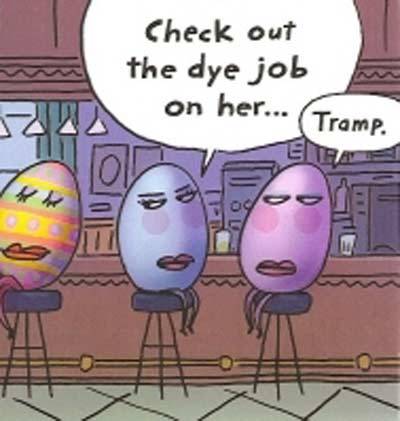
I never believed in the Easter Bunny. The very idea seemed implausible at best to me. Even at the tender age of five I couldn’t ignore the fundamental disconnect between the egg and the rabbit.
Rabbits don't lay eggs. They don't even eat eggs. What eggo-centric lunatic dreamed up this harebrained mythology?  Rabbits are cute and soft, but they are not bright. They eat grass and they poop,  Bunnies are basically just tiny, long eared cows. With short legs.  And I think their contribution to the world's methane surplus has been sorely under rated. Did I mention they were not good at mathematics? 
Listen - if you put an egg in front of a rabbit, the rabbit with nudge it aside to get to the grass underneath, even if it is plastic grass. You could even write the rabbit’s name on the side of the egg, and the rabbit would still ignore it.
And yet every year we insist upon convincing our toddlers that for some reason a rabbit has chosen to hide vast numbers of eggs all over our back yards. Under bushes. Behind flower pots. In trees. What is wrong with us?! Rabbits can’t climb trees.
You might as well tell your children that elephants have been herding water buffalo in your flower bed, or that squirrels are using your attic to store up their winter supply of canned beets. Why do we insist upon telling our children this particular absurd story?
Where is this rabbit supposed to get all of these eggs? And from whom is he supposedly hiding them? From the chickens, perhaps - otherwise known as “the mothers”. If you think about it an Easter Egg Hunt is a mass kidnapping and we are encouraging our children to be accessories after the fact. The F.B.I. should be involved in this story line, or at least Farmer McGreggor.
The very idea is so silly that most of the eggs hidden today aren’t even real, They're plastic. And they are filled with chocolate and licorice and sweet tarts, and other things that rabbits don’t eat! Show me a rabbit that eats sweet tarts and I will show you a candidate for hossenfeffer..
Children eat those things. They aren't healthy for the children, but they eat them anyway. Just like they eat old gum, or crickets. Those aren't good for children either, but given half a chance , any toddler with happily stick a live cricket in their mouth. And a few teenagers, too.
And I understand that the Easter Egg hunt is for the children's entertainment. It’s just supposed to be fun. But couldn’t it be logical and fun at the same time? Couldn’t we have an Easter chicken hiding the eggs? Why does it have to be a bunny rabbit?! Maybe instead of hiding the eggs,  he could be the one looking for the eggs. Although, again, why, I have no idea. There seems to be a subtle hidden nastiness inside the Easter Rabbit,
The birth of the Easter bunny is about as murky as the reasoning behind him being a him. And yes, the gender-bender nomenclature claims Mr. Bunny is a male fertility symbol – known in any other context as a creepy old man.- or a creepy old rabbit.  
The description of male rabbits during their mating season is "Mad as a March Hare".  Because the reality is they will copulate with anything that even remotely resembles a female rabbit. Anything.
It was the immortal Bede, the 7th century rumor trolling English monk,  who claimed the Jewish festival of Passover occurred during the month of “Eostre”, who was an ancient Gallic fertility goddess, which means she was a woman, which seems more sensible as far as fertility is concerned. And definitely less ominous than the image of a male heir to all that sexual energy.
In 1835 Jacob Grimm – the elder of the brothers of the same name – suggested there was “linguistic support” for a “Proto-Indo-European goddess named 'Ostera' who brought the dawn each morning. In reward for delivering this gift of life the sleepy Proto-Indo- European males threw things at her, eggs maybe, told her to come back in an hour and probably called her the “B” word. 
Wrote the grim Mr. Grimm about this heathen Easter “ ...there seem to have lingered among the people Easter-games so-called....I allude especially to the custom of Easter eggs...”. To which I am forced to reply, “What the hell does that mean? 
Are we talking some kind of Proto-Indo-European symbolic Ostera eggs or egg eggs? According to Grimm's theory the Easter Egg hunt is a sort of primitive endurance contest, involving stuffing your face with “pastry of heathenish form”, and/or a “Cool Hand Luke” egg eating contest, only now with psychedelic colors. So you can over think this thing any way you want, and it still makes no sense.
I know I’m overwrought over this. The Easter bunny is just another one of those little contradictions in logic accepted without question by most people, one of those silly little stripped gears in the workings of our cultural machinery, that don’t make any sense but seem to be required to hold our society together.  Like Daylight savings time. Or that bar on boy’s bicycles. Or Keanu Reeves’ movie career.
You could get excited about outrageous, silly things like the Easter Bunny  Or you can just ignore them, and pretend there is a logic to them, and live your life in some semblance of calm. But to do so would be a fraud and you know it!
The truth shall set you free. And the truth is the the spring Easter Bunny is a violently, sexual predator.  I don’t know who said the thing about truth and freedom, whoever said it would be so argumentative they will probably out live the rest of us.  We deserve to know why it is that an Easter Bunny would hide eggs. And if the answer isn’t good enough, we have a right to pick our own illogical anthropomorphic creature upon which to base our Easter fun.
In a nutshell - or an an egg shell -  Rabbits are an old German symbol of fertility, for obvious reasons. And the egg is a symbol of...I guess breakfast and birth  And if you put those two together, the Easter Egg Hunt becomes a rabbit symbolically hiding his fertility all over your back yard, where your children are encouraged to hunt until they find it.
Are we nuts?  When they are five or six years old we send them looking for the symbol of fertility in their own backyard.. When they are twelve we don't even want them to be taught about this in the public schools!  No wonder Americans are so screwed up. We get our childhood from a furry Casanova, and our adolescence from Queen Victoria.
Why do I feel so strongly about this? Because, oddly enough I once had a male rabbit actually find his fertility  in my back yard. All over my backyard. And the deposit he left behind did not smell like eggs -  at least not fresh eggs. And I ended up with about fifty million female rabbits in my backyard for the next twenty-four hours or so. My dog was too scared to go outside. And I certainly didn’t want any small children going out there, either, because I wasn’t sure I could explain what they would see. Or suffer. Not to mention their propensity for picking things up and putting it in their mouths. What an Easter that was.
But, getting back to the mythology - Why in God's name would you want your children to find the secret of fertility? And I think I have found the solution to that question. So you can have a grandchild, that’s why. Grandchildren are essential because they help you torture your adult children, thus completing one slice out of the circle of life pie chart.
It’s curious that the chickens, who actually lay the millions of eggs that are stashed under bushes and flowers and lawn chairs on Easter Sunday, are not considered symbols of fertility. The feminists’ version of this is that these chicks do all the work while some crowing cock gets all the credit.  Thank goodness feminism has been totally discredited. Still, those hard boiled chicks may have a point.  Scrambled, like everything else in our polyglot culture, but a point never-the-less. I just wish I knew what the hell it was.
- 30 -

Blog Archive