

I hear the complaints piling up again about crooked, two-faced, lying politicians and it seems to me that the objections and the job description are nearly identical. The rules of politics were first laid down 2,400 years ago, and they have not been improved upon since. To be successful a politician must first be elected, and second he or she must be re-elected. And the proof of these rules was firmly established by the golden boy of ancient Greek democracy, the man who turned hypocrisy, sycophancy, performance and prevarication into an art form, the greatest politician of all time bar none, Alcibiades Alcmaeonidae. It wasn’t that after Alcibiades they broke the mold, it was that Alcibiades was the mold. His world was shaped by his uncle and guardian, Pericles (above), who defined a great leader as someone who “…knows what must be done and is able to explain it; loves one’s country and is incorruptible.” Having decided that Athens and Sparta were destined for war, Pericles devised a most unusual strategy. In 430 and 429 B.C. Spartan armies invaded Athenian territory (called Attica), burned crops and villages and took hostages. But the Athenian army refused to give battle, relying on their fleet to bring in grain from Egypt and the Ukraine to keep them fed. Pericles’ plan was to frustrate the Spartans until internal political dissent encouraged them to surrender. And it might have worked but for one unanticipated event. The plague arrived on the grain ships from Egypt in 428 B.C. and killed perhaps a third of the population of Athens, including Pericles.
 The abrupt vacuum at the top of Athenian politics was an opportunity for the young Alcibiades (above). He was a superstar right from the start. First he was a real Olympic athlete and “the Adonis of Athens…tall, shapely, remarkably handsome, fond of showy attire and luxurious surroundings…” (p 221, Baldwin Project) He was a powerful speaker whose slight lisp made him all the more endearing. He seduced women and men with equal ease and equally often.
His world was shaped by his uncle and guardian, Pericles (above), who defined a great leader as someone who “…knows what must be done and is able to explain it; loves one’s country and is incorruptible.” Having decided that Athens and Sparta were destined for war, Pericles devised a most unusual strategy. In 430 and 429 B.C. Spartan armies invaded Athenian territory (called Attica), burned crops and villages and took hostages. But the Athenian army refused to give battle, relying on their fleet to bring in grain from Egypt and the Ukraine to keep them fed. Pericles’ plan was to frustrate the Spartans until internal political dissent encouraged them to surrender. And it might have worked but for one unanticipated event. The plague arrived on the grain ships from Egypt in 428 B.C. and killed perhaps a third of the population of Athens, including Pericles.The abrupt vacuum at the top of Athenian politics was an opportunity for the young Alcibiades (above). He was a superstar right from the start. First he was a real Olympic athlete and “the Adonis of Athens…tall, shapely, remarkably handsome, fond of showy attire and luxurious surroundings…” (p 221, Baldwin Project) He was a powerful speaker whose slight lisp made him all the more endearing. He seduced women and men with equal ease and equally often.And at 19 years old Alcibiades even beguiled the old pedophile Socrates. Reading Plato’s version of their dialogs is like watching a snake charmer with arthritis toying with a hungry python. Socrates began by berating Alcibiades’ youthful arrogance. “You say you do not need any person for anything …For you think you are the most beautiful and greatest” – and then later he fell under Alcibiades' spell, calling him “…the greatest of the Greeks.” Still, Socrates shared Alcibiades bed only once; if Athens had only been that wise. It seems that all Alcibiades learned from Socrates was that he needed a project worthy of his ambition. And in 415 B.C. Alcibiades suggested a cloak and dagger strike on the island of Sicily, a commando operation - perhaps even capturing by subterfuge the port city of Syracuse, Sparta’s strongest ally. But Alcibiades’ opponent, Nicias, not wanting his enemy given the chance to succeed, warned that such an expedition would have to be hugely expensive, requiring as many as 140 ships and 6,000 men. He meant to mock the idea but to the shock of both Nicias and Alcibiades, the Athenian council voted to fund the massive mission and then placed both Alcibiades and Nicias in charge of it.
It seems that all Alcibiades learned from Socrates was that he needed a project worthy of his ambition. And in 415 B.C. Alcibiades suggested a cloak and dagger strike on the island of Sicily, a commando operation - perhaps even capturing by subterfuge the port city of Syracuse, Sparta’s strongest ally. But Alcibiades’ opponent, Nicias, not wanting his enemy given the chance to succeed, warned that such an expedition would have to be hugely expensive, requiring as many as 140 ships and 6,000 men. He meant to mock the idea but to the shock of both Nicias and Alcibiades, the Athenian council voted to fund the massive mission and then placed both Alcibiades and Nicias in charge of it.Somehow the two foes managed to assemble the huge force. But Alcibiades should have been more worried about Nicias' cooperation, for when they landed outside of Syracuse they found a trireme from Athens had arrived there ahead of them. As soon as Alcibiades had sailed away the Athenian council had ordered Alcibiades home to stand trial for heresy and treason. It was obvious that Nicias was behind this, and Alcibiades had no intention of putting his fate in the hands of Nicias’ allies.
On his way back to Athens Alcibiades jumped ship at Thurii, and boldly contacted the Spartans. He offered them information on the Athenian expedition’s plans to capture Messina, and when that information proved correct the Spartans warily agreed to allow Alcibiades sanctuary in their city. Alcibiades had made his first betrayal. Once in Sparta, he converted from a luxury loving Athenian into a prime example of Spartan brutality and sadomasochism.
Alcibiades had made his first betrayal. Once in Sparta, he converted from a luxury loving Athenian into a prime example of Spartan brutality and sadomasochism. Like any good Spartan politician he began wearing simple clothes and eating cold gruel and exercising in public with the other sadomasochistic Spartans. He advised the Spartans on a strategy that led to the complete defeat of Nicias and the slaughter and capture of his entire Athenian force. In fact Alcibiades had become one of the most respected and trusted Spartans in Sparta - until one morning in 412 B.C. when the Spartan king Agis II came home unexpectedly to speak to his queen and Alcibiades was seen jumping out of her bedroom window. Agis II put out a contract on Alcibiades, and he disappeared, next turning up in Persia, as an advisor at the court of the satrapy Tissaphernes, who had been funding the Spartan war effort. Alcibiades had just made his second betrayal. Tissaphernes had been hoping to weaken the Athenians. But now he had begun to worry that the Spartans were getting too strong, which is exactly what he was told by his new political advisor, Alcibiades. On his advice the Persians cut back their cash support for Sparta, and Alcibiades put out peace feelers to his fellow Athenians. He convinced them that he could bring the Persians into the war on Athens’ side. Of course Tissaphernes had no intention of committing his forces until both sides were exhausted, but by the time the Athenians realized this, according to the poet Aristophanes, they yearned for Alcibiades even while they hated him. This was to be Alcibiades’ third betrayal.
 The Athenian generals made him an Admiral, and he engineered an Athenian naval victory at Abydos, near the Hellespont, and burned the little village of Byzantium. After another Alcibiades victory the Spartans sent home a desperate note. “Our ships are lost. Mindarus (the commander) is dead. The men are starving. We do not know what to do.”
Tissaphernes had been hoping to weaken the Athenians. But now he had begun to worry that the Spartans were getting too strong, which is exactly what he was told by his new political advisor, Alcibiades. On his advice the Persians cut back their cash support for Sparta, and Alcibiades put out peace feelers to his fellow Athenians. He convinced them that he could bring the Persians into the war on Athens’ side. Of course Tissaphernes had no intention of committing his forces until both sides were exhausted, but by the time the Athenians realized this, according to the poet Aristophanes, they yearned for Alcibiades even while they hated him. This was to be Alcibiades’ third betrayal.The Athenian generals made him an Admiral, and he engineered an Athenian naval victory at Abydos, near the Hellespont, and burned the little village of Byzantium. After another Alcibiades victory the Spartans sent home a desperate note. “Our ships are lost. Mindarus (the commander) is dead. The men are starving. We do not know what to do.”In 407 B.C. Alcibiades made his triumphal return to Athens itself, to cheering throngs and the return of his property, which had been seized when he had joined Sparta. All charges against him were dropped; but not forgotten.  His last betrayal had convinced the Persians to again fully fund the Spartan war effort. And in 406 B.C. Alcibiades sailed with 100 ships on a mission to assist Phocaea, which was under siege from Spartan forces. While making a scout Alcibiades left 80 ships at anchor at Notium under his second in command. But while he was away the fool brought on an engagement with the Spartan fleet, and was soundly defeated. His enemies blamed Alcibiades for the disaster, and he was forced into exile once again, and this time it looked final.
 In 404 B.C. Alcibiades was living in retirement with a mistress in Phyrgia, in what is today central Turkey, in a mountain cabin. In the dark of night assassins set the house on fire and murdered Alcibiades as he rushed out side. Says the Baldwin Project, “Thus perished, at less than fifty years of age, one of the most brilliant and able of all the Athenians.”
His last betrayal had convinced the Persians to again fully fund the Spartan war effort. And in 406 B.C. Alcibiades sailed with 100 ships on a mission to assist Phocaea, which was under siege from Spartan forces. While making a scout Alcibiades left 80 ships at anchor at Notium under his second in command. But while he was away the fool brought on an engagement with the Spartan fleet, and was soundly defeated. His enemies blamed Alcibiades for the disaster, and he was forced into exile once again, and this time it looked final.In 404 B.C. Alcibiades was living in retirement with a mistress in Phyrgia, in what is today central Turkey, in a mountain cabin. In the dark of night assassins set the house on fire and murdered Alcibiades as he rushed out side. Says the Baldwin Project, “Thus perished, at less than fifty years of age, one of the most brilliant and able of all the Athenians.”Some say it was the Spartans who killed him, and some that it was his Athenian enemies, and some say it was the brothers of a Persian woman he had seduced. If Alcibiades did not fit his uncle’s definition of a great leader, still he had been a successful politician for each of the three great powers of his time – Athens, Sparta and Persia. How could you not consider him the greatest politician of any age? 
- 30 -


 Nils Ekholm had joined Andree in Spitsbergen for his first attempt at floating a balloon to the North Pole in 1896, but the southerly winds Andree had confidently predicted never showed up. The delay gave Ekholm time to crunch some additional numbers and he came to the disturbing revelation that the Ornen was leaking like a kitchen sieve. It would never, he realized, stay inflated long enough to reach the Pole, let alone safety on a farther shore like Alaska or Russia. When he expressed his reservations, Andree expressed disappointment with Ekholm’s lack of enthusiasm. After the flight was cancelled for the year Ekholm made alternative travel plans for the summer of 1897. And that was how Knut Fraenkel earned a chance at immorality and trichinosis; lucky him.
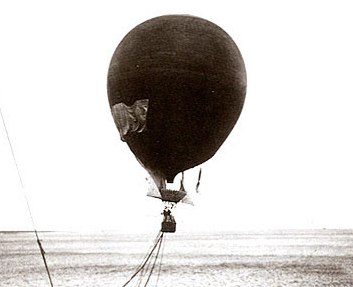


 On July 14th, the Ornen had crashed onto the ice, after just 51 hours in the air. (Stridberg took extensive photos of the 'landing'.) The three men then spent a week unpacking and deciding what to do. Only then did they set out for home.
 As they marched, each two steps they took to the south were countered by the floating ice pack which carried them one and a half steps toward the north and east.


 Gillmore had proven the power of his logic at Fort Pulaski (above), whose massive brick walls guarded the outskirts of Savannah, Georgia. Gillmore’s advantage at Fort Pulaski was the Parrot Gun, the invention of the precise and logical mind of Robert Parker Parrott, who ran the West Point Foundry in Cold Spring, New York.

 On the southern shoulder of Charleston’s inner harbor loomed the battered remnants of Fort Sumter, where the Civil War had begun in April of 1861. The Washington Republican newspaper waxed poetic when describing Gillmore's technical attack upon this birthplace of the rebellion. “From well-known mechanical laws, ...the penetration of the 24 pound shot at 3,500 yards…in brickwork, is six inches. The penetration of the 10 inch projectile will therefore be between six and seven feet of the same material…equal to the united blows of 200 sledge hammers weighing 100 lbs each, falling from a height of ten feet and acting upon a drill ten inches in diameter.” It could have been lifted from General Gillmore’s notebooks, and probably was.
 By midsummer Gillmore’s Parrott guns had reduced Fort Sumter to “a shapeless and harmless mass of ruin.” Yet Charleston still held out, because defending the outer harbor on Morris Island was Fort Wagner, situated directly astride the channel ships used to approach Charleston. Fort Wagner’s low packed sand and timber walls simply swallowed whole the explosive shells from Gillmore’s Parrotts, and punished the 54th regiment when they tried a direct ground assault (above - from the movie "Glory"). In his frustration Gillmore came to the logical conclusion that the Confederates would surrender when faced with the correct application of the power of his guns.
 On the morning of July 16, 1863, Gillmore ordered Colonel Edward W. Serrell of the engineers to find a spot for a new battery within range of Charleston itself. Col Serrell and an aide spent the day wandering across the slat marshes “…carrying a fourteen foot plank…Where the inundation would not bear them they sat on the plank and pushed it forward between their legs. When the soil appeared stiffer, they carried the plank until they reached the soft mud once more.” (Battles & Leaders of the Civil War, Vol. 4, Underwood et al, The Century Co. 1884) By evening this method had located a rectangle of more or less solid ground (in the low brush in the background, above) 8,000 yards from Charleston, at the maximum range of the Parrotts.
 It took a month to build a battery (above) amongst the muck, and on August 21st Gillmore sent a note to General Pierre Gustave Toutant Beauregard, the rebel commander, warning that if he did not at once surrender both forts Wagner and Sumter, Charleston would be bombarded with “Greek fire”. However, the note did not arrive until 10:45 p.m., and General Beauregard had gone to bed. And in any case the note bore no signature. The offended gentlemen of the Confederate headquarters returned the offensive note for signing. The 19th century industrial revolution and just run up against 18th century social graces.
 The amended note re-arrived at Beauregard’s headquarters at 9:00a.m the morning of August 23rd, and Gustave Toutant responded in his best Southern aristocratic outrage. “It would appear, sir, that despairing of reducing these works you now resort to the novel measure of turning your guns against the old men, the women and children, and the hospitals of a sleeping city.” In response Gillmore gave the Confederates a truce of 24 hours to evacuate Charleston before the Swamp Angel would continue its bombardment. In fact the Parrott had slid out of position after 16 shots and it would take hours of work to move the 8 ton cannon back into place.
 As darkness fell the Angel opened fire again. But this time, as the barrel heated up the shells began to show a nasty tendency to explode in the barrel, and the breech band expanded so that it started to slide around on the breech. Col. Serrell wisely had a second lanyard tied to the first, to give his men some distance when they fired the darn thing, and after another 13 shots, as the Swamp Angel let go her 38th attempt at burning Charleston to the ground, the gun exploded, blowing off the breech band, cracking the breech itself, blowing three feet off the end of the barrel, and landing the cannon atop her own battery (below). This exercise in the application of violence was finished, for the moment.
 Not that Gillmore was about to give up. The relentless bombardment of Fort Wagner had converted that post into an open wound through which the defenders were slowly bleeding to death. Two weeks after the Swamp Angel blew up, on September 7, 1863, Beauregard pulled his troops out.
 In far off New York, Herman Melville, a man who knew something about the dark effects of obsession on the human heart, was inspired to put pen to paper; “There is a coal black Angel, With a thick African lip, And he dwells (like the hunted and harried), In a swamp where the green frogs dip. But his face is against a City, Which is over a bay of the sea, And he breathes with the breath that is blastment, and dooms by a far degree…Who weeps for the woeful City, Let him weep for our guilty kind; Who joys at her wild despairing – Christ, the Forgiver, convert his mind.”
 You can see that terror now, in Cadwallader Park in the city of Trenton, New Jersey, preserved as a memento of one of humanities’ early attempts at a logical application of terror. And, no, it didn't work; terror rarely works, and never for long.


