August 2025

August  2025
I DON'T NEED A RIDE. I NEED AMMUNITION.

Translate

Showing posts with label Roger Ailes. Show all posts

Sunday, November 17, 2024

ORIGINAL SIN Chapter Five


More than likely, the Bush campaign used the racial facts of the case intentionally...as part of the overall strategy to recruit white voters without drawing the ‘racist’ label. Atwater (above) ...was a white man raised in the Deep South…who was accustomed to referring to black men with overstated familiarity.”
Tali Mendelberg Professor of Politics, Princeton University. 2001

The location chosen to shoot the ad was the 37 year old Utah State Prison in Draper (above). The prison had experience working with film production companies, including “Halloween 4”. The weather was reliable and there were support services (film laboratories, editing facilities, local air freight) 20 miles to the southwest in Salt Lake City, and the Utah Film Commission was friendly to Republican ideology. 
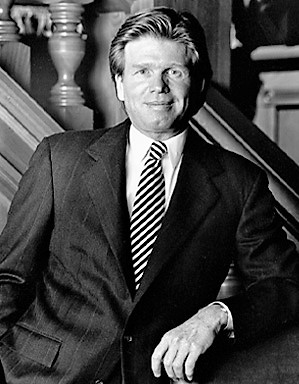
 The script for the spot titled “Revolving Door” was written by Milwaukee ad man, Dennis Frankenberry (above) and his firm of Frankenberry, Laughlin and Constable. Later he told an interviewer, "Fortunately, we were in a position to commit our resources to the campaign just then." In truth his availability had been created by his conviction for drunk driving and leaving the scene of an accident having caused bodily injury,  And that is how a white man who had received the benefit of work furlough during his sentence, was able to "commit resources" to create an advertisement which would bring an end to furloughs for thousands of prisoners - most of them black.  D.L. and C. hired a production company called “The James Gang”  out of Dallas, Texas, , run by conservative photographer James Beresford,  to actually shoot the spot.
Ominous drum roll. Quick Fade In Long Shot. The camera pulls back from a guard carrying a rifle as he climbs the watch tower outside of a prison. Title fades in, reading, “The Dukakis Furlough Program”, then fades out quickly. Narrator: “As governor, Dukakis vetoed mandatory sentences for drug dealers.” Dissolve to a Long Shot of a rifle carrying guard walking along a fence line. Narrator: He vetoed the death penalty. His revolving door prison policy....”
Dissolve into a Medium Long Shot of a line of prisoners walking away from the camera toward a fence. In the center of the fence is a glass revolving door. A line of prisoners, heads down, pass through the door and then continue walking back towards the camera. Narrator: “...gave weekend furloughs to first degree murders not eligible for parole.” 
Title fades in across the lower center of the screen: “268 escaped”. Narrator: “While out, many committed other crimes like kidnapping and rape”. Fade in a tighter medium shot centered on the revolving door.
A title card fades in lower center of screen “Many are still at large.” Narrator” And many are still at large.” Quickly fade out title. Narrator: “Now, Micheal Dukakis, says he wants to do for America...” Dissolve to a Long Shot of a guard with a rifle standing on a roof, with the guard tower in the back ground. Narrator: “...what he has done for Massachusetts”. Dissolve in Bush/Quayle claimer across the bottom of the screen. Narrator: “America can't afford that risk.” Quick Fade to Black.
The revolving door was a prop, built in Salt Lake City and assembled a day early at an angle between two gates in the third, outside fence line. Some 50 members of The Young Republicans attending Brigham Young University and The University of Utah were recruited to act as prisoners. None of the actors or crew had any contact with the general prison population. And the actual shoot was accomplished in a single day.
During the shoot Dennis Frankenberry made at least one alteration to the “shooting script”. Among the endless line of down faced prisoners, one, and only one - a black man with a neat low Afro haircut - was instructed to glance upward as he exited the revolving door. He was the only “prisoner” who did anything different from the others, making him an immediate focal point. In order to increase the impact of the spot, during editing it was decided to drain the color from the film, so in its broadcast version it was gray sepia tones, as if it were a 1960's news documentary.
Denials of racism being used as a tool by the Bush campaign are belied by the close coordination between the two spots. They were a one two-punch, one to to the jaw and the second to the breadbasket. The more blatant ad, “Furlough”, began running on Wednesday, 21 September, 1988. The following night CBS News reported on the new commercial, describing it as “crime ad”. Race was not mentioned at all.
The Furlough ad ran for 2 weeks, ending on Tuesday, 4 October. The very next day, Wednesday, 5 October, “Revolving Door” first aired. CBS did not mention either ad again until 20 October, and this time the story concentrated on William Horton's criminal record. Complaints about the racist context to the ads would not be mentioned on CBS until 24 October, three weeks into the “Revolving Door” ad run. CBS only review of the content of the ads was a comment by media consultant Tony Schwartz, who described the ads as “particularly effective”. Why they were effective was not mentioned. This at a time the average television and newspaper newsrooms  had few blacks in editorial positions.
After the campaign, Larry McCarthy, the creator of the “Furlough” ad, described William Horton as “...every suburban mother’s greatest fear.” By suburban, he meant, of course, white. And the Federal Election Commissions investigation of the ads, demanded by the Democratic party and the NAACP was forced to admit that Roger Ailes “may have implicitly communicated to Mr. McCarthy”. But any further questions were cut off by the Republicans who made up half of the commission.
Bill Keller, who edited an investigation of the Horton story for The Marshal Project, would later point out, “The astounding fact is that, at the time, all 50 states had furlough programs for prisoners, including for murderers in many states. Even Ronald Reagan, when he was (Republican) Governor of California, had a furlough program...twice, inmates who were out on furloughs...committed murders. Reagan defended the program and said nobody’s perfect.”
Keller went on to describe William Horton as “...a convenient tool in a kind of politics that at the very least was fear mongering and I think fair to say race baiting. I think it had echoes of the earlier Southern strategy of Republicans, which was to play on white anxiety.” I would say not an echo, but a maturing clarion call to white power and what would become in another thirty years as the Republican base.
- 30 -

Thursday, November 14, 2024

ORIGINAL SIN Chapter Two


The question everyone wants answered is how a cold-blooded murderer ever got out in the first place,”
The Lawrence Eagle-Tribune April, 1987
One afternoon in late May of 1988, the 6' 9” Jim Pinkerton, leader of the 35 “nerds” doing Opposition Research for the Vice President George Walker Bush Presidential campaign, was reading the transcript of the New York Democratic Presidential Primary debate. 
By then it was clear Massachusetts Governor Michael Dukakis would be the Democratic nominee, and early polls gave him a 17 point lead over Bush. 
But Jim read something in Al Gore's remarks which tweaked his interest. He called Reagan White House Staffer Andrew Hill "Andy" Card  (above) who was from the bay state, to ask about the “furlough issue.”
Jim Pinkerton explained later, “Card said, Yes, this has been a huge thing up here...The Boston Globe had run stories on this, the Lawrence Eagle-Tribune had run something like one hundred thirty stories.   They won a Pulitzer Prize (abive) ... it was just sort of totally hiding in plain sight...it was just like discovering gold.” 
When Pinkerton told his boss, campaign manager, “boy wonder” Lee Atwater said, "By the time we’re finished, they’re going to wonder whether Willie Horton is Dukakis’s running mate.”  And  Communications Director Roger Ailes promised to “Strip the bark off that little bastard (Dukakis)”, adding, “The only question is whether we depict Willie Horton with a knife in his hand or without it.” Within days, Horton's threatening mug shot was hanging at Bush''s 15th street, D.C. headquarters.
Roger Eugene Ailes (above) came into politics as a two time Emmy winning talk show producer with a "boundless propensity for fabulism and a bottomless ego.” 
The talk show brought Ailes (above, left) into contact with Richard Nixon (above, right), who after a few hours listening to Roger, appointed him his Executive for Television.  Privately Ailes had a cynical view of his new client. He looks like somebody hung him in a closet overnight and he jumps out in the morning with his suit all bunched up and starts running around saying, ‘I want to be president.’"
In the words of Jim Pinkerton, with Nixon, Ailes was,  part Don Rickles, part psychiatrist and part motivational football coach".,  During the 1968 campaign,  instead of doing standard interviews with heavyweight journalists Ailes designed “town hall” meetings,  hosted by local anchors and filled with carefully chosen voters who would ask Nixon softball questions. Historian Rick Perlstein explained the events were not staged, rather, “They were fixed”.
It also highlighted Roger's insight into the creation of news, what came to be called his “Orchestra Pit Theory". “If you have two guys on a stage and one guy says, "I have a solution to the Middle East problem," and the other guy falls in the orchestra pit, who do you think is going to be on the evening news?” Or as Roger rephrased it during the '84 campaign, “ What would a journalist rather cover? New TV ads or the latest proposal to change the capital gains tax?"
Working closely with Ronald Reagan, Ailes became known as “Dr. Feelgood” because of his ability to reassure and coach the candidate through difficult situations. It was Ailes who counseled that facts were not important. “You get elected”, he told Reagan, “on themes”. As Mary Matalin, a longtime Republican campaign strategist remembered, “"Roger always had the clearest vision...When you came to a strategy impasse...I can’t remember a single incident where he lost a fight."
Having chosen to highlight the issues of furloughs – among others - the next step was to convince their client, Vice President George Herbert Walker Bush (above) that he needed to play rough. The Bush family had been wealthy since Samuel Prescott Bush took over the Buckeye Steel Company in 1908 and bought a summer vacation home in Kennebunkport, Maine. 
And although Bush had earned the Distinguished Flying Cross in World War II (above) and been a successful businessman, and politician, he was what Atwater called a "cocktail party Republican", a large step removed from the blood thirsty front line fighters like himself.. 
So Ailes rented an office in a shopping mall in the "quintessentially suburban” town of Paramus, New Jersey (above), where he ran a series of focus groups, testing the public impressions of Bush and Dukakis. It seems likely that while these groups were also “fixed”.
As expected and intended the groups did not have good news for Bush. They reinforced the “Curse of Martin Van Buren”, the last Vice President who had won election to Presidency in his own right back in 1836. Atwater explained the current dilemma. “We’re 17 points back,” said Atwater, “and (Dukakis will) pick up 10 more points at their convention and we won’t win. Even with a good campaign, we won’t win.” After this presentation, Atwater said, “it was an easy sell.”
Atwater (above) would later explain to an interviewer what “it” was. “You start out in 1954 by saying, "Nigger, nigger, nigger.” By 1968 you can't say "nigger"...So you say stuff like forced busing, states' rights and all that stuff. You're getting so abstract now...fiscal conservatism, balancing the budget, cut taxes...” When the interviewer asked if Atwater was admitting the “conservative strategy” was just racism dressed up in new clothes, Lee responded, “You all don't quote me on this.”
By now, William Horton (above)  was inmate number 189-1821 at the Jessup Correctional Institute, south of Baltimore. He had been sentenced to 2 life terms plus 85 years by Maryland Judge Vincent Fema. 
Massachusetts had requested Horton's return to finish his life sentence, but Judge Fema said, "I'm not prepared to take the chance that Mr. Horton might again be furloughed or otherwise released. This man should never draw a breath of free air again." It was as if the judge were writing ads for the Republicans.
And Horton's victims were still trapped in prisons Horton had created for them. They never returned to their home, selling it at a loss. Although they went ahead with their marriage plans 2 months after the assault, Angela Barnes constantly carries a knife in her purse, and keeps one in her beside table. She admits to even taking the weapon into the bathtub with her. She thinks, if faced with a similar situation, with a gun to her head, “I think I'd say 'Go ahead, shoot me'. I don't want to go through this again”. 
Since that horrific night in 1987, Clifford Barnes has never gotten a full night's sleep.  He would later demand, Ask Dukakis if he wants Willie Horton in his basement”  But when the couple had approached Governor Micheal Dukakis to discuss the state's furlough program, he refused to meet with them. It was as if Dukakis was writing ads for the Republicans.
Now all the Bush team needed to find the right person to create the perfect ad that mixed race and prison furloughs to destroy the Democrat candidate,
- 30 -

Monday, March 11, 2019

FOREIGN AGENTS Chapter Seven.

More than likely, the Bush campaign used the racial facts of the case intentionally...as part of the overall strategy to recruit white voters without drawing the ‘racist’ label. Atwater (above) ...was a white man raised in the Deep South…who was accustomed to referring to black men with overstated familiarity.”
Tali Mendelberg Professor of Politics, Princeton University. 2001

The location chosen to shoot the ad was the 37 year old the Utah State Prison in Draper (above). The prison had experience working with film production companies, including “Halloween 4”. The weather was reliable and there were support services (film laboratories, editing facilities, local air freight) 20 miles to the southwest in Salt Lake City, and the Utah Film Commission was friendly to Republican ideology. 
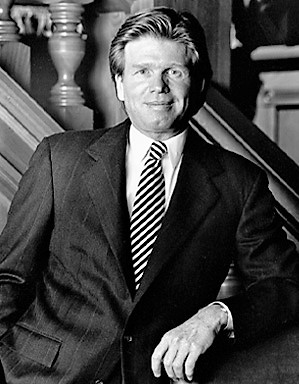
 The script for the spot titled “Revolving Door” was written by Milwaukee ad man, Dennis Frankenberry (above) and his firm of Frankenberry, Laughlin and Constable. Later he told an interviewer, "Fortunately, we were in a position to commit our resources to the campaign just then." In truth his availability had been created by his conviction for drunk driving and leaving the scene of an accident having caused bodily injury,  Which his how a white man who had received the benefit of work furlough during his sentence, was able to "commit resources" to create an advertisement which would bring an end to furloughs for thousands of prisoners - most of them black.  D.L. and C. hired a production company called “The James Gang”  out of Dallas, Texas, , run by conservative photographer James Beresford,  to actually shoot the spot.
Ominous drum roll. Quick Fade In Long Shot. The camera pulls back from a guard carrying a rifle as he climbs the watch tower outside of a prison. Title fades in, reading, “The Dukakis Furlough Program”, then fades out quickly. Narrator: “As governor, Dukakis vetoed mandatory sentences for drug dealers.” Dissolve to a Long Shot of a rifle carrying guard walking along a fence line. Narrator: He vetoed the death penalty. His revolving door prison policy....”
Dissolve into a Medium Long Shot of a line of prisoners walking away from the camera toward a fence. In the center of the fence is a glass revolving door. A line of prisoners, heads down, pass through the door and then continue walking back towards the camera. Narrator: “...gave weekend furloughs to first degree murders not eligible for parole.” 
Title fades in across the lower center of the screen: “268 escaped”. Narrator: “While out, many committed other crimes like kidnapping and rape”. Fade in a tighter medium shot centered on the revolving door.
A title card fades in lower center of screen “Many are still at large.” Narrator” And many are still at large.” Quickly fade out title. Narrator: “Now, Micheal Dukakis, says he wants to do for America...” Dissolve to a Long Shot of a guard with a rifle standing on a roof, with the guard tower in the back ground. Narrator: “...what he has done for Massachusetts”. Dissolve in Bush/Quayle claimer across the bottom of the screen. Narrator: “America can't afford that risk.” Quick Fade to Black.
The revolving door was a prop, built in Salt Lake City and assembled a day early at an angle between two gates in the third, outside fence line. Some 50 members of The Young Republicans attending Brigham Young University and The University of Utah were recruited to act as prisoners. None of the actors or crew had any contact with the general prison population. And the actual shoot was accomplished in a single day.
During the shoot Dennis Frankenberry made at least one alteration to the “shooting script”. Among the endless line of down faced prisoners, one, and only one - a black man with a neat low Afro haircut - was instructed to glance upward as he exited the revolving door. He was the only “prisoner” who did anything different from the others, making him an immediate focal point. In order to increase the impact of the spot, during editing it was decided to drain the color from the film, so in its broadcast version it was gray sepia tones, as if 1960's news documentary.
Denials of racism being used as a tool by the Bush campaign are belied by the close coordination between the two spots. They were a one two-punch, one to to the jaw and the second to the breadbasket. The more blatant ad, “Furlough”, began running on Wednesday, 21 September, 1988. The following night CBS News reported on the new commercial, describing it as “crime ad”. Race was not mentioned at all.
The Furlough ad ran for 2 weeks, ending on Tuesday, 4 October. The very next day, Wednesday, 5 October, “Revolving Door” first aired. CBS did not mention either ad again until 20 October, and this time the story concentrated on William Horton's criminal record. Complaints about the racist context to the ads would not be mentioned on CBS until 24 October, three weeks into the “Revolving Door” ad run. CBS only review of the content of the ads was a comment by media consultant Tony Schwartz, who described the ads as “particularly effective”. Why they were effective was not mentioned. This at a time the average television and newspaper newsrooms  had few blacks in editorial positions.
After the campaign, Larry McCarthy, the creator of the “Furlough” ad, described William Horton as “...every suburban mother’s greatest fear.” By suburban, he meant, of course, white. And the Federal Election Commissions investigation of the ads, demanded by the Democratic party and the NAACP was forced to admit that Roger Ailes “may have implicitly communicated to Mr. McCarthy”. But any further questions were cut off by the Republicans who made up half of the commission.
Bill Keller, who edited an investigation of the Horton story for The Marshal Project, would later point out, “The astounding fact is that, at the time, all 50 states had furlough programs for prisoners, including for murderers in many states. Even Ronald Reagan, when he was (Republican) Governor of California, had a furlough program...twice, inmates who were out on furloughs...committed murders. Reagan defended the program and said nobody’s perfect.”
Keller went on to describe William Horton as “...a convenient tool in a kind of politics that at the very least was fear mongering and I think fair to say race baiting. I think it had echoes of the earlier Southern strategy of Republicans, which was to play on white anxiety.” I would say not an echo, but a maturing clarion call to white power and what would become the Republican base.
- 30 -

Blog Archive