August 2025

August  2025
I DON'T NEED A RIDE. I NEED AMMUNITION.

Translate

Showing posts with label Prison Furlough. Show all posts

Sunday, November 17, 2024

ORIGINAL SIN Chapter Five


More than likely, the Bush campaign used the racial facts of the case intentionally...as part of the overall strategy to recruit white voters without drawing the ‘racist’ label. Atwater (above) ...was a white man raised in the Deep South…who was accustomed to referring to black men with overstated familiarity.”
Tali Mendelberg Professor of Politics, Princeton University. 2001

The location chosen to shoot the ad was the 37 year old Utah State Prison in Draper (above). The prison had experience working with film production companies, including “Halloween 4”. The weather was reliable and there were support services (film laboratories, editing facilities, local air freight) 20 miles to the southwest in Salt Lake City, and the Utah Film Commission was friendly to Republican ideology. 
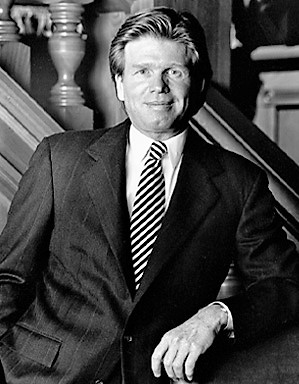
 The script for the spot titled “Revolving Door” was written by Milwaukee ad man, Dennis Frankenberry (above) and his firm of Frankenberry, Laughlin and Constable. Later he told an interviewer, "Fortunately, we were in a position to commit our resources to the campaign just then." In truth his availability had been created by his conviction for drunk driving and leaving the scene of an accident having caused bodily injury,  And that is how a white man who had received the benefit of work furlough during his sentence, was able to "commit resources" to create an advertisement which would bring an end to furloughs for thousands of prisoners - most of them black.  D.L. and C. hired a production company called “The James Gang”  out of Dallas, Texas, , run by conservative photographer James Beresford,  to actually shoot the spot.
Ominous drum roll. Quick Fade In Long Shot. The camera pulls back from a guard carrying a rifle as he climbs the watch tower outside of a prison. Title fades in, reading, “The Dukakis Furlough Program”, then fades out quickly. Narrator: “As governor, Dukakis vetoed mandatory sentences for drug dealers.” Dissolve to a Long Shot of a rifle carrying guard walking along a fence line. Narrator: He vetoed the death penalty. His revolving door prison policy....”
Dissolve into a Medium Long Shot of a line of prisoners walking away from the camera toward a fence. In the center of the fence is a glass revolving door. A line of prisoners, heads down, pass through the door and then continue walking back towards the camera. Narrator: “...gave weekend furloughs to first degree murders not eligible for parole.” 
Title fades in across the lower center of the screen: “268 escaped”. Narrator: “While out, many committed other crimes like kidnapping and rape”. Fade in a tighter medium shot centered on the revolving door.
A title card fades in lower center of screen “Many are still at large.” Narrator” And many are still at large.” Quickly fade out title. Narrator: “Now, Micheal Dukakis, says he wants to do for America...” Dissolve to a Long Shot of a guard with a rifle standing on a roof, with the guard tower in the back ground. Narrator: “...what he has done for Massachusetts”. Dissolve in Bush/Quayle claimer across the bottom of the screen. Narrator: “America can't afford that risk.” Quick Fade to Black.
The revolving door was a prop, built in Salt Lake City and assembled a day early at an angle between two gates in the third, outside fence line. Some 50 members of The Young Republicans attending Brigham Young University and The University of Utah were recruited to act as prisoners. None of the actors or crew had any contact with the general prison population. And the actual shoot was accomplished in a single day.
During the shoot Dennis Frankenberry made at least one alteration to the “shooting script”. Among the endless line of down faced prisoners, one, and only one - a black man with a neat low Afro haircut - was instructed to glance upward as he exited the revolving door. He was the only “prisoner” who did anything different from the others, making him an immediate focal point. In order to increase the impact of the spot, during editing it was decided to drain the color from the film, so in its broadcast version it was gray sepia tones, as if it were a 1960's news documentary.
Denials of racism being used as a tool by the Bush campaign are belied by the close coordination between the two spots. They were a one two-punch, one to to the jaw and the second to the breadbasket. The more blatant ad, “Furlough”, began running on Wednesday, 21 September, 1988. The following night CBS News reported on the new commercial, describing it as “crime ad”. Race was not mentioned at all.
The Furlough ad ran for 2 weeks, ending on Tuesday, 4 October. The very next day, Wednesday, 5 October, “Revolving Door” first aired. CBS did not mention either ad again until 20 October, and this time the story concentrated on William Horton's criminal record. Complaints about the racist context to the ads would not be mentioned on CBS until 24 October, three weeks into the “Revolving Door” ad run. CBS only review of the content of the ads was a comment by media consultant Tony Schwartz, who described the ads as “particularly effective”. Why they were effective was not mentioned. This at a time the average television and newspaper newsrooms  had few blacks in editorial positions.
After the campaign, Larry McCarthy, the creator of the “Furlough” ad, described William Horton as “...every suburban mother’s greatest fear.” By suburban, he meant, of course, white. And the Federal Election Commissions investigation of the ads, demanded by the Democratic party and the NAACP was forced to admit that Roger Ailes “may have implicitly communicated to Mr. McCarthy”. But any further questions were cut off by the Republicans who made up half of the commission.
Bill Keller, who edited an investigation of the Horton story for The Marshal Project, would later point out, “The astounding fact is that, at the time, all 50 states had furlough programs for prisoners, including for murderers in many states. Even Ronald Reagan, when he was (Republican) Governor of California, had a furlough program...twice, inmates who were out on furloughs...committed murders. Reagan defended the program and said nobody’s perfect.”
Keller went on to describe William Horton as “...a convenient tool in a kind of politics that at the very least was fear mongering and I think fair to say race baiting. I think it had echoes of the earlier Southern strategy of Republicans, which was to play on white anxiety.” I would say not an echo, but a maturing clarion call to white power and what would become in another thirty years as the Republican base.
- 30 -

Saturday, November 16, 2024

ORIGINAL SIN Chapter Four


...the concentration of wealth (is) what the Republican party is all about.”
Kevin Phillips. “The Politics of Rich and Poor” 1990
The red BMW convertible raced northbound up the tree lined Lake Drive in the North Port neighborhood of Milwaukee, Wisconsin. It powered toward the little park called the Gilman Triangle. 
The red headed driver reeked of beer as he blew through the stop sign at East Bradford Avenue. Homes and apartment buildings flashed past as he drifted over the center of the 2500 block of the narrow residential street.
It was another 3rd of July evening, this one two years before Angela and Clifford Barnes would be brutally attacked some 900 miles to the east. The drunk behind the wheel was 38 year old Dennis Frankenberry (above) , a “precocious young advertising executive” and founder of the hottest firm in Milwaukee.  
He had just snared the multi-million dollar Miller Brewing Company account for his agency.  He was, as the saying went, “rich, white and over twenty-one”, and a regular donor to the Wisconsin Republican party.   
Dennis may or may not have seen the single headlamp looming in front of him. He must have felt the impact as the motorcycle crumpled against the kidney grill of his car. And he surely saw the two passengers as they were catapulted onto his hood, and then tossed aside to the pavement like crumpled trash.
The damaged BMW did not pause, and Dennis Frankenberry did not inquire as to the condition the victims he left sprawled on the street behind him. 
Twenty-one year old Toby Gargardeski got the worst of it, fracturing his skull. After surgery the next day Toby would be left in a coma, in critical but stable condition. His companion, 20 year old Melcio Montemoyer, also suffered head injuries, but his most serious injury was a badly fractured leg which would require several surgeries and would never fully heal.
The red BMW continued half a mile up Lake Drive before turning onto East Locust Street. When the car started to give out, Dennis pulled onto a side street, where he finally stopped. He burst into the nearest house, telling the startled occupants that he had just been an accident. They noted he reeked of alcohol and had “watery, red eyes”.  Dennis demanded a glass of water, then a phone. When the police arrived, summoned by a witness who had followed his escape, Dennis hid upstairs. The occupants admitted the cops, who took Dennis into custody. He spent Wednesday night in jail, and on Thursday morning, 4 July, 1985, he was released on bail.
On Monday morning, 8 July, 1985, Dennis Frankenberry was asked to appear with his attorney at the district attorney's office at 8:30 am to discuss the accident. He finally showed up at noon. After a short meeting, Dennis was free to leave again. 
This time he left the state, checking into a private hospital in Kansas to be treated for his addictions to cocaine and alcohol. In reporting his extraordinary treatment, 
The Milwaukee Journal would win no Pulitzer Prize for their coverage. They identified Dennis only as “an advertising executive”. The newspaper was a client of his firm, as was the state of Wisconsin.
It would be October before the city got around to charging Dennis Frankenberry, with reckless driving and leaving the scene of an accident. The October trial was quick. Dennis pled guilty as charged.  He was fined $300. 
And he was incarcerated. For 90 days. In fact he only spent his nights in jail. His days were spent in his office, working on anti-drinking and driving public service ads which would count toward his court ordered 250 hours of public service. In other words he was serving his sentences concurrently. Dennis was also furloughed to spend weekends with his wife and children.  The hypocrisy was noted by a few Milwaukee journalist, despite the official blanket thrown over Dennis' transgression. It was true, as one author has pointed out, that “While outside the correctional facility, Frankenberry committed advertising, not kidnapping and rape.” Still his treatment was the exception.
After only 66 days Dennis was “released” for “good behavior”. That left only the court ordered restitution to his victims. In early January of 1987 the lawyers announced that Toby Gargardeski, awake but struggling to read again and having short term memory problems, was awarded $990,000, and Melcio Montemoyer, just beginning to deal with the nerve damage in his leg and foot, was awarded $250,000. According to the courts, justice had been served. The crippled Melcio explained to the few reporters who showed up, “If it had been me, I would have probably gotten a longer sentence...but then we're no big shots.”  Nor were they white.
The public service ads produced by Frankenberry, Laughlin and Constable would win awards,
bringing the agency and Dennis to the attention of some even “bigger shots”, who, despite Dennis' new reputation, invited them to come to Washington to submit ideas based on theme's suggested by Atwater and Ailes.
Frankenberry's team submitted four ads the Bush campaign decided to put into production. There was the “Boston Harbor” spot (above), attacking Dukakis' environmental record, which was far stronger than Bush's.  There was “Tax Blizzard” which threatened a flood of IRS missives pouring into a middle class family home, building on the “tax and spend Democrats” trope. And there was the “Oath of Allegiance” ad which implied that Micheal Dukakis was unpatriotic. But the one that interested Atwater and Ailes the most was Dennis' “Revolving Door” spot.
The Revolving Door” did not mention William Horton or his crimes. Atwater and Ailes knew such a blatant racist attack (“n---er, n---er, n---er”) would cause a media blow back. But it could serve as cover for such and attack.  As Ailes told Ad Age magazine, “News is who has the hottest attack ads and who can get the highest ratings.”  The odd fact that the man who would help destroy the weekend parole system in American had himself benefited from that same system did not seem to bother any of the participants.
- 30 -

Monday, March 11, 2019

FOREIGN AGENTS Chapter Seven.

More than likely, the Bush campaign used the racial facts of the case intentionally...as part of the overall strategy to recruit white voters without drawing the ‘racist’ label. Atwater (above) ...was a white man raised in the Deep South…who was accustomed to referring to black men with overstated familiarity.”
Tali Mendelberg Professor of Politics, Princeton University. 2001

The location chosen to shoot the ad was the 37 year old the Utah State Prison in Draper (above). The prison had experience working with film production companies, including “Halloween 4”. The weather was reliable and there were support services (film laboratories, editing facilities, local air freight) 20 miles to the southwest in Salt Lake City, and the Utah Film Commission was friendly to Republican ideology. 
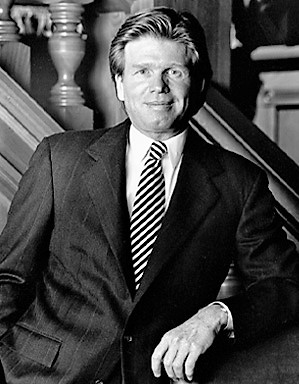
 The script for the spot titled “Revolving Door” was written by Milwaukee ad man, Dennis Frankenberry (above) and his firm of Frankenberry, Laughlin and Constable. Later he told an interviewer, "Fortunately, we were in a position to commit our resources to the campaign just then." In truth his availability had been created by his conviction for drunk driving and leaving the scene of an accident having caused bodily injury,  Which his how a white man who had received the benefit of work furlough during his sentence, was able to "commit resources" to create an advertisement which would bring an end to furloughs for thousands of prisoners - most of them black.  D.L. and C. hired a production company called “The James Gang”  out of Dallas, Texas, , run by conservative photographer James Beresford,  to actually shoot the spot.
Ominous drum roll. Quick Fade In Long Shot. The camera pulls back from a guard carrying a rifle as he climbs the watch tower outside of a prison. Title fades in, reading, “The Dukakis Furlough Program”, then fades out quickly. Narrator: “As governor, Dukakis vetoed mandatory sentences for drug dealers.” Dissolve to a Long Shot of a rifle carrying guard walking along a fence line. Narrator: He vetoed the death penalty. His revolving door prison policy....”
Dissolve into a Medium Long Shot of a line of prisoners walking away from the camera toward a fence. In the center of the fence is a glass revolving door. A line of prisoners, heads down, pass through the door and then continue walking back towards the camera. Narrator: “...gave weekend furloughs to first degree murders not eligible for parole.” 
Title fades in across the lower center of the screen: “268 escaped”. Narrator: “While out, many committed other crimes like kidnapping and rape”. Fade in a tighter medium shot centered on the revolving door.
A title card fades in lower center of screen “Many are still at large.” Narrator” And many are still at large.” Quickly fade out title. Narrator: “Now, Micheal Dukakis, says he wants to do for America...” Dissolve to a Long Shot of a guard with a rifle standing on a roof, with the guard tower in the back ground. Narrator: “...what he has done for Massachusetts”. Dissolve in Bush/Quayle claimer across the bottom of the screen. Narrator: “America can't afford that risk.” Quick Fade to Black.
The revolving door was a prop, built in Salt Lake City and assembled a day early at an angle between two gates in the third, outside fence line. Some 50 members of The Young Republicans attending Brigham Young University and The University of Utah were recruited to act as prisoners. None of the actors or crew had any contact with the general prison population. And the actual shoot was accomplished in a single day.
During the shoot Dennis Frankenberry made at least one alteration to the “shooting script”. Among the endless line of down faced prisoners, one, and only one - a black man with a neat low Afro haircut - was instructed to glance upward as he exited the revolving door. He was the only “prisoner” who did anything different from the others, making him an immediate focal point. In order to increase the impact of the spot, during editing it was decided to drain the color from the film, so in its broadcast version it was gray sepia tones, as if 1960's news documentary.
Denials of racism being used as a tool by the Bush campaign are belied by the close coordination between the two spots. They were a one two-punch, one to to the jaw and the second to the breadbasket. The more blatant ad, “Furlough”, began running on Wednesday, 21 September, 1988. The following night CBS News reported on the new commercial, describing it as “crime ad”. Race was not mentioned at all.
The Furlough ad ran for 2 weeks, ending on Tuesday, 4 October. The very next day, Wednesday, 5 October, “Revolving Door” first aired. CBS did not mention either ad again until 20 October, and this time the story concentrated on William Horton's criminal record. Complaints about the racist context to the ads would not be mentioned on CBS until 24 October, three weeks into the “Revolving Door” ad run. CBS only review of the content of the ads was a comment by media consultant Tony Schwartz, who described the ads as “particularly effective”. Why they were effective was not mentioned. This at a time the average television and newspaper newsrooms  had few blacks in editorial positions.
After the campaign, Larry McCarthy, the creator of the “Furlough” ad, described William Horton as “...every suburban mother’s greatest fear.” By suburban, he meant, of course, white. And the Federal Election Commissions investigation of the ads, demanded by the Democratic party and the NAACP was forced to admit that Roger Ailes “may have implicitly communicated to Mr. McCarthy”. But any further questions were cut off by the Republicans who made up half of the commission.
Bill Keller, who edited an investigation of the Horton story for The Marshal Project, would later point out, “The astounding fact is that, at the time, all 50 states had furlough programs for prisoners, including for murderers in many states. Even Ronald Reagan, when he was (Republican) Governor of California, had a furlough program...twice, inmates who were out on furloughs...committed murders. Reagan defended the program and said nobody’s perfect.”
Keller went on to describe William Horton as “...a convenient tool in a kind of politics that at the very least was fear mongering and I think fair to say race baiting. I think it had echoes of the earlier Southern strategy of Republicans, which was to play on white anxiety.” I would say not an echo, but a maturing clarion call to white power and what would become the Republican base.
- 30 -

Sunday, February 24, 2019

FOREIGN AGENTS Chapter Four

...the concentration of wealth are what the Republican party is all about.”
Kevin Phillips. “The Politics of Rich and Poor” 1990
The red BMW convertible raced northbound up the tree lined Lake Drive in the North Port neighborhood of Milwaukee, Wisconsin. It powered toward the little park called the Gilman Triangle. 
The red headed driver reeked of beer as he blew through the stop sign at East Bradford Avenue. Homes and apartment buildings flashed past as he drifted over the center of the 2500 block of the narrow residential street.
It was another 3rd of July evening, this one two years before Angela and Clifford Barnes would be brutally attacked some 900 miles to the east. The drunk behind the wheel was 38 year old Dennis Frankenberry (above) , a “precocious young advertising executive” and founder of the hottest firm in Milwaukee.  
He had just snared the multi-million dollar Miller Brewing Company account for his agency.  He was, as the saying went, “rich, white and over twenty-one”, and a regular donor to the Wisconsin Republican party.   
Dennis may or may not have seen the single headlamp looming in front of him. He must have felt the impact as the motorcycle crumpled against the kidney grill of his car. And he surely saw the two passengers as they were catapulted onto his hood, and then tossed aside to the pavement like crumpled trash.
The damaged BMW did not pause, and Dennis Frankenberry did not inquire as to the condition the victims he left sprawled on the street behind him. 
Twenty-one year old Toby Gargardeski got the worst of it, fracturing his skull. After surgery the next day Toby would be left in a coma, in critical but stable condition. His companion, 20 year old Melcio Montemoyer, also suffered head injuries, but his most serious injury was a badly fractured leg which would require several surgeries and would never fully heal.
The red BMW continued half a mile up Lake Drive before turning onto East Locust Street. When the car started to give out, Dennis pulled onto a side street, where he finally stopped. He burst into the nearest house, telling the startled occupants that he had just been an accident. They noted he reeked of alcohol and had “watery, red eyes”.  Dennis demanded a glass of water, then a phone. When the police arrived, summoned by a witness who had followed his escape, Dennis hid upstairs. The occupants admitted the cops, who took Dennis into custody. He spent Wednesday night in jail, and on Thursday morning, 4 July, 1985, he was released on bail.
On Monday morning, 8 July, 1985, Dennis Frankenberry was asked to appear with his attorney at the district attorney's office at 8:30 am to discuss the accident. He finally showed up at noon. After a short meeting, Dennis was free to leave again. 
This time he left the state, checking into a private hospital in Kansas to be treated for his addictions to cocaine and alcohol. In reporting his extraordinary treatment, 
The Milwaukee Journal would win no Pulitzer Prize for their coverage. They identified Dennis only as “an advertising executive”. The newspaper was a client of his firm, as was the state of Wisconsin.
It would be October before the city got around to charging Dennis Frankenberry, with reckless driving and leaving the scene of an accident. The October trial was quick. Dennis pled guilty as charged.  He was fined $300. 
And he was incarcerated. For 90 days. In fact he spent his nights in jail. His days were spent in his office, working on anti-drinking and driving public service ads which would count toward his court ordered 250 hours of public service. In other words he was serving his sentences concurrently. Dennis was also furloughed to spend weekends with his wife and children.  The hypocrisy was noted by a few Milwaukee journalist, despite the official blanket thrown over Dennis' transgression. It was true, as one author has pointed out, that “While outside the correctional facility, Frankenberry committed advertising, not kidnapping and rape.” Still his treatment was the exception.
After only 66 days Dennis was “released” for “good behavior”. That left only the court ordered restitution to his victims. In early January of 1987 the lawyers announced that Toby Gargardeski, awake but struggling to read again and having short term memory problems, was awarded $990,000, and Melcio Montemoyer, just beginning to deal with the nerve damage in his leg and foot, was awarded $250,000. According to the courts, justice had been served. The crippled Melcio explained to the few reporters who showed up, “If it had been me, I would have probably gotten a longer sentence...but then we're no big shots.”
The public service ads produced by Frankenberry, Laughlin and Constable would win awards,
bringing the agency and Dennis to the attention of some even “bigger shots”, who, despite Dennis' new reputation, invited them to come to Washington to submit ideas based on theme's suggested by Atwater and Ailes.
Frankenberry's team submitted four ads the Bush campaign decided to put into production. There was the “Boston Harbor” spot (above), attacking Dukakis' environmental record, which was far stronger than Bush's.  There was “Tax Blizzard” which threatened a flood of IRS missives pouring into a middle class family home, building on the “tax and spend Democrats” trope. And there was the “Oath of Allegiance” ad which implied that Micheal Dukakis was unpatriotic. But the one that interested Atwater and Ailes the most was Dennis' “Revolving Door” spot.
The Revolving Door” did not mention William Horton or his crimes. Atwater and Ailes knew such a blatant racist attack (“n---er, n---er, n---er”) would cause a media blow back. But it could serve as cover for such and attack.  As Ailes told Ad Age magazine, “News is who has the hottest attack ads and who can get the highest ratings.”  The odd fact that the man who would help destroy the weekend parole system in American had himself benefited from that same system did not seem to bother any pf the participants.
- 30 -

Blog Archive