August 2025

August  2025
I DON'T NEED A RIDE. I NEED AMMUNITION.

Translate

Showing posts with label Bayou Teche. Show all posts

Sunday, October 22, 2023

VICKSBURG Chapter Seventy - Two


In mid May the new commander of the Trans-Mississippi – just 3 months on the job - 39 year old General Edmund Kirby “Seminole” Smith (above) , faced a mounting crises with shrinking resources. 

Two years before, in March, the Confederacy had lost its most populous city, New Orleans. In April of 1862 the Yankees of had driven the government of what had been the richest state in the Confederacy  from it's capital, Baton Rouge. In January of 1863  Smith had surrendered the new capital of  Oposlusa. And in early May, from it's 4th capital Alexandria,  on the Red River. Since March the government had been isolated 124 miles northwest of Alexandria, in the small town of Shreveport - half a mile to the east of Smith's headquarters at Fort Johnston, and just 40 miles from the Texas border.
The little capital of Shreveport (above) -   between hills and the Red River -  was jammed with about 6,000 whites and 3,000 slaves – almost double it's antebellum population. The Shreveport Arsenal, under Captain Frederick Peabody Leavenworth, was busily producing ammunition and repairing weapons, now with additional workers evacuated from the Arkadelphia, Arkansas Ordnance Works. But the only way to get that production to the armies was by horse drawn wagon. The Red River supply line was now blocked at Alexandria. The closest railroad to Shreveport was the line from Marshal, Texas - which stopped 5 miles short of town. The only other railroad came no nearer than Monroe, 100 miles to the east.
Almost 200,000 men from the Trans Mississippi were serving in Confederate armies - 60,000 from Arkansas, almost 60,000 from Texas, 50,000 from Louisiana, 30,000 from Missouri and 2,500 from New Mexico Territory. But by mid-May of 1863 all those men were beyond reach. Kirby Smith could muster barely 30,000 men in the Trans Mississippi. And those few were short of training, uniforms, food, ammunition and medicine because the “gray back” Confederate currency used to buy supplies was almost worthless. The view from Fort Johnson was so depressing, Smith began to consider resigning from the army and retreating into a Jesuit monastery.
Seventy miles southeast of Shreveport, at Natchitoches, commanding about 4,000 scattered men, was 36 year old Major General Richard Scott "Dick" Taylor. He had spent the spring being pushed up the Bayou Teche, even suffering the insult of having his own plantation burned to the ground. Even after Yankee Major General Nathaniel Banks withdrew 3 divisions down the Red River to attack Port Hudson, Taylor's army was still too small to confront the 10,000 Yankees as they backtracked down Teche Bayou to Brashear City, the western terminus of the railroad out of New Orleans. Never the less, the ex – President's son had a plan.
General Taylor would write after the war that as he re-entered Alexandria, he received word that, “...Major-General Walker, with a division of infantry (Walker's Greyhounds)...would reach me within the next few days”.  Taylor had no doubt how best to use 4,000 fresh soldiers. “I was confident that, with Walker's force, Brashear City could be captured...(And when) Banks's communication with New Orleans..._(was)threatened....(this) would raise such a storm as to bring General Banks from Port Hudson, the garrison of which could then unite with General Joseph Johnston in the rear of General Grant.”
Major General John George Walker (above)  was another of the qualified field officers in the Army of Northern Virginia who were transferred west in June of 1862, after Robert E. Lee took over in Virginia. So, in November, Walker took command of 12 Texas regiments in 3 training camps in Lonoke County, central Arkansas. The staging posts had originally been called Camp Hope, but in the fall 1862 measles and typhoid swept through the 20,000 recruits, killing 1,500 of them, including newly promoted Brigadier General Allison Nelson. Thereafter the soldiers referred to the place as Camp Death, but the War Department preferred Camp Nelson. Walker earned his men's respect by paying attention to camp hygiene, which cut the death rate by two thirds.
A brigade of the Texas Division, under Brigadier General Thomas J. Churchill, was detached to occupy Fort Hindman at the Arkansas Post in January of 1863, but was lost when that position was captured by Major General John Alexander McClernand. Until late April, Walker's men remained in central Arkansas, in case the Yankees made another strike toward the capital of Little Rock. But once General Smith could confirm that Grant had crossed the Mississippi to attack Vicksburg, he decided he could risk 6,000 of Walker's men to cut the Yankee supply line.
They set out on foot the morning of Friday, 24 April, 1863. Eight days and 78 miles later they crossed the border into Louisiana. They made 16 miles on Saturday, 2 May, and another 16 on Sunday, 3 May, camping that night on the banks of Bayou Bartholomew. Following that tributary south for 2 more days, and 15 miles, brought Walker's division to Washita, Arkansas, where they were met by a dozen steam boats, which carried them to the town of Trenton, opposite the town of Monroe, western terminus of the Vicksburg railroad. The 6,000 rebels camped that night, 2 miles south of Trenton. That night they informed General Smith they had finally arrived in the theater of operations.
While General Smith considered what to do with Walker's Texas division, local commander, and Texan, 44 year old Brigadier General Paul Octave Hébert, tried to pilfer a brigade for his own needs. But Walker was able to fall back on his orders from General Smith, to keep his division together.
Eventually, Smith decided it would be better to send the Texans back to Arkansas, where they would be safe from both the Yankees and sticky fingered Confederate generals. So at 8:00 a.m., on Saturday, 9 May, the 6,000 Texas soldiers re-boarded transports (above)  for a return voyage to Washita. But as the boats headed north, General Taylor would re-direct Walker and his men to his join his southern assault on Brashear City.
The Texans waited until Friday, 15 May, for their supply wagons to arrive from Washita. The next day, Saturday, 16 May, as Grant's Yankees were driving Pemberton's rebels back behind the forts at Vicksburg, the Texas Division retraced their steps 17 miles southward. Over the next 8 days General Walker's Greyhounds marched 150 miles, finally reaching Alexandria, on Wednesday 27 May –which is when General Smith in Shreveport finally learned of Taylor's revival of his proposed advance down Bayou Teche.
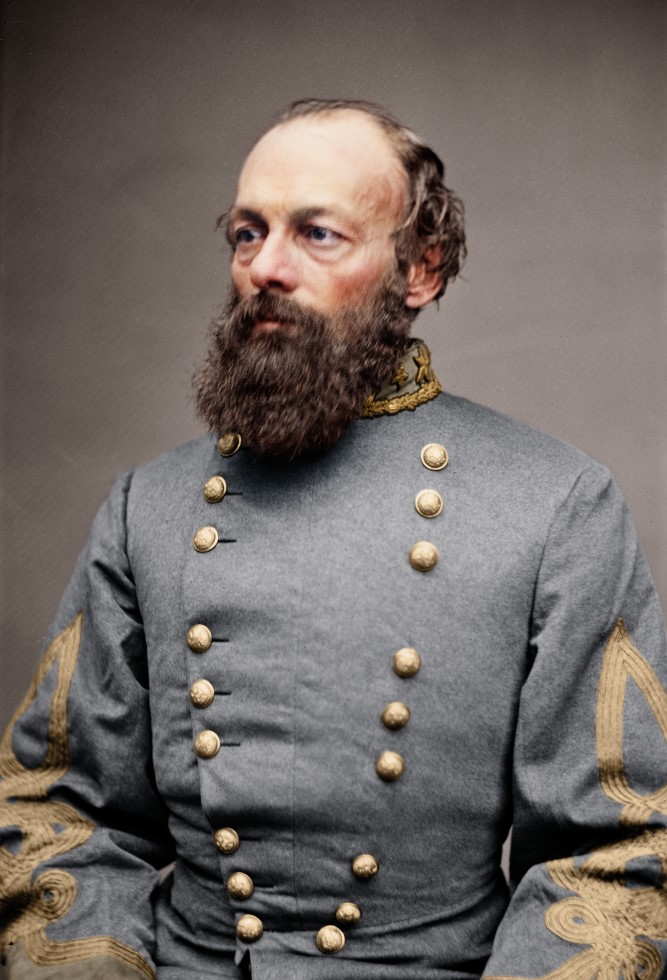
Taylor would claim that both Confederate Secretary of War James Seddon and President Jefferson Davis had approved his fantastic, almost fantasy, plan to threaten New Orleans. But Taylor's boss, General Kirby Smith (above), did not.  As they retreated from Alexandria, the Yankees had burned and destroyed everything in Cajun Country which might support an advancing rebel army.  So Taylor's plan depended upon capturing Yankee supply depots to feed and arm his now 8,000 men, and that, in the opinion of General Smith, was not likely to happen. And even if it did, it would leave half of the Trans Mississippi army isolated in the far south west corner of the theater. Besides, Smith had been receiving an almost endless stream of orders from President Davis to do something directly to rescue Vicksburg – under cutting the claim Davis supported Taylor's fantasy.
General Taylor (above) whined, “ I was informed that...public opinion would condemn us if we did not try to do something.” So Smith's original orders stood. On Thursday, 28 May the Texans changed their line of march, now heading 40 miles over 3 days toward the port called Little River. There they prepared 2 day's rations before again boarding steamboats, this time heading north up the Tenas River.
Taylor and Walker were to advance toward Richmond, Louisiana, on the Shreveport and Vicksburg railroad, and strike from there to capture Young's Point and Milliken’s Bend, thus cutting Grant's supply line down the western bank of the Mississippi. Taylor remained skeptical. “The problem was to withdraw the garrison (of Vicksburg), not to re- enforce it”, he wrote.  But in all fairness, that was not Smith's plan, either. He wanted to force Grant to withdraw from his positions in central Mississippi, by cutting his supply line. 
The problem was that the week earlier,  Grant had shifted his supply base to the Yazoo River at Chickasaw Bayou and Snyder's Bluff. So after a month's worth of exhausting marching and counter-marching, General Smith's plan had failed before it had ever been launched.
- 30 -

Tuesday, February 28, 2023

VICKSBURG Chapter Twenty


When it was all over 47 year old politician turned Major General Nathaniel Banks (above) would claim the salt was his idea. But the salt was a strategic goal, and Bank's was never a strategic thinker. The Vice President of the United States, 53 year old Hannibal Hamlin of Paris, Maine, , called the man "wonderfully cold and self (assured)".   And he did not mean that as a complement. A modern historian - Allan Nevins -  has described Banks as  "clever (and)...showy...without much depth or purpose,”  As if to prove these charges, "General" Banks was obsessed with learning tactics. 
The strategic thinker was 25 year old Brigadier General Geoffrey "Gottfried" Weitzel, a brilliant staff officer under the corpulent and corrupt Bay State politician turned Major General Benjamin Butler. In 1862 Butler, commanding  31,000 men,  was lord of the captured city of New Orleans. It was his aide General Weitzel who dreamed up the Bayou Teche operation, because,....well for several good reasons but strategically because of 144 acres of solid high ground in the middle of a Louisiana swamp called Avery Island or more traditionally, Ile Petite Anse - "the small cove".
See, in antebellum America sodium chloride was the only available food preservative. Drawing moisture out by salting beef and pork made them inhospitable to bacteria, slowing their decomposition.  The problem in the 2 centuries prior to 1860 was that there were only a few places on dry land in North America where salt could regularly be obtained in quantity, The largest and most dependable were "The Salt City" of Syracuse, New York (above), where brine springs of 78% salt fed into Nine Mile Creek...
...and Saltville, Virginia (above)  on the North Fork of the Holston River near the Tennessee state border.  In 1840, just outside of Saltville, a gold mine was sunk 210 feet deep and struck halite - solid rock salt, like that mined in Europe.  But it was never exploited because it was far cheaper and faster to evaporate salt out of either the ocean or the brine springs, than drag it up from 200 feet underground.
Then in May of 1860 pure rock salt was discovered by John Marsh Avery, just 16 feet below his Louisiana sugar cane plantation. Suddenly the Confederacy had 7 million pounds of cheap salt a year which had merely to be pried from open pits, and transported 10 miles north to New Iberia, on the shores of the Bayou Teche. General Butler ordered General Weitzel to plan the destruction of this valuable resource, but in October of 1862 General Butler was relieved.
His replacement was the shallow, ambitious General Nathaniel Banks, commander of the brand new 25,000 man Army of the Gulf.  He had recruited these green troops himself, and their training was not yet complete. Almost one third were 90 day volunteers whose enlistments were already half up. Much of their equipment had never been delivered, Some had even been issued muskets that could not fire. After struggling to get this mess straightened out - he was only partially successful -  in January of 1863, Banks sent General Weitzel and a couple of thousand men into southwestern Louisiana as far as Bashear City, on Bayou Teche and on the southern shores of Grand lake - an aneurysm near the mouth of the Atchafalaya River.
What Weitzel discovered was that in 1861 Louisiana had been stripped of young white males to fill out the Army of Northern Virginia. Two years later, only 3,500 effectives could be scrapped together to defend the southern half of the richest state in the Confederacy. 
They were formed into two brigades under the command of Major General Richard Scott "Dick" Taylor (above).  Like Banks,  Richard Taylor had never attended West Point, but was smart and willing to learn. Butt Taylor's only objective qualification for command was that he was the only son of the 12th President of the United States, Zachary Taylor. 
One of his two brigades was named for its commander, 34 year old Cajun Brigadier General Jean - Jacques Alfred Alexander Mouton (above). He was the West Point trained son of an ex- Louisiana Governor. 
And commanded by the alcoholic 44 year old Brigadier General Henry Hopkins Sibley (above), was the Arizona Brigade. This was a melange of Texas cavalry regiments which never set foot in Arizona, rarely had enough horses to operate as cavalry and never operated as an entire brigade. The one regiment which did have horses was commanded by 49 year old Texan, Colonel Thomas Green. According to Yankee Admiral David Dixon Porter, when drunk Green was so fearless he was worth 5,000 men in battle.
The Yankee Weitzel's mission was cut short because President Lincoln's patience began to run short. He wanted Banks (above) to assist Grant in taking Vicksburg.  And as January 1863 drew to a close,  48 year old General of the Army Henry Wager Halleck passed along Mr. Lincoln's frustration to General Banks. Wrote Halleck, "Nothing but absolute necessity will excuse any further delay on your part." So, in February, Weitzel's command rejoined Bank's little half trained army in New Orleans.  They then sailed 130 miles up river to Baton Rouge, occupied by Federals since May of 1862.  They then marched the 25 miles north to invest the isolated southern outpost of Vicksburg, the fortress of Port Hudson.
It was an impressive fort.   Behind high packed earthen walls were 15,000 soldiers and 21 heavy cannon, blocking any advance further north up the Mississippi on land or water. After tapping lightly at the fortress, Banks, sheepishly retreated back to Baton Rouge, with nothing to show for the effort. Which is when Weitzel dusted off his Bayou Teche proposal. And in selling it to Banks, the Prussian born Weitzel must have echoed Mister Lincoln's own thinking.
A year earlier, the 54 year old Abraham Lincoln (above) had reminded his jubilant commanders, celebrating the capture of New Orleans,  of what still needed to be done. Recalling his own two Mississippi River flat boat trips, Lincoln lectured them, "I am acquainted with that region and...as valuable as New Orleans will be to us, Vicksburg...is the key." 
Sweeping his arms across a map of Texas, Louisiana and Arkansas, the 16th American President explained, "Here is the Red River (above), which will supply the Confederates with cattle and corn to feed their armies....From Vicksburg these supplies can be distributed by rail all over the Confederacy. It means hog and hominy without limit...The war can never be brought to a close until that key is in our pocket." And, added Weitzel, there was now the salt.
In mid-March, Banks pulled 2 of his 3 divisions out of the Baton Rouge defensive lines and returned them to New Orleans. He garrisoned that city with about half his force. Banks then ferried the best trained and armed 10,000 men across the Mississippi to Algiers, Louisiana, where they were loaded aboard cars of the New Orleans and Opelousas Central Railroad (above). This line ran 80 miles due west through swamps to the line's temporary termination just beyond Bashear City, at Pattersonville, Louisiana. 
Here elements of the 4th Division under 34 year old Brigadier General Cuvier Grover (above) were loaded onto transports and barges on the Atchafalaya River.  They then sailed up this river into Grand Lake and past the rebels at Fort Brisland. 
Their plan was that on Thursday, 11 April, they would land 15 miles north and cut off the rebel retreat by capturing the town of Franklin, Louisiana. They would then crush Taylor's entire army between them and elements of the 1st division under 41 year old Major General Christopher Columbus Agur, who would be attacking Fort Brisland from the south.
It was not until Wednesday, 10 April, 1863 that Banks finally notified General Grant that he was no longer laying siege to Port Hudson. Banks assured Grant that the operations up Bayou Teche would be brief and productive.  By destroying Taylor's little army, he would be protecting New Orleans, and by outflanking and capturing the rebel fort up the Atchafalaya River, he would be cutting the Red River supply line and isolating Port Hudson. Having achieved all of this, Banks assured General Grant, he would be back before the gates of Port Hudson, ready to take the place by direct assault, with or without Grant's assistance, by 10 May.  It was a bold program, and it would take luck and speed to make the effort worth the effort.
Banks' artillery opened fire on Fort Brisland at 9:00am, on Friday 12 April. But General Agur's men did not emerged from the knee high sugar cane until 11:00am.  Still after a lot of long distance cannon fire and musketry and some marching back and forth, there was no direct assault on the fort. After nightfall word arrived that General Grover had finally landed a day late, and as of Saturday, 13 April, would be advancing on Franklin. General Banks ordered a dawn assault on the rebel fortress.
Inside the fort, "Dick" Taylor found himself in the role of King Leonidas at Thermopylae, except, Taylor chose the better part of valor, He saved his army to fight another day  by ordering a retreat under cover of night.  Bank's carried the abandoned works at dawn, That afternoon -  Sunday, 14 April, General Taylor fought a strong delaying action at Irish Bend (above), a mile and a half north of Franklin, which covered his army's escape..  
Taylor did not stop his retreat up Bayou Teche (above) until he reached the little town of Opelousas, 70 miles further north. After the fall of Baton Rouge in May 1862, this town of 1,000 had become the state capital - at least until the January raid by General Weitzler,  when Governor Morton had ordered the government removed even further north to Shreveport, on the Atchafalaya River.
To his credit, Banks pressed his advantage, and 30 miles north of Irish Bend, captured the town of New Iberia. And on Thursday, 18 April, 2 regiments of Federal troops arrived at Ile Petite Anse. They destroyed 18 buildings and all the mining equipment. Henceforth, General Taylor would have to get his salt - when he could - from Texas. The eastern Confederacy would now have to pay $100 for a  75 pound barrel of the precious mineral. And with each month of the war, that price would go up.
Two days later, on Saturday 20 April, General Banks achieved two more of his objectives. Tactically,, he captured Opelousas, Louisiana, The town's business leaders surrendered before the first Federal troops even entered the village. But of strategic importance was the capture on that same day of the fort Bank of the Rose - Butte a'-la-Rose - on the Atchafalaya River. This gave Banks direct access to the Red River, which joined the Mississippi above Port Hudson. Federal ships could now interdict all rebel river traffic,  No more pork or hominy would reach Vicksburg. To all intents the objectives of the entire  Vicksburg campaign had been achieved, even without Vicksburg being captured, if Banks could hold the ground he had just occupied.
The problems was Bank's 10,000 men could not hold the ground he'd won. Not the single railroad - nor the Federal Navy - could supply his men in these swamps indefinitely. The countless bayous of Cajun country meant raiders could easily outflank every fort or town, burning Federal supplies. And the further north he allowed himself to be tempted, the worse General Bank's predicament became.
It was no accident that this region was the original source of the tale of "Brer Rabbit and the Tar Baby." Although Banks would press his advantage 70 miles further north - capturing Alexandria, Louisiana, on Thursday, 7 May, 1863 - he finally realized he had already over stayed his welcome.
Over the next 4 weeks, as they slowly withdrew, the Federal troops stripped Cajun country of everything that might be of use. Colonel Thomas Edward Chickering, the 38 year old piano maker from Boston and commander of the Federal garrison of Opelousas, would "virtually denude" the region, taking or destroying all "cotton, sugar, fodder, corn, livestock, implements, wagons, slaves and anything else of value." 

By the time Banks returned to the Mississippi, the Cajun counties would need at least a year to recover enough so they could support even Taylor's small army. Bank's also brought to New Orleans 5,000 "freedmen", none of whom would ever supply the Confederacy with food or equipment again, and many of whom would be wearing Union Blue within a year, fighting and dying for their right to be free.
So the salt quarry was destroyed, and the bounty of the rich land was denied to the rebels,, and thousands of recruits added to the Federal armies by what General Halleck called "these eccentric movements" by General Banks.  But Major General Nathaniel Banks did not return to capture Port Hudson until long after 10 May, of 1863, which he had promised. And as far the single minded Ulysses Grant was concerned, that was all that really mattered.
- 30 -

Sunday, September 26, 2021

VICKSBURG Chapter Seventy

In mid May the new commander of the Trans-Mississippi – just 3 months on the job - 39 year old General Edmund Kirby “Seminole” Smith (above) , faced a mounting crises with shrinking resources. 

Two years before, in March, the Confederacy had lost its most populous city, New Orleans. In April of 1862 the Yankees of had driven the government of what had been the richest state in the Confederacy  from it's capital, Baton Rouge. In January of 1863  Smith had surrendered the new capital of  Oposlusa. And in early May, from it's 4th capital Alexandria,  on the Red River. Since March the government had been isolated 124 miles northwest of Alexandria, in the small town of Shreveport - half a mile to the east of Smith's headquarters at Fort Johnston, and just 40 miles from the Texas border.
The little capital of Shreveport (above) -   between hills and the Red River -  was jammed with about 6,000 whites and 3,000 slaves – almost double it's antebellum population. The Shreveport Arsenal, under Captain Frederick Peabody Leavenworth, was busily producing ammunition and repairing weapons, now with additional workers evacuated from the Arkadelphia, Arkansas Ordnance Works. But the only way to get that production to the armies was by horse drawn wagon. The Red River supply line was now blocked at Alexandria. The closest railroad to Shreveport was the line from Marshal, Texas - which stopped 5 miles short of town. The only other railroad came no nearer than Monroe, 100 miles to the east.
Almost 200,000 men from the Trans Mississippi were serving in Confederate armies - 60,000 from Arkansas, almost 60,000 from Texas, 50,000 from Louisiana, 30,000 from Missouri and 2,500 from New Mexico Territory. But by mid-May of 1863 all those men were beyond reach. Kirby Smith could muster barely 30,000 men in the Trans Mississippi. And those few were short of training, uniforms, food, ammunition and medicine because the “gray back” Confederate currency used to buy supplies was almost worthless. The view from Fort Johnson was so depressing, Smith began to consider resigning from the army and retreating into a Jesuit monastery.
Seventy miles southeast of Shreveport, at Natchitoches, commanding about 4,000 scattered men, was 36 year old Major General Richard Scott "Dick" Taylor. He had spent the spring being pushed up the Bayou Teche, even suffering the insult of having his own plantation burned to the ground. Even after Yankee Major General Nathaniel Banks withdrew 3 divisions down the Red River to attack Port Hudson, Taylor's army was still too small to confront the 10,000 Yankees as they backtracked down Teche Bayou to Brashear City, the western terminus of the railroad out of New Orleans. Never the less, the ex – President's son had a plan.
General Taylor would write after the war that as he re-entered Alexandria, he received word that, “...Major-General Walker, with a division of infantry (Walker's Greyhounds)...would reach me within the next few days”.  Taylor had no doubt how best to use 4,000 fresh soldiers. “I was confident that, with Walker's force, Brashear City could be captured...(And when) Banks's communication with New Orleans..._(was)threatened....(this) would raise such a storm as to bring General Banks from Port Hudson, the garrison of which could then unite with General Joseph Johnston in the rear of General Grant.”
Major General John George Walker (above)  was another of the qualified field officers in the Army of Northern Virginia who were transferred west in June of 1862, after Robert E. Lee took over in Virginia. So, in November, Walker took command of 12 Texas regiments in 3 training camps in Lonoke County, central Arkansas. The staging posts had originally been called Camp Hope, but in the fall 1862 measles and typhoid swept through the 20,000 recruits, killing 1,500 of them, including newly promoted Brigadier General Allison Nelson. Thereafter the soldiers referred to the place as Camp Death, but the War Department preferred Camp Nelson. Walker earned his men's respect by paying attention to camp hygiene, which cut the death rate by two thirds.
A brigade of the Texas Division, under Brigadier General Thomas J. Churchill, was detached to occupy Fort Hindman at the Arkansas Post in January of 1863, but was lost when that position was captured by Major General John Alexander McClernand. Until late April, Walker's men remained in central Arkansas, in case the Yankees made another strike toward the capital of Little Rock. But once General Smith could confirm that Grant had crossed the Mississippi to attack Vicksburg, he decided he could risk 6,000 of Walker's men to cut the Yankee supply line.
They set out on foot the morning of Friday, 24 April, 1863. Eight days and 78 miles later they crossed the border into Louisiana. They made 16 miles on Saturday, 2 May, and another 16 on Sunday, 3 May, camping that night on the banks of Bayou Bartholomew. Following that tributary south for 2 more days, and 15 miles, brought Walker's division to Washita, Arkansas, where they were met by a dozen steam boats, which carried them to the town of Trenton, opposite the town of Monroe, western terminus of the Vicksburg railroad. The 6,000 rebels camped that night, 2 miles south of Trenton. That night they informed General Smith they had finally arrived in the theater of operations.
While General Smith considered what to do with Walker's Texas division, local commander, and Texan, 44 year old Brigadier General Paul Octave Hébert, tried to pilfer a brigade for his own needs. But Walker was able to fall back on his orders from General Smith, to keep his division together.
Eventually, Smith decided it would be better to send the Texans back to Arkansas, where they would be safe from both the Yankees and sticky fingered Confederate generals. So at 8:00 a.m., on Saturday, 9 May, the 6,000 Texas soldiers re-boarded transports (above)  for a return voyage to Washita. But as the boats headed north, General Taylor would re-direct Walker and his men to his join his southern assault on Brashear City.
The Texans waited until Friday, 15 May, for their supply wagons to arrive from Washita. The next day, Saturday, 16 May, as Grant's Yankees were driving Pemberton's rebels back behind the forts at Vicksburg, the Texas Division retraced their steps 17 miles southward. Over the next 8 days General Walker's Greyhounds marched 150 miles, finally reaching Alexandria, on Wednesday 27 May –which is when General Smith in Shreveport finally learned of Taylor's revival of his proposed advance down Bayou Teche.
Taylor would claim that both Confederate Secretary of War James Seddon and President Jefferson Davis had approved his fantastic, almost fantasy, plan to threaten New Orleans. But Taylor's boss, General Kirby Smith (above), did not.  As they retreated from Alexandria, the Yankees had burned and destroyed everything in Cajun Country which might support an advancing rebel army.  So Taylor's plan depended upon capturing Yankee supply depots to feed and arm his now 8,000 men, and that, in the opinion of General Smith, was not likely to happen. And even if it did, it would leave half of the Trans Mississippi army isolated in the far south west corner of the theater. Besides, Smith had been receiving an almost endless stream of orders from President Davis to do something directly to rescue Vicksburg – under cutting the claim Davis supported Taylor's fantasy.
General Taylor (above) whined, “ I was informed that...public opinion would condemn us if we did not try to do something.” So Smith's original orders stood. On Thursday, 28 May the Texans changed their line of march, now heading 40 miles over 3 days toward the port called Little River. There they prepared 2 day's rations before again boarding steamboats, this time heading north up the Tenas River.
Taylor and Walker were to advance toward Richmond, Louisiana, on the Shreveport and Vicksburg railroad, and strike from there to capture Young's Point and Milliken’s Bend, thus cutting Grant's supply line down the western bank of the Mississippi. Taylor remained skeptical. “The problem was to withdraw the garrison (of Vicksburg), not to re- enforce it”, he wrote.  But in all fairness, that was not Smith's plan, either. He wanted to force Grant to withdraw from his positions in central Mississippi, by cutting his supply line. 
The problem was that the week earlier,  Grant had shifted his supply base to the Yazoo River at Chickasaw Bayou and Snyder's Bluff. So after a month's worth of exhausting marching and counter-marching, General Smith's plan had failed before it had ever been launched.
- 30 -

Blog Archive