

I am surprised most people think the Seventh Cavalry was wiped out at Little Big Horn by the Sioux and Cheyenne. In truth, of the 650 officers and men, scouts and civilians engaged on June 25, 1876 (on the Army’s side) only some 286 were killed: a devastating 44%, but hardly the entire command. Most of the men under Major Marcus Reno made it out alive. And where Reno was able to hold his command together over three horrible days of combat, the 210 men directly under the command of “General” George Armstrong Custer were dead within three hours of the first shot being fired. The results for the U.S. Army were even worse in the Second Battle of the Little Big Horn, when, for fifty-seven years, they were mercilessly attacked by a five foot four inch Victorian widow with blue-gray eyes and chestnut hair. Her name was Elizabeth Bacon Custer. And in this engagement she wiped the U.S. Army out, leaving no survivors.
 Immediately after the battle the military judgments were fairly unanimous. President Grant, who had been elevated to the White House based on his record as a military commander, told a reporter, “I regard Custer’s massacre as a sacrifice of troops brought on by Custer himself,…(which) was wholly unnecessary – wholly unnecessary.” General Philip Sheridan, the man who had lobbied for Custer’s inclusion on the expedition considered the disaster primarily Custer’s fault. “Had the Seventh Cavalry been held together, it would have been able to handle the Indians on the Little Big Horn."
And finally, General Samuel Davis Sturgis, overall commander of the seventh, whose son, James, had died on the Little Big Horn, reacted negatively to the suggestion that a monument be dedicated to the memory of “The American Murat”, Custer; “For God’s sake let them hide it in some dark valley, or veil it, or put it anywhere the bleeding hearts of the widows, orphans, fathers and mothers of the men so uselessly sacrificed to Custer’s ambition, can never be wrung at the sight of it.” Having dismissed Custer, the army also dismissed his 34 year old widow. Barely a month after her husband had died amid the Montana scrub brush, “Libby” Custer was forced to leave Fort Abraham Lincoln. As a widow Libby had no right to quarters on the post, and so lost the social support of her Army life and friends. Her income was immediately reduced to the widow’s pension of $30 a month; her total assets were worth barely $8,000, while the claims against Custer’s estate exceeded $13,000. And then, in her hour of need, Libby received support from an unexpected source.
 His name was Frederick Whittaker, and he scratched out a living as a writer of pulp fiction and non-fiction for magazines of the day, “…about the best of its kind”. He had met Custer during the Civil War, and the General’s death inspired him to write a dramatic eulogy praising the fallen hero in Galaxy Magazine. Whittaker also mentioned Custer’s “natural recklessness and vanity”, but Libby immediately contacted him. Libby provided Whittaker with the couple’s personal letters, access to family and friends, war department correspondence and permission to use large sections from Custer’s own book, “My Life on the Plains.”
Having dismissed Custer, the army also dismissed his 34 year old widow. Barely a month after her husband had died amid the Montana scrub brush, “Libby” Custer was forced to leave Fort Abraham Lincoln. As a widow Libby had no right to quarters on the post, and so lost the social support of her Army life and friends. Her income was immediately reduced to the widow’s pension of $30 a month; her total assets were worth barely $8,000, while the claims against Custer’s estate exceeded $13,000. And then, in her hour of need, Libby received support from an unexpected source.His name was Frederick Whittaker, and he scratched out a living as a writer of pulp fiction and non-fiction for magazines of the day, “…about the best of its kind”. He had met Custer during the Civil War, and the General’s death inspired him to write a dramatic eulogy praising the fallen hero in Galaxy Magazine. Whittaker also mentioned Custer’s “natural recklessness and vanity”, but Libby immediately contacted him. Libby provided Whittaker with the couple’s personal letters, access to family and friends, war department correspondence and permission to use large sections from Custer’s own book, “My Life on the Plains.”What emerged, just six months after Little Big Horn, was “A Complete Life of General George A. Custer”. It was pulp as well, filled with inaccuracies and excessive praise for Custer, but it was also a best seller. “So fell the brave caviler, the Christian soldier, surrounded by foes, but dying in harness amid the men he loved.”  This time there was no hint of faults in Custer. Instead the blame was laid elsewhere. Of Custer, Whittaker wrote; “He could have run like Reno had he wished...It is clear, in the light of Custer’s previous character, that he held on to the last, expecting to be supported, as he had a right to expect. It was only when he clearly saw he had been betrayed, that he resolved to die game, as it was too late to retreat.” http://digital.library.wisc.edu/1711.dl/History.Whittaker (Sheldon and Company, New York, 1876).
 All but a few professional soldiers admitted that Whittaker had gotten it wrong. In fact one of the most serious charges laid against Custer was that at the Washita he had, in fact, deserted a junior commander and his men. But those same officers withheld their criticism of Whittaker to avoid being forced to also criticize Custer's widow. Reno (above) eventually was forced to ask for and received a Court of Inquiry (not a Court Martial) on his conduct at Little Big Horn, which cleared his name and revealed the character of the people Whittaker had relied on for his version of the battle, but it made little difference to the general public who declared the Inquiry a whitewash.
 Elizabeth Custer went on to support herself comfortably by writing three books; “Tenting on the Plains”,"Following the Guidon” and “Boots and Saddles”. In each her husband was idolized and lionized. In 1901 she managed to squeeze out one more, a children’s book, “The Boy General. Story of the Life of Major-General George A. Custer”: “The true soldier asks no questions; he obeys, and Custer was a true soldier. He gave his life in carrying out the orders of his commanding general… He had trained and exhorted his men and officers to loyalty, and with one exception they stood true to their trust, as was shown by the order in which they fell.” By the time Libby died, in 1933, at the age of ninety-one, her vision of Little Big Horn was set in the concrete of the printed page.
 The first who endorsed Libby's view was Edward S. Godfrey, who had been a junior officer at the Little Big Horn and a Custer “fan” from before the battle. His 1892 “Custer’s Last Battle” was unequivocal. “...had Reno made his charge as ordered,…the Hostiles would have been so engaged… that Custer’s approach…would have broken the moral of the warriors….(Reno’s) faltering ...his halting, his falling back to the defensive position in the woods...; his conduct up to and during the siege…was not such as to inspire confidence or even respect,…” .” These attacks on Reno continued for most of the 20th century. The 1941 movie staring Errol Flynn as Custer displays Libby's view of Reno as well as any tome, echoed even by respected historians such as Robert Utley who in the 1980’s described Reno as "… a besotted, socially inept mediocrity, (who) commanded little respect in the regiment and was the antithesis of the electric Custer in almost every way.”
 So for over a century Marcus Reno was reviled and despised as the coward who did not charge as ordered, instead pleading weasel-like that Custer had not supported him as promised. It would not be until Ronald Nichols biography of Reno, “In Custer’s Shadow” (U. of Oklahoma Press, 1999) that Reno received a fair hearing.
 About the same time the Indian accounts of the fight began to finally be given a serious consideration by white historians, including the story told to photographer Edward Curtis in 1907 by three of Custer’s Indian scouts. The three men said they watched amazed as Custer stood on the bluffs overlooking Reno’s fight in the valley, a story supported by some soldiers in the valley fight who reported seeing Custer on the bluffs. (Most historians had always assumed they were imagining things.)
This time there was no hint of faults in Custer. Instead the blame was laid elsewhere. Of Custer, Whittaker wrote; “He could have run like Reno had he wished...It is clear, in the light of Custer’s previous character, that he held on to the last, expecting to be supported, as he had a right to expect. It was only when he clearly saw he had been betrayed, that he resolved to die game, as it was too late to retreat.” http://digital.library.wisc.edu/1711.dl/History.Whittaker (Sheldon and Company, New York, 1876).All but a few professional soldiers admitted that Whittaker had gotten it wrong. In fact one of the most serious charges laid against Custer was that at the Washita he had, in fact, deserted a junior commander and his men. But those same officers withheld their criticism of Whittaker to avoid being forced to also criticize Custer's widow. Reno (above) eventually was forced to ask for and received a Court of Inquiry (not a Court Martial) on his conduct at Little Big Horn, which cleared his name and revealed the character of the people Whittaker had relied on for his version of the battle, but it made little difference to the general public who declared the Inquiry a whitewash.Elizabeth Custer went on to support herself comfortably by writing three books; “Tenting on the Plains”,"Following the Guidon” and “Boots and Saddles”. In each her husband was idolized and lionized. In 1901 she managed to squeeze out one more, a children’s book, “The Boy General. Story of the Life of Major-General George A. Custer”: “The true soldier asks no questions; he obeys, and Custer was a true soldier. He gave his life in carrying out the orders of his commanding general… He had trained and exhorted his men and officers to loyalty, and with one exception they stood true to their trust, as was shown by the order in which they fell.” By the time Libby died, in 1933, at the age of ninety-one, her vision of Little Big Horn was set in the concrete of the printed page.The first who endorsed Libby's view was Edward S. Godfrey, who had been a junior officer at the Little Big Horn and a Custer “fan” from before the battle. His 1892 “Custer’s Last Battle” was unequivocal. “...had Reno made his charge as ordered,…the Hostiles would have been so engaged… that Custer’s approach…would have broken the moral of the warriors….(Reno’s) faltering ...his halting, his falling back to the defensive position in the woods...; his conduct up to and during the siege…was not such as to inspire confidence or even respect,…” .” These attacks on Reno continued for most of the 20th century. The 1941 movie staring Errol Flynn as Custer displays Libby's view of Reno as well as any tome, echoed even by respected historians such as Robert Utley who in the 1980’s described Reno as "… a besotted, socially inept mediocrity, (who) commanded little respect in the regiment and was the antithesis of the electric Custer in almost every way.”So for over a century Marcus Reno was reviled and despised as the coward who did not charge as ordered, instead pleading weasel-like that Custer had not supported him as promised. It would not be until Ronald Nichols biography of Reno, “In Custer’s Shadow” (U. of Oklahoma Press, 1999) that Reno received a fair hearing.About the same time the Indian accounts of the fight began to finally be given a serious consideration by white historians, including the story told to photographer Edward Curtis in 1907 by three of Custer’s Indian scouts. The three men said they watched amazed as Custer stood on the bluffs overlooking Reno’s fight in the valley, a story supported by some soldiers in the valley fight who reported seeing Custer on the bluffs. (Most historians had always assumed they were imagining things.)One of the scouts, White Man Runs Him (above), claimed to have scolded Custer; “Why don’t you cross the river and fight too?” To which the scouts say Custer replied, “It is early yet and plenty of time. Let them fight. Our turn will come.” And it did. But sure was a long time coming.
And it did. But sure was a long time coming.- 30 -


 So within days of ascending to the Throne of Horus, Thutmose III (above) ordered the head of his army, Thanuny, to gather troops and supplies at the border fortress of Tjaru by the last week August, 1458 B.C. Clearly Thutmose intended to march into Canaan, and that meant trouble for the kingdom of Kadesh, a Canaaite kingdom in what is today western Syria, which had paid homage to Egypt for the last century. But while Hatshepsut was slowly dying the kings of Kadesh had taken the opportunity to realign themselves with Mittani, a kingdom to their north. And the Mittani kingdom paid homage to the powerful Hittites, centered in Turkey. So in reality this was a high stakes poker game between the Hittite and Egyptian super powers, using the client states of Canaan and Mittani as chips. And Thutmose intended to show the Hittites that he was not bluffing.
  There was a delay in gathering the army, and Thutmose did not leave Tjaru until February of 1457 B.C. His Egyptian army was mostly infantry, perhaps 10,000 men, divided into platoons of six to ten men each, consisting of bowmen and lancers. The mobile force of two-horse chariots were not built for long distance travel, and on the march the chariots had to be light enough for each to be carried by their shield men. On this march across the Sinai (the Red Deseret) skirmishers advanced to the front while raiding parties ranged along the flanks, gathering cattle, grain and water for each night’s camp. Behind came the baggage train of ox carts carrying supplies, repair tents and blacksmiths, soothsayers, priests and musicians.
 These people were used to walking, and never rode on horseback, so the army reached the Philistine fortress of Gaza (“The key to Syria”) by mid-March. After another 11 days marching up the coastal plain Thutmose’s army entered the port of Jamnia, near present day Tel Aviv. Here he rested his men and scouts brought word that the Canaanite armies were awaiting him on the Plain of Esdraelon, in front of the hill fortress of Megiddo. So in early May, with his communications back to Egypt secured by his navy, Thutmose swung inland, to the small village of Yaham.
 In front of him now rose a line of low hills, stretching from the northwest (Mt. Carmel at 1,740 feet) to the southeast (Mts Tabor & Gilboa, 1,929 feet). Megiddo and the Canaanite army were on the northern flank of these hills, and his generals told Thutmose there were only two roads. The most direct route headed due north from Yaham and then turned northwestward on the Via Maris (sea route) to the village of Taanakha, before reaching Megiddo. The longer path headed northwest from Yaham along the flank of the mountains before crossing the hills to reach the Via Maris at the village of Yokneam. From there it was an easy backtrack southeastward to Megiddo. The Canaanite army had divided their infantry, with almost half guarding Taanakha and the other half Yokneam. Stationed at Megiddo (in the center) were the Canaanite chariots with some infantry support, ready to fall upon either approach the Egyptians made.
 However there was also a third choice. On the road north toward Yokneam there was a cutoff, a path less traveled, that ran through the village of Aruna and then through a narrow defile, so narrow that the army could pass through only single file, before debauching onto the Plain directly in front of Megiddo. It was the most direct route, but Thutmose’s men would arrive piecemeal, where they could be destroyed “in detail”, one unit at a time. But this route also offered an opportunity.
 It seems that Thanuny feinted toward the two main roads, using perhaps two thirds of the army. But before dawn Thutmose sent his spearmen and shield men through the pass, single file; perhaps 3,000 men in all. When they stepped out of the pass it was about 1:00 p.m., May 9th , 1457 B.C. The Canaanite chariots, surprised at their enemies sudden appearance, hastily charged at the Egyptian spearmen, and let loose a barrage of arrows. But defended by their shield men, the Egyptian formations stood firm. And then, as the Canaanites withdrew to reform and attack again, the Egyptian ranks opened up and from the defile appeared Egyptian chariots, carried through the pass and reassembled. Now like a whirlwind they fell upon the Canaanite chariots.
 “Even when moving at a slow pace, …(the Egyptian war chariot) shook terribly, and when driven at full speed it was only by a miracle of skill that the occupants could maintain their equilibrium…the charioteer would stand astride the front panels, keeping his right foot only inside the vehicle…the reins tied around his body so he could by throwing his weight either to the right or left…pull up or start his horses by a simple movement of the loins…he went into battle with bent bow, the string drawn back to his ear…while the shield-bearer, clinging to the body of the chariot with one hand, held out his buckler with the other to shelter his comrade.” (History of Egypt Chakdea, etc. G. Maspero. Groilier Society)
 The Canaanites panicked at the sudden Egyptian charge, and their causalities tell the story; just 83 killed, but 240 taken prisoner and 924 chariots and 2,132 horses captured. The Canaanite infantry on the wings, now divided by the Egyptian army, abandoned Megiddo and scattered in retreat. And although the fortress held out for seven months before finally surrendering, from the moment Thutmose III reached the Plain of Esdraelon, he had ensured his capture of the hill fort of Megiddo, or, in the Canaanite language, Armageddon. And thus ended the first battle recorded in detail in history.

 His world was shaped by his uncle and guardian, Pericles (above), who defined a great leader as someone who “…knows what must be done and is able to explain it; loves one’s country and is incorruptible.” Having decided that Athens and Sparta were destined for war, Pericles devised a most unusual strategy. In 430 and 429 B.C. Spartan armies invaded Athenian territory (called Attica), burned crops and villages and took hostages. But the Athenian army refused to give battle, relying on their fleet to bring in grain from Egypt and the Ukraine to keep them fed. Pericles’ plan was to frustrate the Spartans until internal political dissent encouraged them to surrender. And it might have worked but for one unanticipated event. The plague arrived on the grain ships from Egypt in 428 B.C. and killed perhaps a third of the population of Athens, including Pericles.
 The abrupt vacuum at the top of Athenian politics was an opportunity for the young Alcibiades (above). He was a superstar right from the start. First he was a real Olympic athlete and “the Adonis of Athens…tall, shapely, remarkably handsome, fond of showy attire and luxurious surroundings…” (p 221, Baldwin Project) He was a powerful speaker whose slight lisp made him all the more endearing. He seduced women and men with equal ease and equally often.
 It seems that all Alcibiades learned from Socrates was that he needed a project worthy of his ambition. And in 415 B.C. Alcibiades suggested a cloak and dagger strike on the island of Sicily, a commando operation - perhaps even capturing by subterfuge the port city of Syracuse, Sparta’s strongest ally. But Alcibiades’ opponent, Nicias, not wanting his enemy given the chance to succeed, warned that such an expedition would have to be hugely expensive, requiring as many as 140 ships and 6,000 men. He meant to mock the idea but to the shock of both Nicias and Alcibiades, the Athenian council voted to fund the massive mission and then placed both Alcibiades and Nicias in charge of it.

 Alcibiades had made his first betrayal. Once in Sparta, he converted from a luxury loving Athenian into a prime example of Spartan brutality and sadomasochism.
 Tissaphernes had been hoping to weaken the Athenians. But now he had begun to worry that the Spartans were getting too strong, which is exactly what he was told by his new political advisor, Alcibiades. On his advice the Persians cut back their cash support for Sparta, and Alcibiades put out peace feelers to his fellow Athenians. He convinced them that he could bring the Persians into the war on Athens’ side. Of course Tissaphernes had no intention of committing his forces until both sides were exhausted, but by the time the Athenians realized this, according to the poet Aristophanes, they yearned for Alcibiades even while they hated him. This was to be Alcibiades’ third betrayal.
 The Athenian generals made him an Admiral, and he engineered an Athenian naval victory at Abydos, near the Hellespont, and burned the little village of Byzantium. After another Alcibiades victory the Spartans sent home a desperate note. “Our ships are lost. Mindarus (the commander) is dead. The men are starving. We do not know what to do.”
 His last betrayal had convinced the Persians to again fully fund the Spartan war effort. And in 406 B.C. Alcibiades sailed with 100 ships on a mission to assist Phocaea, which was under siege from Spartan forces. While making a scout Alcibiades left 80 ships at anchor at Notium under his second in command. But while he was away the fool brought on an engagement with the Spartan fleet, and was soundly defeated. His enemies blamed Alcibiades for the disaster, and he was forced into exile once again, and this time it looked final.
 In 404 B.C. Alcibiades was living in retirement with a mistress in Phyrgia, in what is today central Turkey, in a mountain cabin. In the dark of night assassins set the house on fire and murdered Alcibiades as he rushed out side. Says the Baldwin Project, “Thus perished, at less than fifty years of age, one of the most brilliant and able of all the Athenians.”


 Nils Ekholm had joined Andree in Spitsbergen for his first attempt at floating a balloon to the North Pole in 1896, but the southerly winds Andree had confidently predicted never showed up. The delay gave Ekholm time to crunch some additional numbers and he came to the disturbing revelation that the Ornen was leaking like a kitchen sieve. It would never, he realized, stay inflated long enough to reach the Pole, let alone safety on a farther shore like Alaska or Russia. When he expressed his reservations, Andree expressed disappointment with Ekholm’s lack of enthusiasm. After the flight was cancelled for the year Ekholm made alternative travel plans for the summer of 1897. And that was how Knut Fraenkel earned a chance at immorality and trichinosis; lucky him.
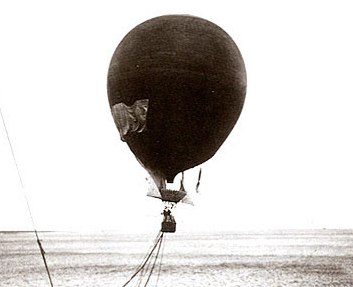


 On July 14th, the Ornen had crashed onto the ice, after just 51 hours in the air. (Stridberg took extensive photos of the 'landing'.) The three men then spent a week unpacking and deciding what to do. Only then did they set out for home.
 As they marched, each two steps they took to the south were countered by the floating ice pack which carried them one and a half steps toward the north and east.


