August 2025

August  2025
I DON'T NEED A RIDE. I NEED AMMUNITION.

Translate

Showing posts with label Tea Party. Show all posts

Thursday, April 18, 2024

THROWING A PARTY


I think of him as one of those self-made right-wing technocrats, who used his fortune to finance an ultra-conservative agenda - a Ross Perot or the Koch brothers. In this case the technology was the telegraph, and the agenda was Anti-Catholicism.  Samuel Finley Breese Morse (above) learned on his father's knee to fear the 'Bavarian Illuminati' from his Protestant father's Sunday sermons. 
As an adult Samuel proselytized that the Roman Catholic Church was flooding America with Irish and German Catholic immigrants to establish a new Vatican City in the Mississippi valley. Wrote Morse, “Surely American Protestants...(will) discover...the cloven foot of this subtle foreign heresy. They will see that Popery is...a political as well as a religious system; that...differs totally...from all other forms of religion in the country.” In 1836 Morse ran for Mayor of New York City. He lost big. But the poison he was peddling (and funding) would take root.
It sprouted into full flower in the congressional elections of 1854, catching on “like measles”, according to one Democrat. The organization was officially known as “The American Party”, but commonly refereed to as the Know Nothings, because its members were coached to respond to all questions by admitting only, “I don't know”, and because, frankly, in the eyes of their critics, the members didn't seem to be very bright. 
Membership was limited to white males of proven English heritage, and usually evangelical Protestants,. And although most of the new candidates had never been active in politics or held public office before,  they won 61 seats in the U.S. House of Representatives. They elected a governor and all the other posts open that year in Massachusetts and Maine. 
They controlled the state legislatures in Pennsylvania and most of New England. They gained advantage in Maryland, Delaware, Kentucky and Tennessee by taking no position on slavery. This hurt them in the deep south, as did violence and murders in Chicago, Philadelphia, Baltimore, St. Louis, Boston, New York, Columbus, Cincinnati and New Orleans. Still, the Know Nothings looked certain to capture the White House in 1856. And then came Bloody Monday in Louisville, Kentucky.
They held three elections in Louisville in 1855. On April 7th, voters threw out the incumbent mayor, who had converted to Catholicism, and elected a Know Nothing replacement and a majority on the city council. They followed this a month later by electing a Know Nothing majority of county court judges. Then the school board fired every Catholic teacher, save one. The Know Nothings were feeling both confident and paranoid - it was the nature of the party and the movement. 
Now another Know Nothing, Charles Morehead (above), was favored to win the governorship of Kentucky on yet another election, Monday August 6th. On the night before, 1,500 Know Nothings staged a torch light march through Catholic neighborhoods, warning them “to keep their elbows in” come morning.
Maybe no one other than Reuben Thomas Durrett (above) could have made the nation face the truth about the Know Nothings. Others wrote about it, but they lacked his resume. R.T., as he preferred to be known, was a defense attorney, and familiar with arguing unpopular causes. He was “intellectually and physically...a magnificent man.” More than that he was a poet, and a lover of truth and history. He had a 50,000 volume personal library. And 300 years earlier, his French Protestant ancestors had barely escaped the St. Bartholomew's Day massacre in France. So when the political spin machine tried to smother every honest voice in Louisville, it was R.T. who validated the reality. “To my mind,” he wrote, “the whole secret of the success of this disgraceful affair was...that the Know Nothing sympathizers were prepared and armed for the conflict...”
According to R.T., the thugs, hired as “special police”, formed a gauntlet in front of the polls. If a would-be voter were an immigrant from Germany or Ireland he was presumed to be Catholic, and was “... ordered by one of the bullies to leave...” And if he refused, “...he was attacked by the whole mob, severely beaten and driven away. If the man showed fight, his life was in great danger. “ 
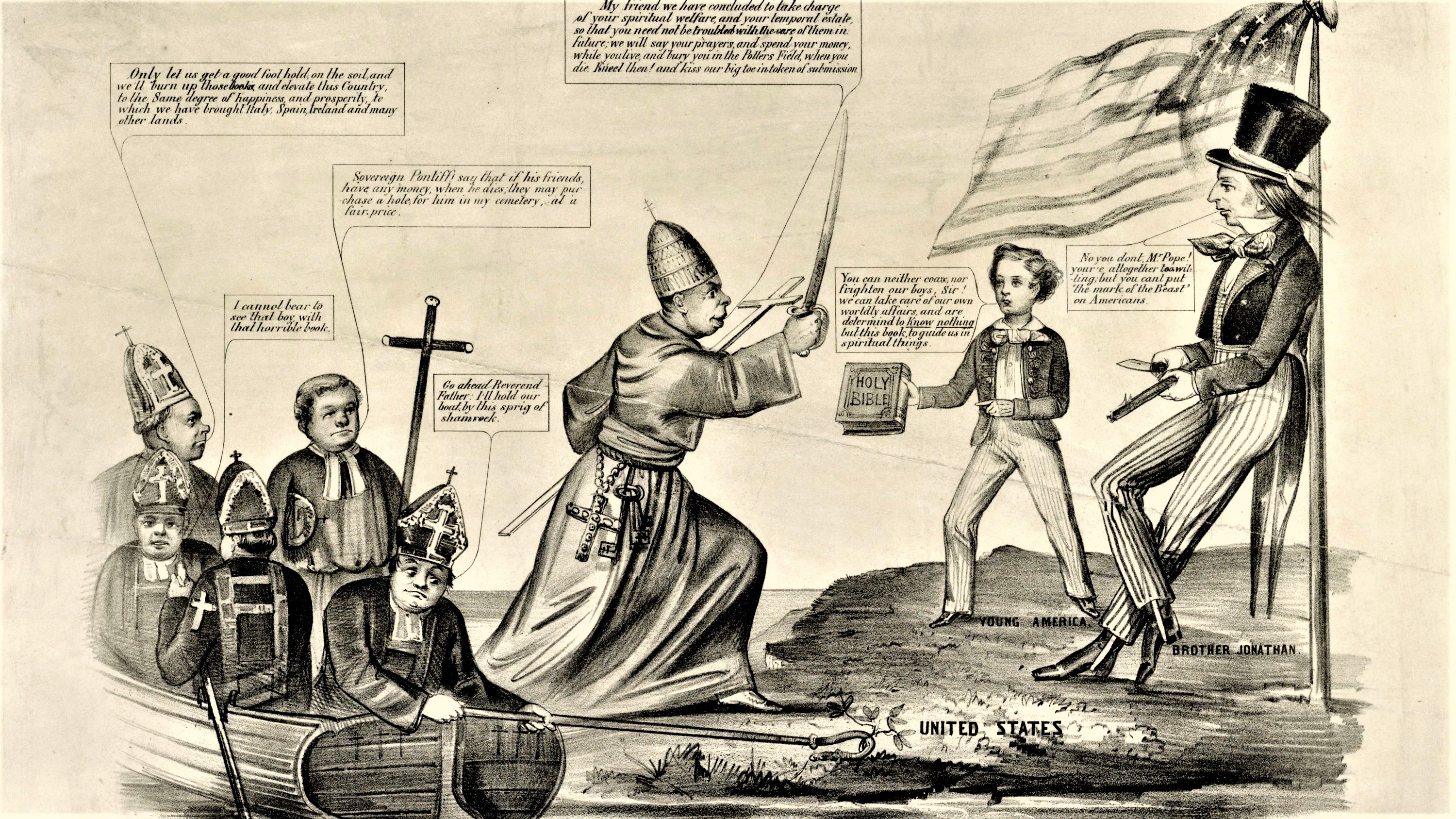
Recently ousted Mayor James Speed watched the beatings on the courthouse lawn from eight in the morning until six. “It was not fighting man to man, but as many as could fall upon a single Irishman or German and beat him with sticks or short clubs...” The clubs were specially made with lead weights in their tips, and mass produced. In the afternoon Speed was told 200 shotgun wielding “Germans” had captured a polling place. Speed knew this to be a fantasy and said so. But the informant, a judge, “replied with warmth showing that he believed it to be true.” About four in the afternoon, things went from bad to worse.
Two Catholic activists, Theodore Rhodes and David Doughtery were warning everyone in their east side neighborhood to stay off Main Street. They stopped at Micheal O'Connor's grocery store, at the corner of 10th street and warned him to close. As they came out of the store a man ran up to them. Basil Rhodes, Theodore's father, who was a block away, saw the man shoot his son dead. The gun shot drew Know Nothings from all directions, and it quickly became common knowledge that the reverse was true, that a Catholic had killed a Know Nothing. What followed was wholesale murder.
The worst of it was Quinn's Row, a block of 12 three story row houses along Main between 11th and 12th streets. Around eight that evening a Know Nothing mob set fire to a ground floor corner grocery run by a family named Long. Recorded a Catholic newspaper, “Seeking to escape...the wretched inhabitants reached the street only to meet death in another form. As soon as one appeared at a door he was fired at...” Mr. Long and two of his sons died that night, as did several of the residents of the upper floor apartments. “A number were taken off badly wounded, and others...returned to the burning houses, preferring rather to be burned than to meet the infuriated mob. One man escaped in woman’s clothes, was detected and shot. Another, who came out covered with a blanket, and, leaning on the arm of his wife, was torn away, and deliberately shot.”
While the first building was still raging, the feed store next door and its apartments went up, followed by a vacant house, then a tobacconist. Noted the newspaper, “How many of these miserable people thus caged in their own houses were burned alive there can be no computation.... Two men were hanged from their banisters of their own homes and also consumed in the flames.” In the last structure on the street, a rooming house, Patrick Quinn, who owned the entire block, was driven outside like the others. Recognized because of his investments around the city (and his brother who was a priest) , he was singled out, beaten to death, and his corpse was thrown back into the fire.
The official version said that 22 people had been killed in the entire city on Bloody Monday It is much more likely that the number was at least 100. The death toll would have been higher but in the German district one of the first buildings looted was Armbruster's brewery. The rioters got so drunk they could only satisfy themselves with torching the building before passing out. 
The new Know Nothing Mayor, John Barbee, managed to save two Catholic Churches from the rioters, but lost on others. But no one was ever prosecuted for the murders, the beatings or the arson. In response the despised immigrants voted with their feet. Ten thousand left Louisville over the next few months, almost 25% of the cities' population. 
In the city left behind businesses failed, unemployment soared and city coffers dried up. Charles Morehead was easily elected governor. but it was the classic tale of “be careful what you wish for”.
Most of the Irish moved to Chicago. Typical was ex-Mayor Speed, who became active in Republican Party politics and served in the Lincoln administration. The Germans mostly moved to St. Louis and Milwaukee, and some to Kansas City, Kansas – ensuring that state would remain in the Union come the Civil War. It was that war which put the entire Know Nothing movement into perspective.
The Civil War made the Know Nothing agenda obsolete. Immigration was the great enemy in the eyes of Samuel Morse. But the actual cause of the pain many were feeling was the industrial revolution, and the refusal of one half of the nation to recognize mechanization had made human slavery economically and morally obsolete. 
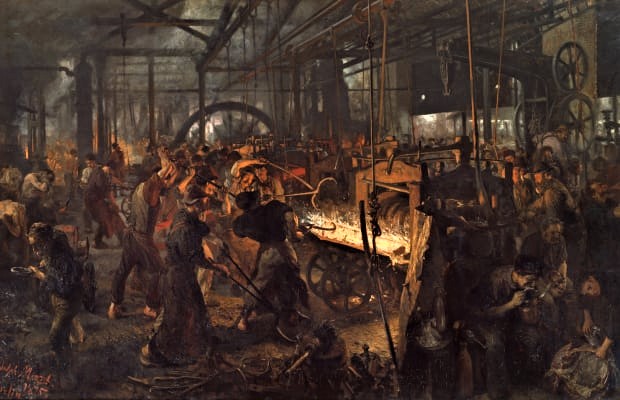
The mathematician Alfred Whitehead observed, “The major advances in civilization....all but wreck the societies in which they occur.” And in his book “War and Peace in the Global Village” Marshall McLuhan explains why that is so. “When one has been hurt by a new technology, when the private person or corporate body finds its entire identity endangered...it lashes back in a fury of self-defense...But... the symptom against which we lash out may be caused by something about which we know nothing.” McLuhan calls that symptom “Phantom Pain”, and compares it to the agony amputees report they feel in missing limbs.
Although America has institutionalized such cultural revolutions, and has succeeded by taking advantage of them in the past, that does not make our politics, and did not make the politics of our ancestors, any easier to live with. Politics are never a solution. Politics are only another symptom.
- 30 - 

Wednesday, May 24, 2023

LEGACY OF A FIRE BRAND


I want to explain the political term, "fire brand". The original definition was a piece of kindling, a bit of burning wood used to start a larger fire. And those who start political fires for a living can be called "Fire Brands." And the most famous fire brand in the history of  American politics, one of the first self described political demons, was William Lowneds Yancey. 
Yancey’s (above) South Carolina family were strongly pro-Federalist, and at an Independence Day celebration in 1834 as a young man, he told a crowd, “Listen, not then...to the voice which whispers…that Americans…can no longer exist…citizens of the same republic…”  He also championed the Federal Union as editor of the newspaper the “Greenville Mountaineer”...
...at least until 1835, when he married an Alabama widow with an Alabama plantation and 35 slaves. Once his comfort and profit came to depend on treating human beings as property Yancey converted to pro-slavery.  And then the economic panic of 1837 slashed cotton prices and wiped out William Yancey’s new found fortune and social status. That traumatic event also converted Yancy into a radical. 
Yancey went back to the profession he knew best, and in 1838 he bought a failing newspaper. Needing to make money quickly, Yancey's very first editorial was sure to please the money people of Alabama - a passionate, radical defense of slavery.  In a follow up editorial he even favored reopening the slave trade with Africa, which had been closed down by British Naval patrols since 1819. Yancey publicly opposed the compromises of 1850, which sought to establish a balance between slave states and “free” states within the Union. By now anything short of total domination by slave states was a cowardly compromise,  in Yancey’s view.
Also in 1838 the true nature of the man was revealed, when an alleged political insult led to a street brawl between Yancey and his wife’s uncle. Yancey shot the man dead on the street. He  justified this hot blooded murder, writing he had been,  “Reared with the spirit of a man…and taught to preserve inviolate my honor…”,  which seems to me an admission of a fragile ego. . He was convicted of manslaughter but served only a few months before being pardoned by the Alabama Governor. His reputation as a murderous hot head did nothing to prevent him from being elected to first the Alabama legislature and then, in 1844,  to the U.S. House of Representatives.
In 1858 Yancey wrote what Horace Greeley called, ‘The Scarlett Letter’, in which he first used the term "fire eater" to describe himself.  He pledged that with like minded southerners, he would, “…fire the Southern heart – instruct the Southern mind …and at the proper moment, by one organized, concerted action, we can precipitate the cotton states into revolution.”  This was why Yancey was called the “Orator of Secession”. 
He worked hard to split his own (Democratic) party on the issue of slavery, believing the election of a Republican (anti-slavery) presidential candidate in 1860 would further his cause and radicalize the south. He was, in the words of that genius Bruce Catton, “…one of the men tossed up by the tormented decade of the 1850’s (John Brown was another) who could help to bring catastrophe on but not do anything more than that.” 
That the North had twice the population of the South, that the North had ten times the industrial and agricultural capacity, that slavery was already dying in the upper South, that the North would not fight to end slavery but would fight to preserve the union, that Lincoln did not believe the Federal government had the power or the right to outlaw slavery, all this meant nothing to Yancey. 
William Yancey (above) wanted secession not despite the destructive effects it would have on the South, but, it seemed, almost because of them. President-elect Abraham Lincoln described the problem of dealing with the fire eaters like Yancey. "Not only must we do them no harm, but somehow we must convince them that we mean to do them no harm". 
It was William Yancy who greeted Jefferson Davis to his 1861 inauguration as Confederate President by saying, "The man and the hour have met". Tom Yancy could always deliver a phrase.  But once war broke out Jefferson Davis sent William Yancey to England to seek diplomatic recognition of the Confederacy.  That mission seemed like an odd choice for this violent aggressive  man, so perhaps Davis really had little hope of Britain ever recognizing the Confederacy, and he just wanted to be rid of Yancey. 
Henry John Temple (above),  Lord Viscount Palmerston III, the British Prime Minister, eventually met with Yancey, but then asked if he had been serious about his call for a resumption of the slave trade. Yancey denied it, but as had been in print for decades without denial, that merely made him an obvious liar. And just asking the question indicated there was no chance that England would recognize the South, at least as long as Yancey represented a significant political voice therein.
Yancey returned home in frustration and defeat. He now served in the Confederate Senate, opposing Confederate President Jefferson Davis’ power to draft troops into national service and in the spring of 1863 blocking Davis’ attempt to form a Confederate Supreme Court.
It was during debate over the court when Yancey and Senator Benjamin Hill (above) of Georgia, got into a brawl on the Confederate Senate floor. It was almost a repeat of the 1838 shooting.  When the hot headed Yancy reached for his gun,  Hill grabbed the only weapon he had at hand - an ink stand. He beaned Yancey on the head with it, cold cocking him. The Confederate Senate censured Yancey and took no action against Hill.  I guess they had judged his true character.
So it seemed that even his political allies and friends did not like William Yancey very much. And this was one of the men the South had staked its future upon. I believe it was William Yancey whom Jefferson Davis was thinking of when he said the epitaph of the Confederacy should be, “Died of a Theory.’
After censure, Yancey returned to Alabama,  where he died of kidney failure in July of 1863, just 2 weeks before his 49th birthday. He had lived just long enough to see the twin defeats of Vicksburg and Gettysburg, which together sealed the doom of the Confederacy.  But even then the fire eaters kept up their arson. More southerners died in the last year of the war, than in the previous 3 years. 
The product of William Yancy's life’s work was the death of 750,000 men, women and children -  the vast majority of them southerners - the gutting of the southern wealth for a century, the  total abolition of slavery in America and the ultimate victory of Federalism over State’s Rights. It is an estate today's fire eaters ought to take note of.  But I doubt they will.
- 30 -

Thursday, October 13, 2022

LEGACY OF A FIRE EATER


I want to explain the political term, "fire brands". The original definition was a piece of kindling, a bit of burning wood used to start a larger fire. And those who start political fires for a living can be called "Fire Brands." And the most famous fire brand in the history of  American politics, one of the first self described political demons, was William Lowneds Yancey. 
Yancey’s (above) South Carolina family were strongly pro-Federalist, and at an Independence Day celebration in 1834 as a young man, he told a crowd, “Listen, not then...to the voice which whispers…that Americans…can no longer exist…citizens of the same republic…”  He also championed the Federal Union as editor of the newspaper the “Greenville Mountaineer”...
...at least until 1835, when he married an Alabama widow with an Alabama plantation and 35 slaves. Once his comfort and profit came to depend on treating human beings as property Yancey converted to pro-slavery.  And then the economic panic of 1837 slashed cotton prices and wiped out William Yancey’s new found fortune and social status. That traumatic event also converted Yancy into a radical. 
Yancey went back to the profession he knew best, and in 1838 he bought a failing newspaper. Needing to make money quickly, Yancey's very first editorial was sure to please the money people of Alabama - a passionate, radical defense of slavery.  In a follow up editorial he even favored reopening the slave trade with Africa, which had been closed down by British Naval patrols since 1819. Yancey publicly opposed the compromises of 1850, which sought to establish a balance between slave states and “free” states within the Union. By now anything short of total domination by slave states was a cowardly compromise,  in Yancey’s view.
Also in 1838 the true nature of the man was revealed, when an alleged political insult led to a street brawl between Yancey and his wife’s uncle. Yancey shot the man dead on the street. He  justified this hot blooded murder, writing he had been,  “Reared with the spirit of a man…and taught to preserve inviolate my honor…”,  which seems to me an admission of a fragile ego. . He was convicted of manslaughter but served only a few months before being pardoned by the Alabama Governor. His reputation as a murderous hot head did nothing to prevent him from being elected to first the Alabama legislature and then, in 1844,  to the U.S. House of Representatives.
In 1858 Yancey wrote what Horace Greeley called, ‘The Scarlett Letter’, in which he first used the term "fire eater" to describe himself.  He pledged that with like minded southerners, he would, “…fire the Southern heart – instruct the Southern mind …and at the proper moment, by one organized, concerted action, we can precipitate the cotton states into revolution.”  This was why Yancey was called the “Orator of Secession”. 
He worked hard to split his own (Democratic) party on the issue of slavery, believing the election of a Republican (anti-slavery) presidential candidate in 1860 would further his cause and radicalize the south. He was, in the words of that genius Bruce Catton, “…one of the men tossed up by the tormented decade of the 1850’s (John Brown was another) who could help to bring catastrophe on but not do anything more than that.” 
That the North had twice the population of the South, that the North had ten times the industrial and agricultural capacity, that slavery was already dying in the upper South, that the North would not fight to end slavery but would fight to preserve the union, that Lincoln did not believe the Federal government had the power or the right to outlaw slavery, all this meant nothing to Yancey. 
William Yancey (above) wanted secession not despite the destructive effects it would have on the South, but, it seemed, almost because of them. President-elect Abraham Lincoln described the problem of dealing with the fire eaters like Yancey. "Not only must we do them no harm, but somehow we must convince them that we mean to do them no harm". 
It was William Yancy who greeted Jefferson Davis to his 1861 inauguration as Confederate President by saying, "The man and the hour have met". Tom Yancy could always deliver a phrase.  But once war broke out Jefferson Davis sent William Yancey to England to seek recognition of the Confederacy.  A diplomatic mission seemed like an odd choice for this violent aggressive  man, so perhaps Davis really had little hope of Britain ever recognizing the Confederacy, and he just wanted to be rid of Yancey. 
Henry John Temple (above),  Lord Viscount Palmerston III, the British Prime Minister, eventually met with Yancey, but then asked if he had been serious about his call for a resumption of the slave trade. Yancey denied it, but as had been in print for decades without denial, that merely made him an obvious liar. And just asking the question indicated there was no chance that England would recognize the South, at least as long as Yancey represented a significant political voice. 
Yancey returned home in frustration and defeat. He now served in the Confederate Senate, opposing Confederate President Jefferson Davis’ power to draft troops into national service and in the spring of 1863 blocking Davis’ attempt to form a Confederate Supreme Court.
It was during debate over the court when Yancey and Senator Benjamin Hill (above) of Georgia, got into a brawl on the Confederate Senate floor. It was almost a repeat of the 1838 shooting.  When the hot headed Yancy reached for his gun,  Hill grabbed the only weapon he had at hand - an ink stand. He beaned Yancey on the head with it, cold cocking him. The Confederate Senate censured Yancey and took no action against Hill.  I guess they had judged his true character.
So it seemed that even his political allies and friends did not like William Yancey very much. And this was one of the men the South had staked its future upon. I believe it was William Yancey whom Jefferson Davis was thinking of when he said the epitaph of the Confederacy should be, “Died of a Theory.’
After censure, Yancey returned to Alabama,  where he died of Kidney failure in July of 1863, just 2 weeks before his 49th birthday. He had lived just long enough to see the twin defeats of Vicksburg and Gettysburg, which together sealed the doom of the Confederacy.  But even then the fire eaters kept up their arson. More southerners died in the last year of the war, than in the previous 3 years. 
The product of William Yancy's life’s work was the death of 750,000 men, women and children -  the vast majority of them southerners - the gutting of the southern wealth for a century, the  total abolition of slavery in America and the ultimate victory of Federalism over State’s Rights. It is an estate today's fire eaters ought to take note of.  But I doubt they will.
- 30 -

Blog Archive