August 2025

August  2025
I DON'T NEED A RIDE. I NEED AMMUNITION.

Translate

Showing posts with label Louisiana. Show all posts

Sunday, October 22, 2023

VICKSBURG Chapter Seventy - Two


In mid May the new commander of the Trans-Mississippi – just 3 months on the job - 39 year old General Edmund Kirby “Seminole” Smith (above) , faced a mounting crises with shrinking resources. 

Two years before, in March, the Confederacy had lost its most populous city, New Orleans. In April of 1862 the Yankees of had driven the government of what had been the richest state in the Confederacy  from it's capital, Baton Rouge. In January of 1863  Smith had surrendered the new capital of  Oposlusa. And in early May, from it's 4th capital Alexandria,  on the Red River. Since March the government had been isolated 124 miles northwest of Alexandria, in the small town of Shreveport - half a mile to the east of Smith's headquarters at Fort Johnston, and just 40 miles from the Texas border.
The little capital of Shreveport (above) -   between hills and the Red River -  was jammed with about 6,000 whites and 3,000 slaves – almost double it's antebellum population. The Shreveport Arsenal, under Captain Frederick Peabody Leavenworth, was busily producing ammunition and repairing weapons, now with additional workers evacuated from the Arkadelphia, Arkansas Ordnance Works. But the only way to get that production to the armies was by horse drawn wagon. The Red River supply line was now blocked at Alexandria. The closest railroad to Shreveport was the line from Marshal, Texas - which stopped 5 miles short of town. The only other railroad came no nearer than Monroe, 100 miles to the east.
Almost 200,000 men from the Trans Mississippi were serving in Confederate armies - 60,000 from Arkansas, almost 60,000 from Texas, 50,000 from Louisiana, 30,000 from Missouri and 2,500 from New Mexico Territory. But by mid-May of 1863 all those men were beyond reach. Kirby Smith could muster barely 30,000 men in the Trans Mississippi. And those few were short of training, uniforms, food, ammunition and medicine because the “gray back” Confederate currency used to buy supplies was almost worthless. The view from Fort Johnson was so depressing, Smith began to consider resigning from the army and retreating into a Jesuit monastery.
Seventy miles southeast of Shreveport, at Natchitoches, commanding about 4,000 scattered men, was 36 year old Major General Richard Scott "Dick" Taylor. He had spent the spring being pushed up the Bayou Teche, even suffering the insult of having his own plantation burned to the ground. Even after Yankee Major General Nathaniel Banks withdrew 3 divisions down the Red River to attack Port Hudson, Taylor's army was still too small to confront the 10,000 Yankees as they backtracked down Teche Bayou to Brashear City, the western terminus of the railroad out of New Orleans. Never the less, the ex – President's son had a plan.
General Taylor would write after the war that as he re-entered Alexandria, he received word that, “...Major-General Walker, with a division of infantry (Walker's Greyhounds)...would reach me within the next few days”.  Taylor had no doubt how best to use 4,000 fresh soldiers. “I was confident that, with Walker's force, Brashear City could be captured...(And when) Banks's communication with New Orleans..._(was)threatened....(this) would raise such a storm as to bring General Banks from Port Hudson, the garrison of which could then unite with General Joseph Johnston in the rear of General Grant.”
Major General John George Walker (above)  was another of the qualified field officers in the Army of Northern Virginia who were transferred west in June of 1862, after Robert E. Lee took over in Virginia. So, in November, Walker took command of 12 Texas regiments in 3 training camps in Lonoke County, central Arkansas. The staging posts had originally been called Camp Hope, but in the fall 1862 measles and typhoid swept through the 20,000 recruits, killing 1,500 of them, including newly promoted Brigadier General Allison Nelson. Thereafter the soldiers referred to the place as Camp Death, but the War Department preferred Camp Nelson. Walker earned his men's respect by paying attention to camp hygiene, which cut the death rate by two thirds.
A brigade of the Texas Division, under Brigadier General Thomas J. Churchill, was detached to occupy Fort Hindman at the Arkansas Post in January of 1863, but was lost when that position was captured by Major General John Alexander McClernand. Until late April, Walker's men remained in central Arkansas, in case the Yankees made another strike toward the capital of Little Rock. But once General Smith could confirm that Grant had crossed the Mississippi to attack Vicksburg, he decided he could risk 6,000 of Walker's men to cut the Yankee supply line.
They set out on foot the morning of Friday, 24 April, 1863. Eight days and 78 miles later they crossed the border into Louisiana. They made 16 miles on Saturday, 2 May, and another 16 on Sunday, 3 May, camping that night on the banks of Bayou Bartholomew. Following that tributary south for 2 more days, and 15 miles, brought Walker's division to Washita, Arkansas, where they were met by a dozen steam boats, which carried them to the town of Trenton, opposite the town of Monroe, western terminus of the Vicksburg railroad. The 6,000 rebels camped that night, 2 miles south of Trenton. That night they informed General Smith they had finally arrived in the theater of operations.
While General Smith considered what to do with Walker's Texas division, local commander, and Texan, 44 year old Brigadier General Paul Octave Hébert, tried to pilfer a brigade for his own needs. But Walker was able to fall back on his orders from General Smith, to keep his division together.
Eventually, Smith decided it would be better to send the Texans back to Arkansas, where they would be safe from both the Yankees and sticky fingered Confederate generals. So at 8:00 a.m., on Saturday, 9 May, the 6,000 Texas soldiers re-boarded transports (above)  for a return voyage to Washita. But as the boats headed north, General Taylor would re-direct Walker and his men to his join his southern assault on Brashear City.
The Texans waited until Friday, 15 May, for their supply wagons to arrive from Washita. The next day, Saturday, 16 May, as Grant's Yankees were driving Pemberton's rebels back behind the forts at Vicksburg, the Texas Division retraced their steps 17 miles southward. Over the next 8 days General Walker's Greyhounds marched 150 miles, finally reaching Alexandria, on Wednesday 27 May –which is when General Smith in Shreveport finally learned of Taylor's revival of his proposed advance down Bayou Teche.
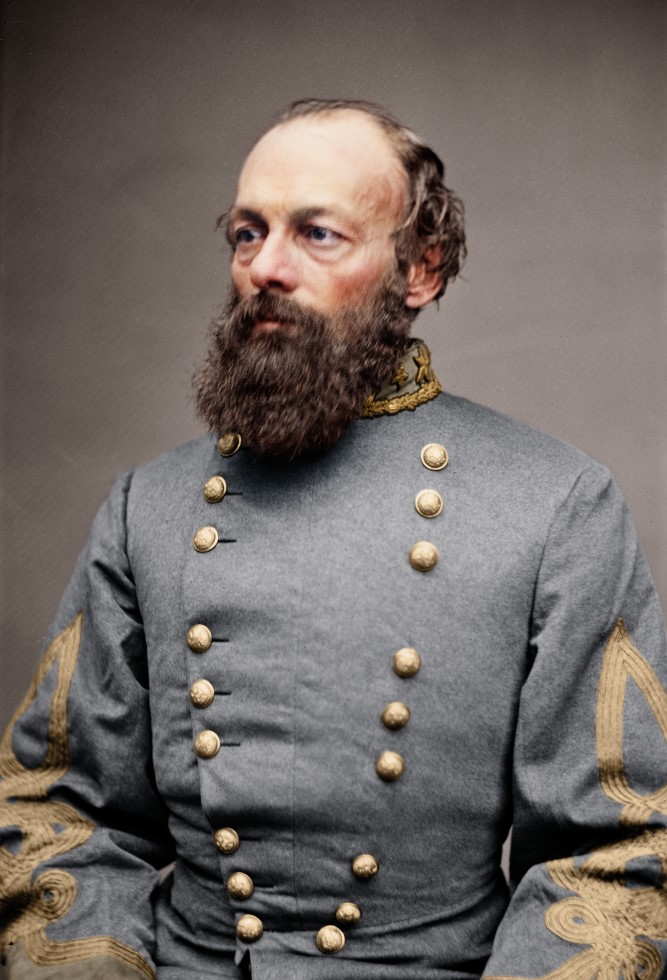
Taylor would claim that both Confederate Secretary of War James Seddon and President Jefferson Davis had approved his fantastic, almost fantasy, plan to threaten New Orleans. But Taylor's boss, General Kirby Smith (above), did not.  As they retreated from Alexandria, the Yankees had burned and destroyed everything in Cajun Country which might support an advancing rebel army.  So Taylor's plan depended upon capturing Yankee supply depots to feed and arm his now 8,000 men, and that, in the opinion of General Smith, was not likely to happen. And even if it did, it would leave half of the Trans Mississippi army isolated in the far south west corner of the theater. Besides, Smith had been receiving an almost endless stream of orders from President Davis to do something directly to rescue Vicksburg – under cutting the claim Davis supported Taylor's fantasy.
General Taylor (above) whined, “ I was informed that...public opinion would condemn us if we did not try to do something.” So Smith's original orders stood. On Thursday, 28 May the Texans changed their line of march, now heading 40 miles over 3 days toward the port called Little River. There they prepared 2 day's rations before again boarding steamboats, this time heading north up the Tenas River.
Taylor and Walker were to advance toward Richmond, Louisiana, on the Shreveport and Vicksburg railroad, and strike from there to capture Young's Point and Milliken’s Bend, thus cutting Grant's supply line down the western bank of the Mississippi. Taylor remained skeptical. “The problem was to withdraw the garrison (of Vicksburg), not to re- enforce it”, he wrote.  But in all fairness, that was not Smith's plan, either. He wanted to force Grant to withdraw from his positions in central Mississippi, by cutting his supply line. 
The problem was that the week earlier,  Grant had shifted his supply base to the Yazoo River at Chickasaw Bayou and Snyder's Bluff. So after a month's worth of exhausting marching and counter-marching, General Smith's plan had failed before it had ever been launched.
- 30 -

Sunday, August 27, 2023

VICKSBURG Chapter Fifty - Eight


As his flotilla broke through the last of the rafts moored across the Yazoo River at Liverpool Landing,  28 year old Lieutenant Commander John Grimes Walker (above) was pleased to see white smoke rising above the tree line.  He could not yet hear explosions from the Yazoo City dockyards 15 miles upstream, but he knew he soon would - if not before his 3 ironclads and infantry filled transports arrived, then shortly there after. 
Once ashore, Walker was to destroy the three warships under construction in the Yazoo City (above) dockyards, and all the equipment used to build them. But the smoke meant  the rebel engineers had started Walker's job for him. It also seemed likely the rebel gunners on the heights above the town would be spiking and abandoning their guns.
The man who had dispatched Walker on this mission was 49 year old Acting Real Admiral David Dixon Porter (above). Secretary of the Navy Gideon Welles had promoted Porter over many other officers because his ambition made him “...fertile in resources (and)...great (in) energy...” But that energy and ambition almost got Porter sidelined before the shooting had actually begun. Late in March of 1861, then naval Lieutenant Porter received an unusual invitation from the new Secretary of State, William Seward. Who, I should point out, he did not work for.
Porter knew what the New York politician wanted to talk about; “The Forts” – Fort Sumter in the harbor of Charleston, South Carolina, and Fort Pickens (above), at the entrance to Pensacola Bay, Florida.  Both brick fortifications were isolated and were under siege, but neither rebel nor Federal officer wanted to shoot first. 
But when Seward asked, “ Can you tell me how we can save Fort Pickens?”, the ambitious Porter could not restrain himself. He immediately answered, “I can, sir.” He then set to work, secretly drawing up a plan to fulfill his hasty promise.
At some point during the next few days it occurred to Porter that his hubris had put him far out on a limb which his boss, Navy Secretary Gideon Welles, was likely to cut off. Still, a week later he assured President Lincoln and Secretary Seward that all he needed was the 16 gun steam frigate USS Powatan  (above) and “...a good-sized steamer and six or seven companies of soldiers...and the fort would soon be made impregnable.”
It was the amateur Lincoln who asked the key question. “Is this not a most irregular mode of proceeding? What will Uncle Gideon (above)  say?” Porter warned that disloyal clerks in the Navy Department would betray the expedition. “But if you will issue all the orders from the Executive Mansion,” Porter told Lincoln, “I will guarantee their prompt execution to the letter.” Lieutenant Porter then handed Lincoln four orders to sign. And one of those orders was so curious, Lincoln told Seward, “See that I don't burn my fingers.”
Two of the orders turned the USS Powhatan over to Porter and relieved the current captain. A third instructed the New York Navy Yard (above) – under Commander Andrew Hull Foote - to secretly fit out the Powhatan and not tell the Navy Department about doing it or when it sailed. 
But the fourth order relieved the commander of the Naval Bureau of Detail, the service's personal office, replacing him with 53 year old Virginian, Captain Samuel Barron (above).  Barron was a curious choice, certain to draw Gideon's attention. Barron was so pro-secession he would soon be named Secretary of the Confederate Navy.  The rest of Porter's little fleet sailed in secret on the last day of March, 1861 - the frigate USS Sabine, the steam sloop USS Brooklyn carrying 200 infantry, and the sloop USS St. Louis. But all four orders were delivered to Secretary Welles along with a stack of routine paperwork, late on the afternoon of April Fools Day, 1861.
When the diligent “Uncle Gideon” read the order on the Bureau of Detail, he was furious. His anger was so great that when Wells stormed into the White House, President Lincoln innocently inquired, “What have I done wrong?” Welles launched into a tirade about Barron, but then added that Porter's intervention had left his transport, “The Star of the West”, which had already sailed to resupply Fort Sumter,  without the support of the USS Powhatan.  After an hour's discussion, Lincoln agreed to reverse the order concerning Barron. But by then it was too late to repair any other damage. 
While Fort Pickens was reinforced even before The Powhatan arrived, Porter's political maneuvering had left “The Star Of The West” as an impotent threat trapped outside of Charleston Harbor. But that ships appearance inspired the rebel forces surrounding Sumter to demand it's immediate surrender. When the fort's commander , Captain Anderson,  refused, the rebel's opened fire at 4:30 a.m. on Friday, 12 April, 1861, and the American Civil War began in earnest. 
Porter (above) could claim he had tried to warn Welles about Secretary Seward's conspiracy. But Welles was not fooled. He could have treated Porter as a possible double agent for the Confederate states. Or he could have simply refused to advance him. But Welles was enough of a patriot that he found a way to overlook the ambitious Lieutenant's machinations. At least, Uncle Gideon told his diary, “Mr. Seward...committed (Porter) at once, and decisively, to the Union cause.” And Gideon Welles still felt comfortable jumping Porter several ranks to an Acting Rear Admiral, and putting him in charge of Grant's “Brown Water Navy” after it's first commander, Andrew Foote, was promoted. And because of that, Vicksburg was doomed.
By Monday, 4 May, 1863, after the port of Grand Gulf, Mississippi had been secured and Sherman's Corps had begun ferrying across the river. Porter was finally free to press his advantage. One ironclad, the Mound City, was sent north to close off the Mississippi just below Vicksburg. Meanwhile Porter steamed south with the rest of his  fleet - The ironclads USS Benton and USS Pittsburg, the side wheel ram the USS Lafayette, the wooden gun boat USS General Price, the river boat USS Switzerland and the tug, USS Ivy. On Thursday, 7 May, these ships had rendezvoused with Admiral Farragut's blue water ships at the mouth of the Red River.
Loading coal and ammunition, Porter's flotilla then steamed up the Red River to Alexandria, Louisiana. Here they made contact with Major General Nathaniel Bank's Army of the Gulf, (above) finally returning to the Mississippi River after his Bayou Teeche adventure. Farragut could now provide shipping to transfer Bank's men to Port Hudson, which had been Bank's original assignment.
Beginning on Friday, 8 May a Union mortar flotilla, supported by the sloop USS Richmond, began a 2 day bombardment of the other remaining Confederate hold out on the Mississippi River, Port Hudson. The shelling was largely ineffective, but gave the garrison a taste of things to come. Meanwhile, by Friday, 15 May, Porter himself had rejoined his fleet anchored in the mouth of the Yazoo River above Vicksburg.
The very next day sailors reported hearing cannon fire off to the west. Unaware this was the distant echoes of the battle of Champion Hill, and not knowing the outcome of that battle, Admiral Porter ordered a tug to steam up the Yazoo River, looking for Grant's army. Finally, after making contact with the Iowa Cavalry on 18 May, Porter ordered marines to occupy Snyder's Bluff.
He also instructed the transports at Milliken's Bend to make steam, and begin landing food and ammunition at the Johnson Plantation a mile east of Chickasaw Bayou.
Grant and Sherman reached Snyder's Bluff on that Tuesday afternoon of 19 May. It had been 52 days since McClernand's corps had begun building the road south from Young's Point. Seeing that rations were already being landed, Major General William Tecumseh Sherman (above) admitted that until this moment he had doubted Grant's plan would work.  In fact, Sherman's XV Corps marching toward Vicksburg behind him would, that very evening, consume the last of their rations. Had Snyder's bluff held out for even a few days, Grant's army might have been forced to retreat into the interior to seek food. The nearest ammunition depot was back in Grand Gulf. But after Champion Hill the army did not have enough reserve to supply a single battle. But now Sherman had no doubts. 
He told Grant this was “one of the greatest campaigns in history.” Grant accepted the compliment, and announced his intention to attack Vicksburg in the morning.
In fact, the Federal supply problem was not solved – not completely. On Wednesday, 20 May, two Missouri units, companies of Major William Tweeddale's Engineer Regiment of the West, and Captain Herman Klosterman's Pioneer Company from Sherman's XV Corps, set 432 men to work rebuilding the road from Johnson's plantation, up onto the bluffs, and then 6 miles beyond to the rear of the new Federal army hemming in Vicksburg.  
Although the first wagons moved off that morning, full rations of food and ammunition would not be supplied until 24 May.  But improvements to the supply continued to be made until the end of the siege,  including over 500 feet of bridges, first pontoons and then more permanent structures.
On the afternoon of Thursday, 21 May, the federal ironclads Baron DeKalb and Chocktaw, the tinclads Forest Rose, Linden and Petel, dropped anchor in the Yazoo River, off Yazoo city.  Under their powerful guns, Lieutenant Command John Grimes Walker landed troops. 
They found the burned out hulks of the rebel ironclad rams which Admiral Porter had been so concerned about for so long - the Mobile, and the Republic, as well as the remains of a 3rd even larger vessel, as yet unnamed.
The dockyard's 5 carpenter and blacksmith shops had also been burned down by the rebels before their retreat.  It seemed obvious that 45 year old Confederate Naval Lieutenant Isaac Newton Brown, in charge of the construction of the rams, had received little or no warning of Pemberton's decision to abandon Snyder's Bluff.   The federal tinclads spent the next day prowling up the river for a few miles, burning buildings, boats and bridges. The shore crews destroyed a sawmill and lumberyard north of Yazoo City. 
All public property in Yazoo City itself was burned down, but leaving the  private businesses along main street (above) untouched.  One hundred fifteen military patients at a hospital in town were given paroles  And on Saturday, 23 May, 1863, Lieutenant Commander Grimes steamed his little fleet back to the mouth of the Yazoo River.  All this damage was merely the first blow the Confederacy was to receive because of Lieutenant General Pemberton's  abandonment of Snyder's bluff.
- 30 -

Monday, February 27, 2023

VICKSBURG Chapter Nineteen


On Sunday, 5 April, 1863, about 50 old men and boys of the Tensas Parish mounted militia - AKA the 15th Independent Louisiana Cavalry, AKA runaway slave hunters - were on a "training patrol" along the eastern shore of Bayou Vidal, in one of the richest cotton growing parishes of cotton rich Louisiana. 
The parish had 118 plantations,  a third of which each held more than 100 humans in bondage. After two full years of war,  slaves in the parish now outnumbered white males by two to one, heightening white fears of a slave revolt. (So much for the myth of "happy Darkies")
 Late that afternoon the militia spotted a couple of Negroes paddling a flatboat across the bayou. With Yankees at Richmond, Louisiana,  all boats had been ordered held on the eastern and southern shore. The whites ordered the slaves to halt. And when the command was ignored the militiamen fired on their disobedient servants.
And to the white men's shock, somebody shot back. One militiaman was killed and another wounded. The idea that a black man or woman would know how to or dare to fire a weapon at a white man was unbelievable. They rushed back to inform their commander, Major Isaac F. Harrison that the Yankees had come to Tensas Parish.
Major Harrison's first responsibility was to notify his superior officers, up the ladder to the deaf and cranky 59 year old Lieutenant General Theophilus Hunter Holmes (above).  But that seemed a pointless exercise because Holmes owed his exalted appointment to his incompetence, which had driven General Robert E. Lee to demand his removal from the eastern theater, and his long friendship to Confederate President, Jefferson Davis, who then made his incompetent friend Commander of the Trans Mississippi. Besides, Holmes was far away in Little Rock, Arkansas, obsessed with guarding the few resources his department was holding on to.  So Major Harrison sent notice not only to General Holmes but also to the nearest commander in the neighboring Department of Mississippi - 32 year old Georgian, Major General John Stevens Bowen.
Bowen (above)  was a competent field commander, and he informed his boss, Lieutenant General John C. Pemberton, in far off Jackson, Mississippi, that he wanted to send some men across the river to find out what Grant was up to.
General Pemberton had suspicions about Bowen. After the battle Corinth the previous year, the Georgia native had filed charges of incompetence against his superior, General Earl Van Dorn. The General was found not guilty, but the stink of betrayal lingered over Bowen and made him suspect. Besides, Pemberton doubted the Yankees were moving south.  Earlier - on Friday, 3 April, 1863 - all but 7,000 men of General Nathaniel Bank's 35,000 man Federal Army of the Gulf had disappeared from lines defending Baton Rogue, on the east bank of the Mississippi. Pemberton had no idea where those 28,000 blue coated soldiers had gone, but it seemed unlikely Grant would be moving south to cross the river if Banks was no longer there to reinforce him. 
Also, scouts reported there was heavy steam boat traffic on the Mississippi between Milliken's Bend and Memphis, to the north of Vicksburg.  This seemed to indicate Grant might be shifting his army for another invasion of central Mississippi. No, the Yankees at New Carthage were just a raiding party - at least that's what it looked like from Pemberton's perspective in Jackson. So he told Bowen to go ahead with a reconnaissance of Louisiana, but to remain ready to re-call those men if they were needed in Jackson.
On Thursday, 9 April, the 1st and 2nd under strength Missouri rebel regiments, under 28 year old lawyer and politician, Colonel Francis Marion Cockrell (above), crossed the river to Hard Times Landing. Cockrell was to find out what the Yankees were doing in Louisiana and if they were serious about it. So he pushed his infantry 6 miles north up the levee road beyond the head of the crescent Lake St. Joseph, south of New Carthage. There they bumped into the advance party of the 49th Indiana Volunteers.
Among the Hoosiers was Doctor John Ritter, and from his perspective the Yankees were a real threat.  "The Rebs", Dr. Ritter wrote his wife, had "occupied the high land down (to) the river. Their pickets were in sight all the time...We threw up breast works across the levee below and by that means held them in check...but if they had planted their artillery they could have shelled us out..."  Except Cockrell had no field guns. So after staring at each other for 5 days Colonel Cockrell decided to provoke a response by falling on an isolated company of the 2nd Illinois Cavalry, occupying the central houses of a plantation owned by Judge William Dunbar, guarding the Yankee right flank along Mills Bayou.
On the afternoon of the Tuesday, 14 April, members of the 1st Missouri left their positions along Bayou Vidal and marched west, crossing Mills Bayou, before swinging north behind the Federal positions. After a few hours of fitful sleep, at 4:00am the next morning, they waded into the waist deep water of the bayou again, falling on the Yankees without warning. In the dark the Missourians were able to capture one sentry, and kill a second before the Yankee cavalrymen awoke and fell back from the main house in confusion.
Still in the dark, the Missourians gathered up the wives and children of the overseers and other white employees who had been left behind. They also rounded up the 100 slaves in their cabins, driving the frightened people like cattle back across Mills Bayou in the dark. They also claimed to have discovered a chaplain of the 2nd Illinois "entertaining" a “young, full grown, athletic” slave woman in a back room of the big house. The truth of that situation can never be proven because no one's version of events can be taken as gospel.
By dawn additional federal units had been awakened, and part of the 10th Ohio Infantry regiment joined the remainder of the 2nd Illinois in driving on the plantation with artillery support. Shortly after dawn the rebels were all safely back across Mills Bayou, taking any of their dead and wounded with them, leaving the Federals to claim only one rebel captured, in exchange for 1 dead, 2 wounded and 2 missing. It was not much of an engagement, unless you unlucky enough to have been shot or killed in it. But the rapid counter attack by the 10th Ohio, told Colonel Cockrell that there was strength behind this move south, and that it was not likely these Yankees were a mere raiding party.
The nervous Dr. Ritter, feeling vulnerable and isolated atop the open levee south of New Carthage, was not as alone as he felt. Behind him Federal engineers were directing the work of the the 1st Missouri Federal and the 127th Illinois and 34th Indiana infantry regiments building a dam...
...and 4 bridges - one 200 feet long - across flooded countryside, and widening to 20 feet and improving and "corduroying" 40 miles of road from Richmond to New Carthage, and " the road from Miliken's bend to Richmond, Louisiana.
Soldiers have been building corduroy roads across swamps for 6,000 years, and the process is simple. It merely requires unlimited manpower, and vast quantities of young trees. First, you clear the roadway, not only of trees but of stumps. Ideally you dig out the roadbed to a depth of a few inches. Then you lay felled trees, each 4 to 6 inches in diameter, across the road, packing the trunks as tightly together as you can, using branches and mud to chock the logs and keep them from rolling under the pressure of a passing legion, a single horse or a wagon. Then you cover the "road" in the mud dug out earlier, to cushion the impact of traffic and to provide safe footing for  the horses.
During the American Civil War only the Yankees seemed to build corduroy roads. Observed a member of the rebel Army of Northern Virginia, "...the roads might have been ‘corduroyed’ according to the Yankee plan...but timber was not to be procured for such a purpose; what little there might be was economically served out for fuel."  A corduroy road could strip a forest of a human generation worth of trees.
In fact the Federal armies got pretty good at it, learning that a fence stripped of its posts would provide enough wood to corduroy half its length in road.  But no corduroy road would survive long under the intense pressure of military use.  And marching 50,000 men over the 12 miles of corduroy road between Young's point and the Desoto Peninsula, would destroy the entire structure, even before the endless supply trains required to feed the men and horses which had marched down that same road. 

But Grant "doubled down" on this approach. Besides the 40 mile interior route to New Carthage,  he ordered the improvement of a second, shorter route, 8 miles long atop the levees directly from Young's Point to the shore of the Desoto Peninsula south of Vicksburg.  But then, Grant had no intention of supplying his army down either road he chose to march over.
Federal troops taking the shorter route would be fully visible to Confederates in Vicksburg, while the inland route was masked from enemy view.  Also, Grant discovered that although the digging had not added enough depth to the bayous to make them usable for shipping, it had deepened them enough to form a flooded obstruction to any rebel infantry from the west wishing to interfere with the march south. 
So by 15 April, the day Colonel Cockrell's Missourians had poked at the Federal's right flank, Grant was ready to order the Hoosiers to push further south, toward Lake St. Joseph and beyond to Hard Times Landing, to make room for the remainder of General McClernand's Corps, and the rest of the army behind them.
Grant's goal seemed obvious, from his perspective at Millinken's Bend. But Pemberton was high and dry in Jackson, Mississippi. Pemberton did not awaken every morning to the sound and smell of the river.  He had not been living next to it and on it for three months, as Grant had. Pemberton's perspective inclined him to look to Grant's army, when his eyes and ears should have been following Grant's brown water navy.

                                    - 30 -

Blog Archive