August 2025

August  2025
I DON'T NEED A RIDE. I NEED AMMUNITION.

Translate

Sunday, November 10, 2013

ET TU Part Six STARTING DATE

I don't wish to overstate things, so speaking conservatively, the year 45 B.C. was one of the most revolutionary years in all of human history. To begin with it was a last year of the old Roman calender, and the year in which Julius Caesar was elected dictator of Rome for life. Could it have been a coincidence then, that this revolutionary year was also the last year of Julius Caesar’s life?
When Cesar conquered Gaul the minute had yet to be invented, the second was a useless abstraction, and the hour a generality. The Romans marked time using the moon. The new moon was the first day of every month, on which bills were to be paid, known as the accounting book day - in Latin, the Kalends. Five to eight days later, on the half moon, was the Nones, and every day between was numbered as 'so days before' the Nones Eight days after the Nones came the full moon, which was called the Ides, or the half. The Ides was followed by a count down to the next Kalends.
The biggest problem with this seemingly simple system was that the months were of equal length, and the year was only 355 days long.  Even two thousand years ago the earth took 365 days to orbit the sun, and those ten missing days caused season creep. This was supposed to be addressed by adding a 13th month, the Mensis Intercalaris, every other year, usually in the dead of winter. But the decision of when and where to add the Mensis Intercalaris was left up to the Counsels, who were the executives who ran Rome and were elected to serve for one year each. And being politicians, most managed to justify stretching out their terms in office for that extra month. So, Rome was soon suffering from additional seasonal creep. By the time Julius Caesar crossed the Rubicon, on January 12, 49 B.C., instead of that date happening in the winter, it was just the middle of autumn. Something ought to be done.
The story goes that late in 48 B.C., at a party in Alexandria, Cleopatra 7 introduced Julius Caesar to her court astronomer, Sosigenes. And it was during their conversation that Sosigenes suggested the Romans dump the moon and start telling time by the sun. Well, Caesar agreed in theory, but he was first and foremost a politician, and not that interested in theory. But he filed it all away for future reference. After defeating the Senate aristocratic forces in Asia Minor, Tunisia and Spain in 46 B.C., Caesar finally turned his attention to fixing things in Rome.
First he swamped the Senate with 300 new Senators, including some from outside of Italy. This gave him the votes to do just about anything he wanted. He wanted to be elected dictator for a year. This position had been created before, but Caesar immediately used his new majority to make the jump to Sosigenes's new calender. Now, his reason for doing this was of course purely practical. In order to bring the seasons into harmony before switching to the new calender Caesar inserted two adjustment months; Intercalaris Prior and Intercalaris Posterior. Adding these 66 days meant that Caesar's year as dictator lasted 445 days, giving him lots of time to get the Senate to vote him dictator perpetuo - dictator for life - which they did in in February 44 B.C. And if as of January 1st, 44 B.C., instead of an intercalaris month inserted every other year, the new Julian calender required only one extra day be inserted every four years, that was merely a happy side effect
For the poor little rich boys, like Senator Marcus Junius Brutus, and his brother-in-law Senator Gaius Cassius Longinus, the changes were not so happy. So many aristocratic Senators had been killed trying to stop Caesar, that the blue blood in the Senate was running thin. Then Caesar had diluted the Senate membership by 50%, by appointing a bunch of rubes and boobs - at least it seemed so to Brutus and Cassius. The  Senate chambers had now acquired all the unpleasant aspects of the audience at the Red Neck comedy tour.
And then, even worse, Caesar cut the welfare rolls by half. Those tossed off the public dole were offered the chance to live overseas in new cites, like New Carthage in Africa and New Corinth in Greece, or Seville in Spain. You would have thought the aristocrats would have cheered this development, but they had gotten so used to denouncing the angry mobs of poor people right outside their doors, that now that the angry mobs were reduced, they missed complaining about them. Almost in reflex they denounced the expense of building all these new “welfare” cities. Caesar was doing this, they said, just to increase his popularity.
But what Caesar did with the banking system in 45 B.C. really ticked off the aristocrats. The country was drowning in debt, mostly owed to the aristocrats in the Senate. They were about the only people with money, and they were getting even richer because of it. In a typical example, Brutus had made a loan to the town of Salamis in Sicily, charging 48% interest. They could never pay that off. But in 45 B.C. the dictator Caesar had wiped out all interest due on any principle already paid. With that one decree, one quarter of the amount owed by the 99% of the population to the top 1% was wiped out. The economy took a big breath of relief. But the 1% were outraged. Caesar was a tyrant, they said. He wanted to be King, they said.
Caesar also rebuilt the Roman forum, including starting a new Senate House to replace the one burned down in 50 B.C. Nearby he built a new market that spurred business investment and profit in the city. He cleared out the vast wooden Subura slums and rebuilt them in cement, which put an end to the fires which regularly threatened to burn down the entire town. Caesar rebuilt the port of Ostia into a vast grain store house, to stabilize the price of bread in Rome. This ticked off the aristocrats in the Senate who had made money manipulating the price of wheat. He set term limits for Roman governors, and established new rules to reduce graft in the provinces. This ticked off the aristocrats who had made profited from that graft. He granted Roman citizenship to millions in Italy, Spain and North Africa, which made Rome something they would all fight for. But that also gave these people rights and protections under the law against rapacious money lenders – also known as the aristocrats in the Senate. Caesar the tyrant not only wanted to be King, he wanted to be made a god, the aristocrats said.
And then Caesar did the one thing which sealed his fate. As election day 45 B.C. approached, Cassisus, Brutus' brother-in-law, was expecting to be nominated for Praetor, mayor of Rome, for 44 B.C.. Instead, Caesar nominated Brutus again. Cassisus was insulted, infuriated and frightened. His veiled hatred of Caesar was well know in the Senate chambers, but he had not thought Caesar knew. Now he must have suspected that Caesar suspected. And Cassius knew what he would do if he were in Caesar's position. Something had to be done.
Cassius knew if he struck back at Caesar himself, he would have little support. Even his brother-in-law
Brutus (above) knew how much he hated and feared Caesar. But Cassius also knew who Brutus was. Cassisus knew Brutus could be led to act if an abstract argument could be justified in concrete terms. So he took a coin out of his purse.
The design of Roman coins was determined by three men,  called the “tresviri monetales”, the 'three money men'  who decided what face or images would be carved into the molds used for the aureus (gold), denarius (silver) and the as (copper) coins used in every transaction from buying political office in Judea to a loaf of bread in Britain. One denarius was roughly the equivalent of fifteen U.S. Dollars, and traditionally they carried the images of gods and demigods representing traits the politicians wanted to be seen as embodying. But in February of 44 B.C. a new denarius was released, bearing the face of Julius Caesar (below).
It was the first coin ever created carrying the head of a living Roman. The coins were being stockpiled for Caesar's coming attack on Parthia. It had been almost ten years since Caesar's mentor and ally, Crassus, had been killed on the field of Carrhae. And it had been his death that destroyed the balance of power in Rome and brought on the civil war. It was common knowledge that Caesar was to leave Rome in a few short weeks to avenge Crassus' death by invading Parthia. And the coins bearing his face, would remind the local “barbarians” of the images of Alexander the Great who had swept aside the Persian Empire, three hundred years before. The coins were a bit of political-economic theater, and their intended audience was in Parthia, where the coins were going to be distributed. .
But, to a Roman audience, such coins spoke of arrogance and presumption. Worse, it spoke of stupidity.
No Roman politician would dare to release such coins and then leave town.  Only a fool or a child would not realize Caesar's intended use for these coins. But remember it was Brutus, who had been described as having the mind of a man but the emotions of a child.
When Cassius pressed one of Cesar's new coins into Brutus palm, his argument for the elimination of Caesar was easy to make. He just had to avoid giving Brutus time to think things through.
- 30 -

Friday, November 08, 2013

THE GREAT ABSCONDING

I am sure you have heard of “Tricky Dick” Nixon, and probably “Slick Willy” Clinton, and maybe even Martin Van “Ruin”, or “Ruther-”fraud” B. Hays. I certainly believe Mitt “47%” Romney should have known about “Ten Cent” Jimmy Buchanan - who opined that a dime was a fair daily wage, and vetoed new colleges because “"there were already too many educated people -” because if Mitt had, old “47%” would have never said such a stupid thing...in public. But I'm willing to bet you have never heard of James William “Honest Dick” Tate, even if you are from Kentucky. But you ought to have.
 
Sans his nom de plume, there was nothing special about James Tate (above). He was of average height and average weight. His forehead was made large by his retreating jet-black hair line. But his bushy “coffee stainer” mustache was the fashion in his day. However, it did hide a down turned mouth, that perhaps hinted at the tragic death of Howard, his three year old son. Still his daughter, Edmonia Lloyd Tate, survived, as did his loving wife Lucy Hawkins Tate. Then in 1867, after 13 years in various appointed positions in Kentucky politics, the 36 year old James Tate had so “materially contributed, by his personal popularity, to the great success of the Democratic party"  the he was nominated and elected State Treasurer.
The Treasurer was responsible for all funds collected in fees, permits, taxes, fines and rents, managed the state's bank accounts, paid state employees and dispensed benefits and verified and paid all bills. And despite it being about now that James acquired his cognomen, I cannot escape the suspicion “Honest Dick” Tate was not chosen for his probity, but for his “popularity”. In fact it was Democratic Party supporters who actually bonded him, pledging their wealth as a guarantee of Tate's “rock sand honesty”, as required by law before he could assumed the position. But that guarantee was contingent upon other state officials verifying “Honest Dick's” work And there is no evidence anybody ever actually did that.
To the public, James “Honest Dick “Tate was an average man, making an average salary, just $2,400 a year (barely $60,000 today), with perks worth perhaps a thousand dollars more. Jame's average unassuming home, at Second and Shelby Streets in Frankfort, cost all of $6,000 (about $100k today). But James was moving in powerful circles now, re-elected every two years for the next two decades. He was the “Treasurer for Life”, and it became known in Frankfort Democratic circles that should a politician need to borrow a few thousand dollars, as Governor Preston H. Leslie did in 1872, then “Honest Dick” would be happy to accept their IOU, and not be too bothersome about demanding prompt repayment. So amiable was “Honest Dick” that he had a safe filled with personal checks, cashed for Democratic friends, but never submitted for reimbursement.
James Tate also chased his own financial Eldorado, investing in land in Indiana, Virginia and Tennessee, along with several coal mines in Kentucky. However the land he bought does not appear to have appreciated in value, and the mines never seemed to produce enough coal to justify their purchase price. James also tried speculating in stocks and, it appears, when those investments failed, more direct forms of gambling. And like all gamblers, losing was just another excuse to risk more.
All of this was below the surface, while in the public view the 1878 “Biographical Encyclopedia of Kentucky” noted that “Honest Dick” Tate was “successively re-elected by popular majorities, perhaps exceeding those obtained by any other candidate for office in the State...it would seem that his lease on the office might be regarded as a fixed fact.” And in 1886, John McAfee described James Tate as the “trusted and honored treasurer” with an “unblemished record for probity and principle...(James) is held in high esteem, and his integrity and forbearance are regarded as of the highest order.”. But rumors must have been floating about Frankfort, because during the 1887 campaign for governor, the perennial second Kentucky party Republicans brought the issue to the surface.
Their candidate that year was the ex-prosecutor from Garrard County, orator William O'Connell Brady, and in what may have been the first Republican use of a “Big Government” attack, Brady charged the Democrats had created unneeded extravagant new offices, like Railroad Commissioners and an Agricultural Bureau. And almost as an aside, Brady suggested the time was past due for an audit of “Honest Dick” Tate's books. The Republicans had no evidence, but the attacks were so successful that after just one debate, ex-Confederate General and Democratic candidate Simon Bolivar Buckner, invented a reason to avoid any further debates.
Democrat Buckner defeated Republican Brady, of course, but his August 3, 1887 margin of victory was just 5 points, compared with a 19 point Democratic win in the 1883 election. Brady had made the strongest Republican showing since the Civil War, and it scared the hell out of the Democrats. In the same election, James “Honest Dick” Tate won re-election for the 11th time, by a margin of 67,000 votes, far more impressive than Governor Buckner's 16,712 vote margin.
It was that fall, that newly elected Democratic State Senator John Kerr Hendrick, an ex-prosecutor from Livingston County, called for a full audit of “Honest Dick” Tate's books. But James Tate said a family illness required his attention, and he needed a little time to get the records together. Senator Hendricks thought Tate was stalling, but the Governor agreed to put the audit off until the spring of 1888.
It was than that a change appeared in “Honest Dick's” modus operendi. Some on his staff noted cash deposits in the state's bank accounts slowed to a trickle. And, if any had noticed, he paid in full a number of his personal debts. Then on Wednesday, March 14, 1888, Henry Murray, a Treasury Clerk, noticed his boss in the office vault, filling two tobacco sacks with gold and silver coins, and an approximately 4 inch thick roll of paper money. Murray assumed the Treasurer was preparing to make a bank deposit. And even after “Honest Dick” was found to have slipped out of the office unseen, no one was alarmed. A note left on his desk, informed the staff he was going to Louisville for two days. It caused little notice. Long time staffers knew better than to expect the boss to return to the office before Monday.
But “Honest Dick” did not return on Monday morning. A staffer dispatched to his home on Second Street, was told his wife Lucy had not heard from him since he left for Louisville, the previous Wednesday. Telegraphed inquires to the Ohio River town said the Treasurer was last seen on Friday evening at a bar, drinking heavily. Saturday, March 17th, he was seen boarding a train for Cincinnati. After that, James “Honest Dick” Tate simply vanished. Newspapers would call it the “Great Kentucky Absconsion”.
The scene left behind told the story of a desperately disorganized personality. Staffers said it had always been that way. The account books seemed written in barely legible hieroglyphics, filled with post dated transactions, erasures, corrections, and indecipherable notations. The safe contained women's beaded bags and purses, and a satchel belonging to a dead infant. It was also brimming with $150,000 in IOUs and “cold checks” from $5 to $5,000, some going back ten years. No hard cash was left behind except for a bundle of $1,000 in $10 bills, found under the safe. How long it had laid there in the dust, no one could say.
In the afternoon of Tuesday March 20th, 1888, the Speaker of the Kentucky House of Representatives, and the President of the state Senate, the Secretary of State, received the following message: “It having been learned this morning that said James W. Tate has been absent from his office since the 15th instant...there is in all probability a large deficit in his public accounts...we by virtue of the authority vested in us...hereby suspend said James W. Tate...” It was signed “S. B. BUCKNER, Governor”. From this day forward, “Honest Dick” Tate would be referred to as “The Defaulting Treasurer.”.
George Willis, a Democratic spin doctor was left spinning. “Such flash of lightning and peal of thunder as was never heard before or since came out of clear sky and rocked the state and the Democratic party as nothing had done since the (Civil) war." Kentucky's state historian noted that “almost everyone was under suspicion either as an accomplice of Tate or because of owing the treasury money, and those who had borrowed money from the treasury were numerous.” Briefly, and perhaps for the first time in Kentucky history, the politicians were ashamed. The Governor made a personal loan to keep the state afloat for awhile.
So inaccurate and confused was The Defaulting Treasurer's record keeping that it proved difficult to make an accurate account of the missing funds. And it was not in the interest of those with checks and IOU's in the safe to make an accurate accounting. A week later Governor Buckner announced the missing tally at approximately $247,128.50 (almost $6 million today). Within a week James “Honest Dick” Tate was impeached in absentia on six counts and removed from office, and then indicted by a grand jury. A reward of $5,000 was offered for his arrest. But the money was never claimed.
Luckily, daughter Edmomia had married a man named Martin, and was living free and clear in distant Kansas City, so the abandoned Lucy could live with her. Wife Lucy had to leave Frankfort because the state of Kentucky had seized the house and everything of value within it, all Jame's bank and stock accounts, including 100 barrels of “Big Spring” bourbon whiskey – another bad investment by the “Defaulting Treasurer”.
 
The house, the whiskey, the investments, were sold at auction, and collected $50,000 (over $1 million today.) But that left the bond holders on the hook for the remaining $200,000 (about $5 million today). They paid, but thanks to a Kentucky Supreme Court decision in 1895, none of those who had authored checks or IOU's found in the safe were required to reimburse the bond holders. That judgement was marked “Not to be officially reported”, and sealed. Most of the names on the IOU's never became public.
But what happened to the “Defaulting Treasurer”, “the Great Absconder”, AKA James “Honest Dick” Tate? He was rumored to be everywhere from Bremen, Germany, to Toronto, Canada. Some said he had joined the expiate Confederate community in Honduras, or Brazil, where slavery remained until May of 1888. In October of 1893 there was a brief flurry of excitement when a newspaper reported he was “Said to have been seen on the “Cotton Belt Train.” in Arizona Territory. But that proved to be mistaken identity, since the New York Times had reported “friends who should know” said he had died in China three years earlier. In 1894 Navy Ensign Hugh Rodman, who had known Tate back in Frankfort, reportedly had dinner with the “Defaulting Treasurer” in Japan, and said he was not well. That should not have been surprising, since he would have been well over sixty by then.
Edmonia later admitted to receiving letters from her father, posted from San Francisco, British Columbia and Japan. The last one read, in part, “I know I will be much denounced and by parties who forget former circumstances”. He professed to being interested in returning to denounce his partners in crime. In 1896 1,200 Kentuckians signed a petition asking the Governor to grant a pardon to James Tate, so he could return and name names.. No such pardon was ever offered. With time new scandals rocked Kentucky, and people forgot about “Honest Dick “ Tate. But we should remember our mistakes. That is how we learn.
- 30 -  

Sunday, November 03, 2013

ET TU Part Five, WINNER TAKE ALL

I wish I could have seen at least one of the parades in the first week of September, 46 B.C..E. They lasted over four days and the spectacle must have been magnificent. Each morning the units formed up on property once owned by the last King of Rome - renamed the Field of Mars. There were cohorts of unarmed soldiers, battalions of slaves, wagons piled high with booty and treasures, and bizarre animals from distant conquered lands. All four parades were to exalt just one man, Julius Ceasar. When all was ready each day, Ceasar, dressed in his Senatorial robe (called in Latin "a candidus") edged in divine purple and with a laurel wreath atop his bald head, would climb into his chariot, and enter the usually bared Gate of Triumph.  Just inside the city walls Ceasar would symbolically surrender his command to representatives of the Roman Senate and the Urban Praetir – the mayor. But if he bothered to notice each day, Ceasar would have seen increasing tension on the face of one man in particular, the Praetor and Senator, Marcus Junius Brutus.
The politician Cicero described his contemporary Brutus as having “the courage of a man but the brains of a child”. You see, Brutus suffered from daddy issues. His father had been a first rate lawyer and a second rate politician. In 78 B.C.E. Brutus the elder had gotten involved with the Catiline Conspiracy. How much Burtus the elder actually knew of the murky plot is debatable, but he ended up in the Cisalpine city of Mutina (modern Modena), besieged by an army loyal to the Senate. The elder Brutus worked out a deal to surrender the town and switch sides. But the Senate army commander, Pompey the Great, decided he couldn't trust the elder Brutus, and had him executed. Thirty years later Brutus the Younger took up to the sword to fight for the Senate and for his idol, Pompey - the man who had orphaned him.
The senators now led the Triumph along the Sacred Way, between cheering crowds. Behind them came the trumpeters, followed by the carts of booty, the slaves, and two white sacrificial bulls. Then came the stacks of captured arms, and then the political prisoners, the generals, kings and queens, staggering in their chains. And only then came Ceasar, under a shower of flowers. He was over 50 now, but still handsome to Roman eyes. Behind him came men from his legions, singing obscene soldier songs, mostly about their commander.
The widow of Brutus the Elder had become the mistress of the young Julius Ceasar. Their affair was so well known in Rome that it was rumored Ceasar was the younger Brutus' real father. It was an absurd claim. The year Brutus was born, Ceasar was just 15. Still, it was yet another reason for the rumors refused to die, and even gained popularity after Pompey's defeat at Physallus in 48 B.C. After fighting alongside Pompey in that battle, Brutus had written Ceasar a letter of apology. And amazingly, Ceasar had forgiven him, even adopting him and appointing him governor of TransAlpine Gaul, one of Ceasar's old posts.
Now, Ceasar's policy of magnanimity was an obvious attempt to make his one-time enemies beholden to him. But in the case of Brutus, Ceasar was also trying to avoiding hurting his old girlfriend, Burtus' mother. I get the feeling this is what passed for love with Ceasar, dispensing favors as a substitute for affection and intimacy. And if you were expecting more from the great man, you were certain to be disappointed. Open affection was not Ceasar's style. Besides, after Pompey's death, he was pretty busy.
Once each Triumphant parade had reached the Capitoline Hill, Ceasar climbed the steps to the Temple of Jupiter. Before entering he removed his laurel wreath as a sign of humility. Then, inside, he watched the two while bulls sacrificed, and their blood was smeared on his face. Then he handed over his political prisoners, such as Leader of the Gauls, Vercongetroix. In fact the big Gaul had spent the last five years held a few hundred yards away, in the prison atop Tullianum Rock. Now he was returned to the prison, lowered back into the dungeon, and tied to a post. A strung bow was slipped over his head and twisted until he was slowly strangled to death. Not all political prisoners were sacrificed during Ceasar's four triumphs. On day two Celepatra 7's younger sister, Arsinoe 4, was spared, but sent to a temple in Greece, which she was not permitted to leave for the rest of her life.
In October 48 B.C., after learning of the death of Pompey, Ceasar had taken possession of the royal palace in Alexandria, Egypt. He had then destroyed the army of the Pharoah Ptolemy 13 and his younger sister Arsinoe 4. He drowned, she had been captured. Then Ceasar set Cleopatra 7 on the throne, making a firm alliance with her to feed his armies and refill his purse. After a fertile diversion with Cleo, on June 23, 47 B.C., Ceasar had set off on a forced march, reminiscent of his quick invasion of Spain two years earlier. Ceasar had crossed the Sinai, marched through Judea and Syria, and the eastern half of modern day Turkey, covering 800 miles in just 47days. On August 2nd at Zile, Ceasar then crushed an army under the the rebellious King Pharnaces, and captured his Roman Senate advisor, Gaius Cassius Longinus. So smashing was his victory, that Ceasar's message informing the Senate was reduced to only three words - “veni, vidi, vici”. The translation reads, “I came, I saw, I conquered.” But in this case, Ceasar proved to be slightly optimistic.
His mistake was in underestimating Cassius, a smart and feisty aristocrat. Cassius had warned against the invasion of Parthia back in 53 B.C. The few legionnaires who survived the debacle of Carrhea, were saved because Cassius lead them to safety. After his own capture in 47 B.C., Caesar offered Cassius a command in the expedition to destroy the last of the Senates' forces in Tunisia. But Cassius said no. Almost any other Roman politician would have killed Cassius for that refusal. But again, Caesar was being magnanimous. He had then decided to risk leaving this hot head unattended, loose in Rome.
Back in his  Triumpate , and leaving the Temple of Jupiter, Ceasar now stood at the top of the steps while Marc Anthony held the laurel wreath over his head. The crowd cheered this ritual, meant to display the hero's rejection of an offer of Kingship. But it seemed to those with suspicious minds that on each of the four days, Ceasar had waited a little longer before rejecting the laurel wreath. Brutus wasn't certain he noticed such reluctance on Ceasar's part. But his brother-in-law Cassius, assured Brutus that he had indeed seen it.
From the Capitaline Hill, marching along the Sacred Way, the Triumpate parade led to the Circus Flaminius, an open space adjacent to the Tiber River and Mars' Field. Here the city held amateur chariot races, and public meetings. Now long tables were set for a banquet, where thousands of average Roman citizens could feast on exotic foods from the newly conquered lands. But this had been a civil war, Roman had killed Roman, and other than the first days triumph to celebrate Ceasar's conquest of Gaul (50 B.C.), the lands Ceasar had recently conquered had already been Roman lands. There were many within the Senate who did not feel Ceasar should have been granted those three days of triumph for his victories over Egypt (48 B.C.), over King Pharnaces (47 B.C.) and the Senate Armies in North Africa and Spain (46 B.C.)
But the promise of parades and free meals, and the hundreds of new Senators Ceasar had appointed, had swayed the Senate to vote to approve the unprecedented four Triumphs. As the sun set on the final Triumph, as the last tipsy guest staggered off to the vomitorium, Julius Ceasar was at the pinnacle of his power.
But of all men, Ceasar was the most likely to have known, there was nowhere left to go from here but down. 
- 30 -

Friday, November 01, 2013

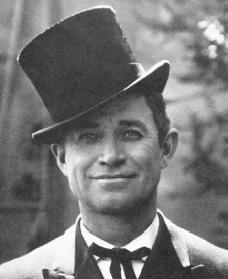
THE AMAZING WILL ROGERS

Everything is funny as long as it is happening to somebody else.
Will Rogers
In America we have the best politicians money can buy.
Will Rogers
"I could never understand why a man would spend $50,000 to get elected to an office when the job only pays $3000 a year!"
Will Rogers
"The taxpayers are sending congressmen on expensive trips abroad. It might be worth it except they keep coming back!"
Will Rogers
Why don't they pass a constitutional amendment prohibiting anybody from learning anything? If it works as well as prohibition did, in five years Americans would be the smartest race of people on Earth
Will Rogers
"You can't say civilization isn't advancing; in every war they kill you in a new way."
Will Rogers
"I don't make jokes. I just watch the government and report the facts."
Will Rogers
There's no trick to being a humorist when you have the whole government working for you."
Will Rogers
Ancient Rome declined because it had a Senate; now what's going to happen to us with both a Senate and a House?"
Will Rogers
On account of being a democracy and run by the people, we are the only nation in the world that has to keep a government four years, no matter what it does."
Will Rogers
Elections are a good deal like marriages. There's no accounting for anyone's taste. Every time we see a bridegroom we wonder why she ever picked him, and it's the same with public officials.
Will Rogers
The Democrats and Republicans are equally corrupt -- it's only in the amount where the Republicans excel.
Will Rogers
I can remember way back when a liberal was generous with his own money.
Will Rogers
A fool and his money are soon elected.
Will Rogers
We always want the best man to win an election. Unfortunately, he never runs.
Will Rogers
You've got to be an optimist to be a Democrat, and you've got to be a humorist to stay one.
Will Rogers
Be thankful we're not getting all the government we're paying for.
Will Rogers
I belong to no organized party. I am a Democrat.
Will Rogers
It must be nice to belong to some legislative body and just pick money out of the air.

Will Rogers
A fool and his money are soon elected.
Will Rogers
Everything is changing. People are taking their comedians seriously and the politicians as a joke.
Will Rogers
Politics has become so expensive that it takes a lot of money even to be defeated.
Will Rogers
The best thing about this group of candidates is that only one of them can win.
Will Rogers
About all I can say for the United States Senate is that it opens with a prayer and closes with an investigation.
Will Rogers
Be thankful we're not getting all the government we're paying for.
Will Rogers
Diplomacy is the art of saying "Nice doggie" until you can find a rock.
Will Roger
Good judgment comes from experience, and a lot of that comes from bad judgment.
Will Rogers
I don't make jokes. I just watch the government and report the facts.
Will Rogers
I bet after seeing us, George Washington would sue us for calling him "father."
Will Rogers
If I studied all my life, I couldn't think up half the number of funny things passed in one session of congress.
Will Rogers
If you ever injected truth into politics you have no politics.
Will Rogers
It's easy being a humorist when you've got the whole government working for you.
Will Rogers
Things ain't what they used to be and never were.
Will Rogers
This country has come to feel the same when Congress is in session as when the baby gets hold of a hammer.
Will Rogers
We don't seem to be able to check crime, so why not legalize it and then tax it out of business?
Will Rogers
Our constitution protects aliens, drunks and U.S. Senators.
Will Rogers
Never miss a good chance to shut up.
Will Rogers
The trouble with practical jokes is that very often they get elected.
Will Rogers
When I die, I want to die like my grandfather, who died peacefully in his sleep - not screaming like all the passengers in his car.
Will Rogers
It takes nerve to be a Democrat. But it takes money to be a Republican
Will Rogers
The Republican platform promises to do better. I don’t think they have done so bad. Everybody’s broke but them.
Will Rogers
Democrats take the whole thing as a joke. Republicans take it serious but run it like a joke.
Will Rogers
A flock of Democrats will replace a mess of Republicans. It won’t mean a thing. They will go in like all the rest of ’em. Go in on promises and come out on alibis.
Will Rogers
Things are terribly dull now. We won’t have any more serious comedy until Congress meets.
Will Rogers
If a man wants to stand well socially, he can’t afford to be seen with either the Democrats or the Republicans.
Will Rogers
Republicans have always been the party of big business. The Democrats of small business. So you just take your pick. The Democrats have their eye on a dime and the Republicans on a dollar.
Will Rogers
You could keep politics clean if you could figure out some way so your government never hired anyone.
Will Rogers
The whole trouble with the Republicans is their fear of an increase in income tax, especially on higher incomes.
Will Rogers
The truth can hurt you worse in an election than about anything that could happen to you.
Will Rogers
A politician is just like a pickpocket. It’s almost impossible to get one to reform.
Will Rogers
It is easier to fool ’em in Washington than at home. So why not be a Senator?
Will Rogers
You know how Congress is. They’ll vote for anything if the thing they vote for will turn around and vote for them.
Will Rogers
Elections are a good deal like marriages. There’s no accounting for anyone’s taste
Will Rogers
It’s awful hard to get people interested in corruption unless they can get some of it.
Will Rogers
George Washington was a politician and a gentleman. That’s a rare combination
Will Rogers
Confucius perspired out more knowledge than the U. S. Senate has vocalized out in the last 50 years.
Will Rogers
This country has gotten where it is in spite of politics, not by the aid of it.
Will Rogers
Every guy looks in his pocket and then votes.
Will Rogers
Once a man wants to hold a Public Office, he is absolutely no good for honest work.
Will Rogers
There is very little dignity, very little sportsmanship, or very little anything in politics - only get the job and hold it.
Will Rogers
Nothing will upset a state economic condition like a legislature. It’s better to have termites in your house than the legislature.
Will Rogers
Slogan: Be a politician; no training necessary.
Will Rogers
That’s the trouble with a politician’s life - somebody is always interrupting it with an election.
Will Rogers
The Ways and Means Committee is supposed to find ways to divide up the means.
Will Rogers
There is no race of people in the world that can compete with a senator for talking. If I went to the Senate, I couldn’t talk fast enough to answer roll call.
Will Rogers
About being a U.S. Senator, the only thing the law says you have to be is 30 years old. Not another single requirement. They just figure that a man that old got nobody to blame but himself if he gets caught there
Will Rogers
I love a dog. He does nothing for political reasons.
Will Rogers
The Democrats are having a lot of fun exposing the Republican campaign corruptions, but they would have a lot more fun if they knew where they could lay their hands on some of it themselves for next November.
Will Rogers

So much money is being spent on the campaigns that I doubt if either man, as good as they are, are worth what it will cost to elect them.
Will Rogers
Make crime pay. Become a Lawyer.
Will Rogers
The income tax has made more liars out of the American people than golf has.
Will Rogers
- 30-

Blog Archive